


Who will own the AI our societies run on?
Localhost lounge event report: What it takes for people, schools, companies and countries to run AI on their own terms
What is a sovereign and resilient AI?
On 11 November 2026, FabCafe Tokyo co-hosted the first Localhost Lounge, a series on local AI from Open WebUI, free, open-source software that lets people and organizations run their own ChatGPT-style assistant. The key question for the night was: If AI becomes as essential to work, school and public services as utilities such as electricity or the internet, who gets to run it, and what happens if goes away?
In a sovereign AI system, users have a say over where the computing power sits, where the data goes and which model answers. A resilient system keeps working when something changes, whether a price rises, a model is retired or a provider rewrites its terms overnight. Today, most AI runs on a few companies’ servers in select countries, so most people, companies and governments have neither resilience nor sovereignty. This means that when an AI tool disappears, that person, company or institution loses not only their data, but the memory and know-how that was built on top of it.
The rules have become concentrated as well. Most of today’s AI standards, from safety testing to what a model remembers about us, are written in a few places and carry those places’ assumptions. In computing, “localhost” is the name for your own machine, an address that always points back home. Localhost Lounge asked what it would take for AI to work the same way, and how people, companies and whole countries could build it together across borders.
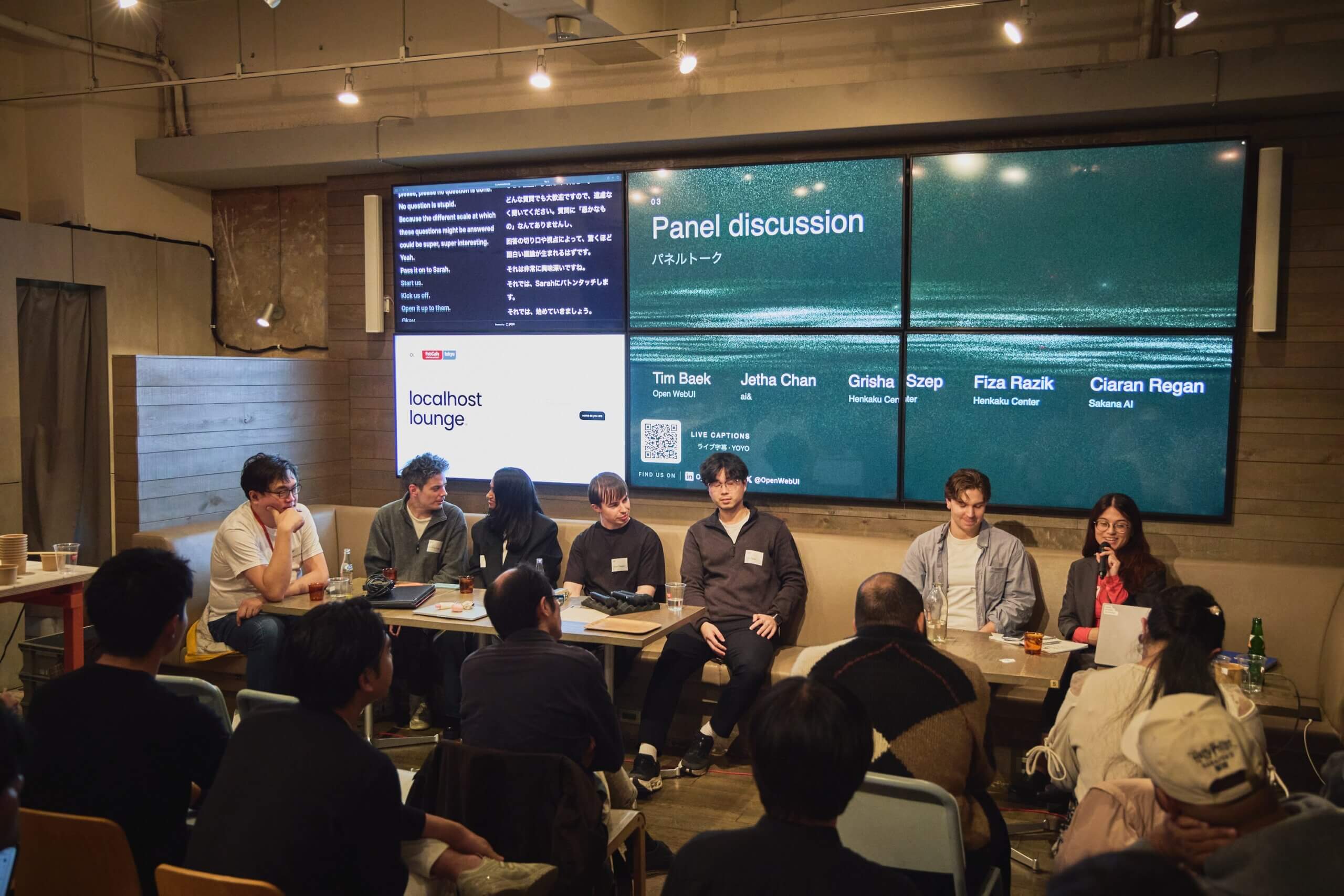
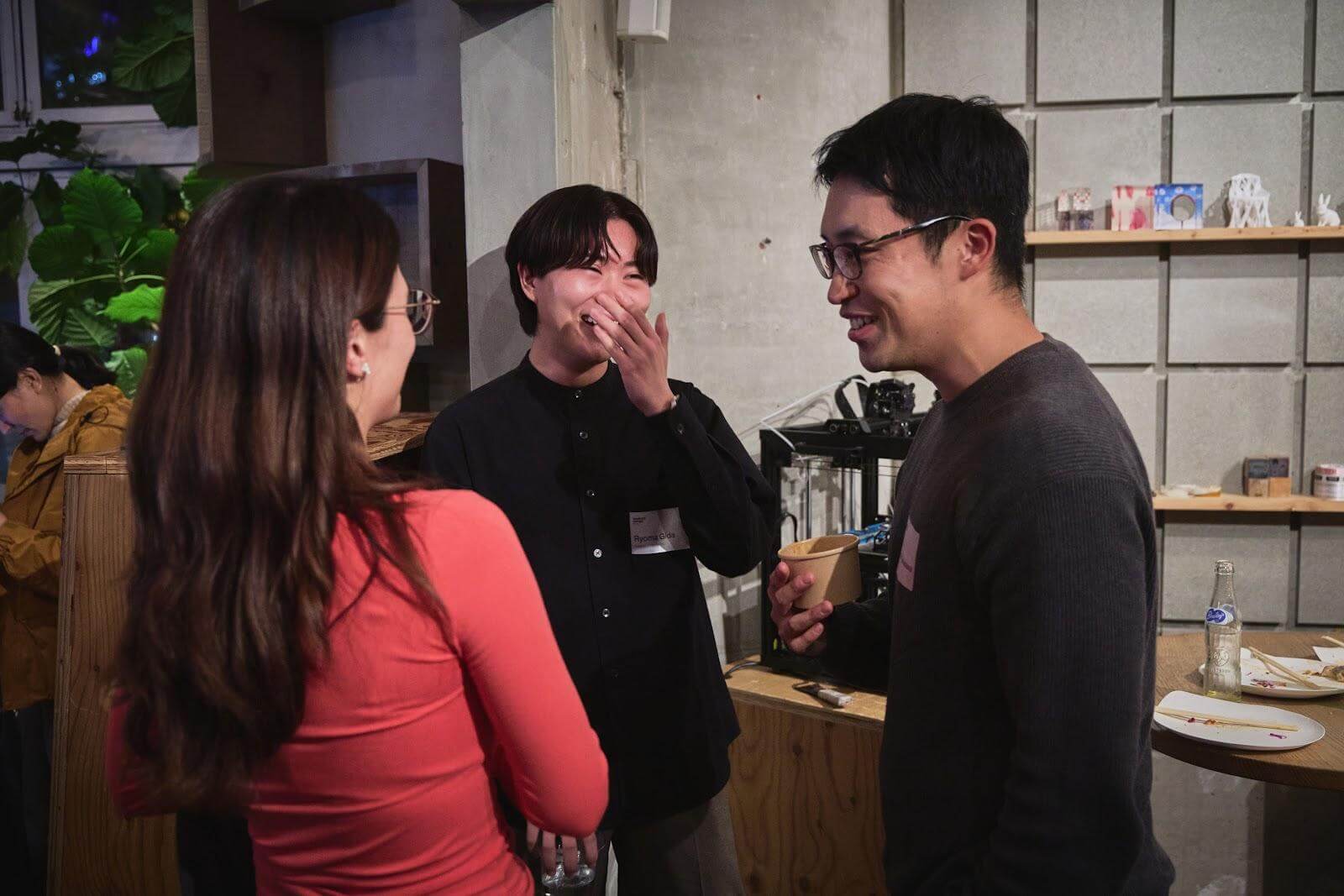
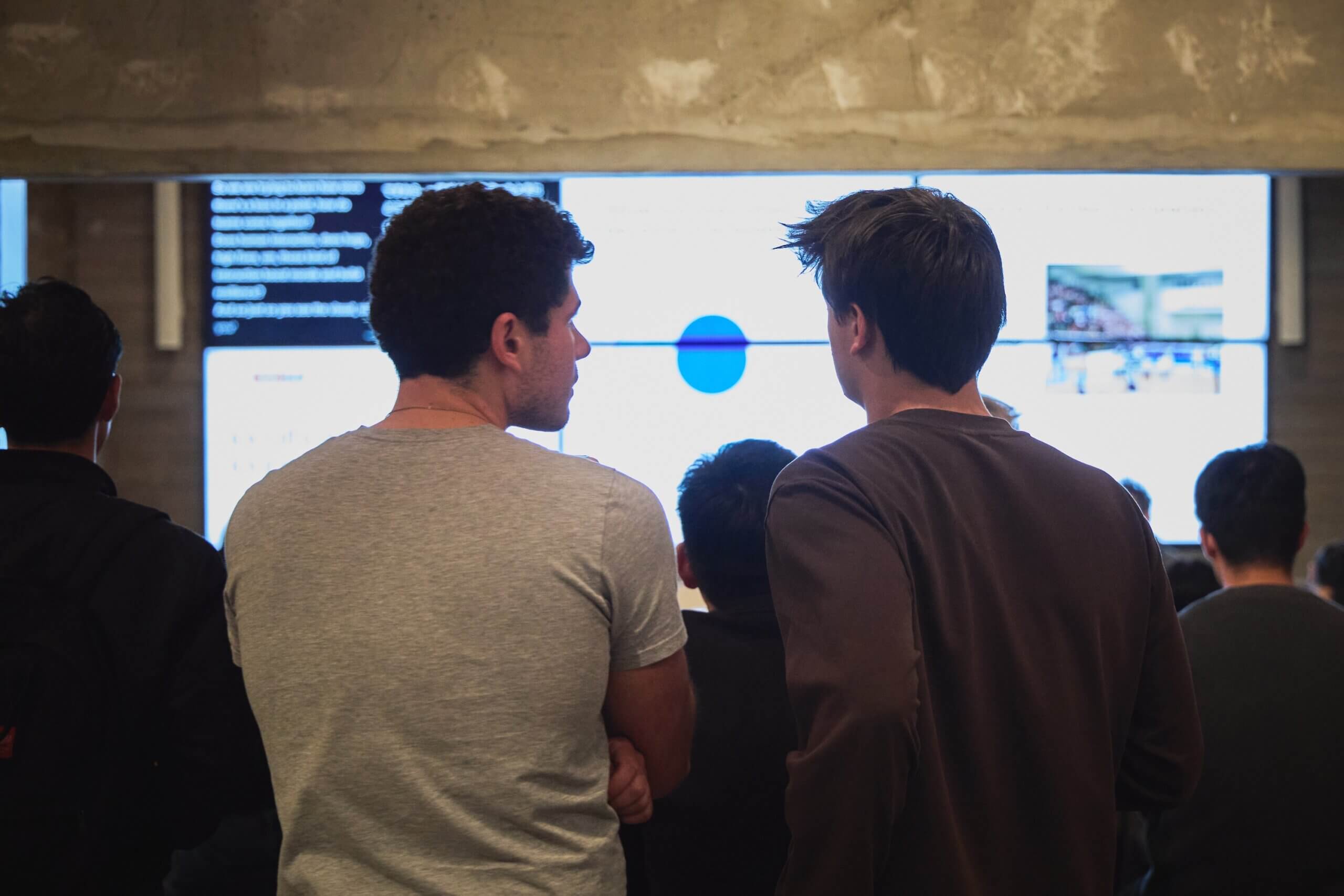
The Tokyo crowd that gathered at our event ranged from AI startups and big-company engineers to researchers, investors and students.

What is AI heading? Where is AI heading? The evening centered on three keywords:
- Resilience: systems and workflows that keep working, and that no one can control centrally or switch off.
- Sovereignty: who controls the computing power, the data and the models, for a person, a company or a country.
- Open source: whether you can inspect, run and change a system. A model anyone can download isn’t the same as knowing how it was made or what biases it may carry.
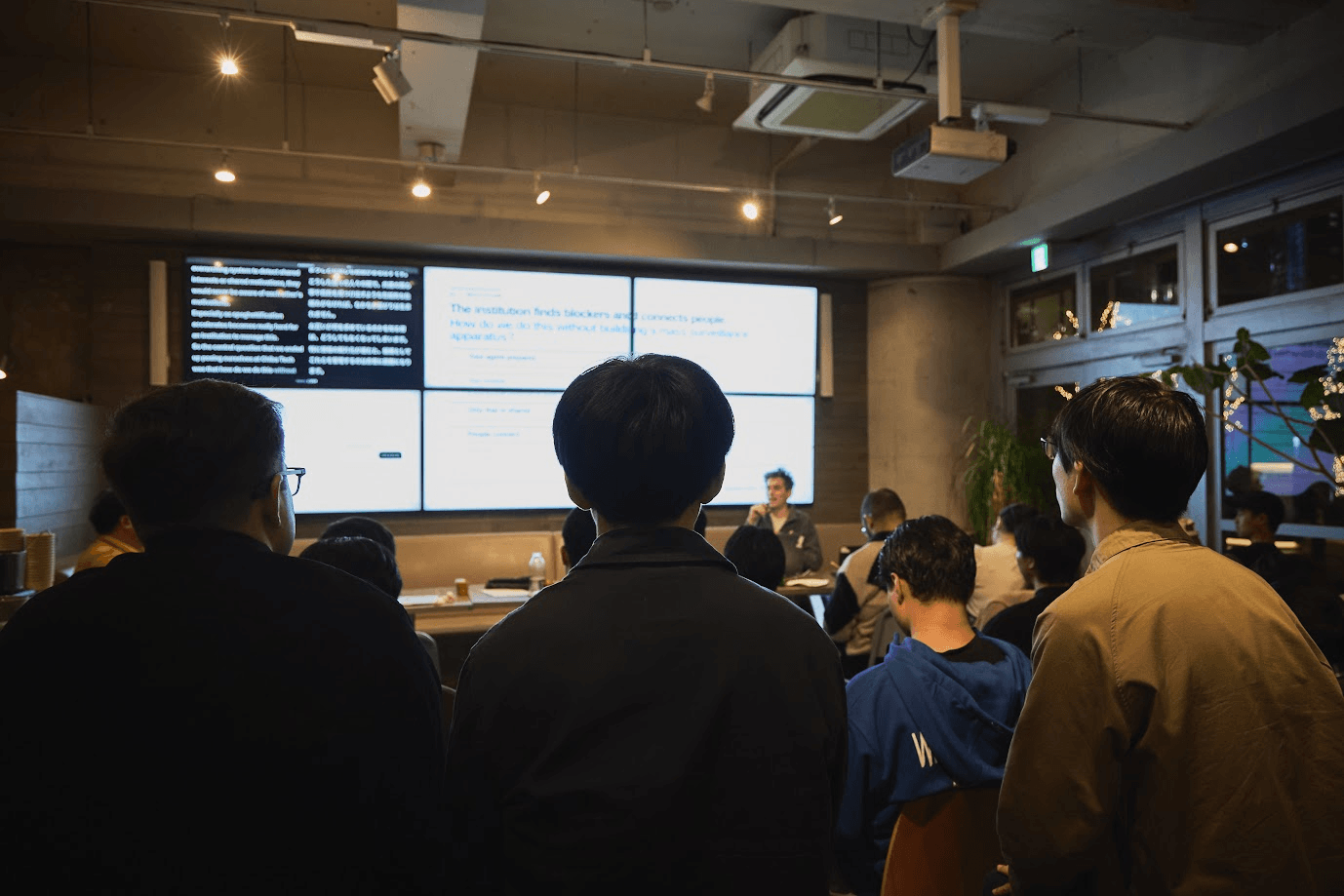
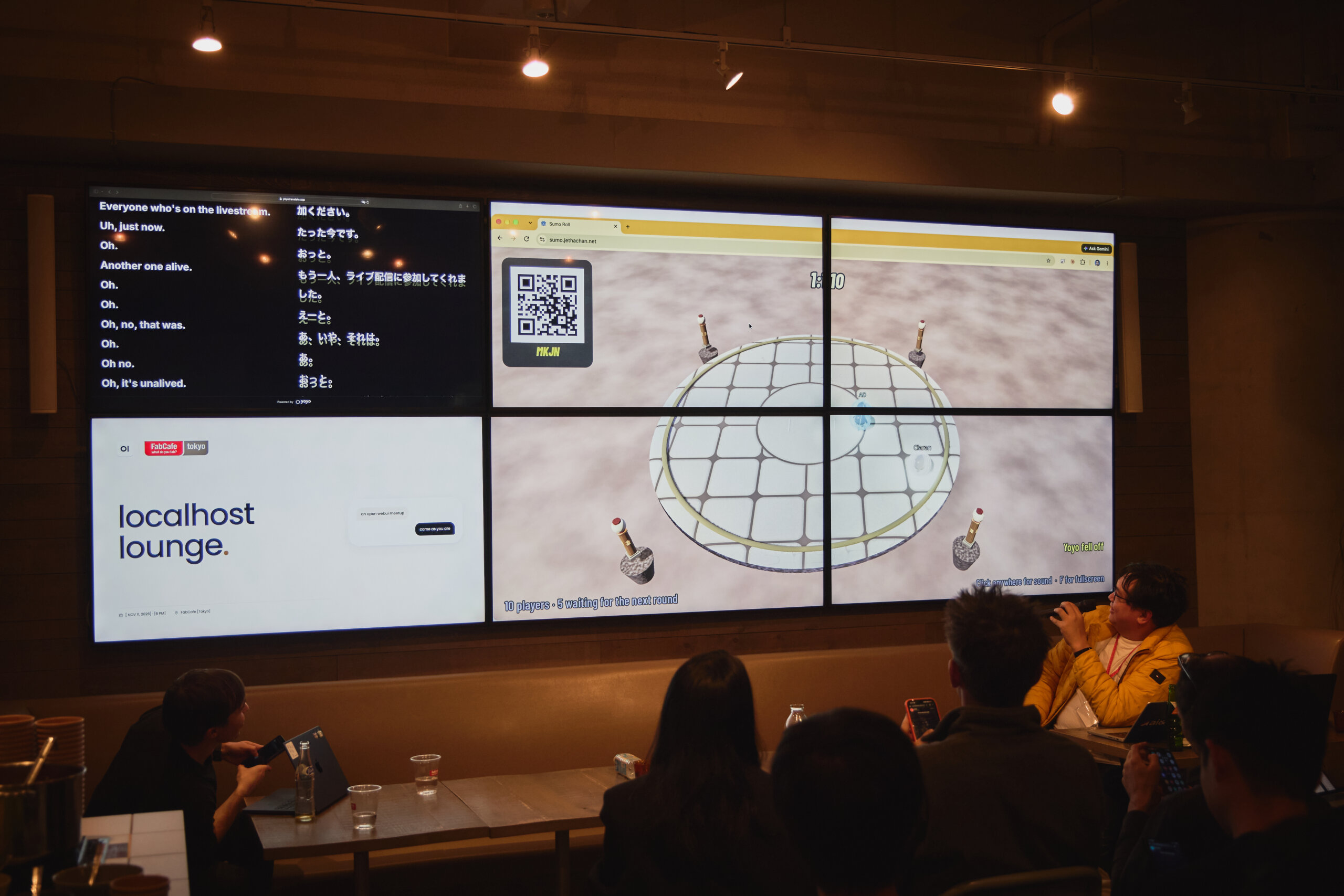
Live Japanese and English captions provide bilingual support.
Event details and program
Date: Wednesday 11 November 2026, 18:30–21:30 (talks from 19:00)
Venue: FabCafe Tokyo 1F, full floor (Shibuya)
Hosts: Open WebUI, co-hosted by FabCafe Tokyo
Language: English, with live Japanese and English captions (Yoyo Translate)
Event page: Luma · fabcafe.com
| Order | Content |
| 1 | Welcome. |
| 2 | Talk: Tim Baek, Open WebUI. From side project to 160,000 GitHub stars and an enterprise business. |
| 3 | Talk: Jetha Chan, ai&. A live enterprise demo. |
| 4 | Talk: Grisha Szep & Fiza Razik, Henkaku Center and Chiba Tech. Resilience and adaptation in the AI era. |
| 5 | Talk: Ciaran Regan, Sakana AI. Continuous Memory Machine research. |
| 6 | Break. About 10 minutes for food and drinks. |
| 7 | Panel. Sovereign and resilient AI systems. Moderated by Sarah Pratt (Open WebUI) and Kalen Windels (FabCafe Tokyo). |
| 8 | Networking. Food, drinks and conversation. |
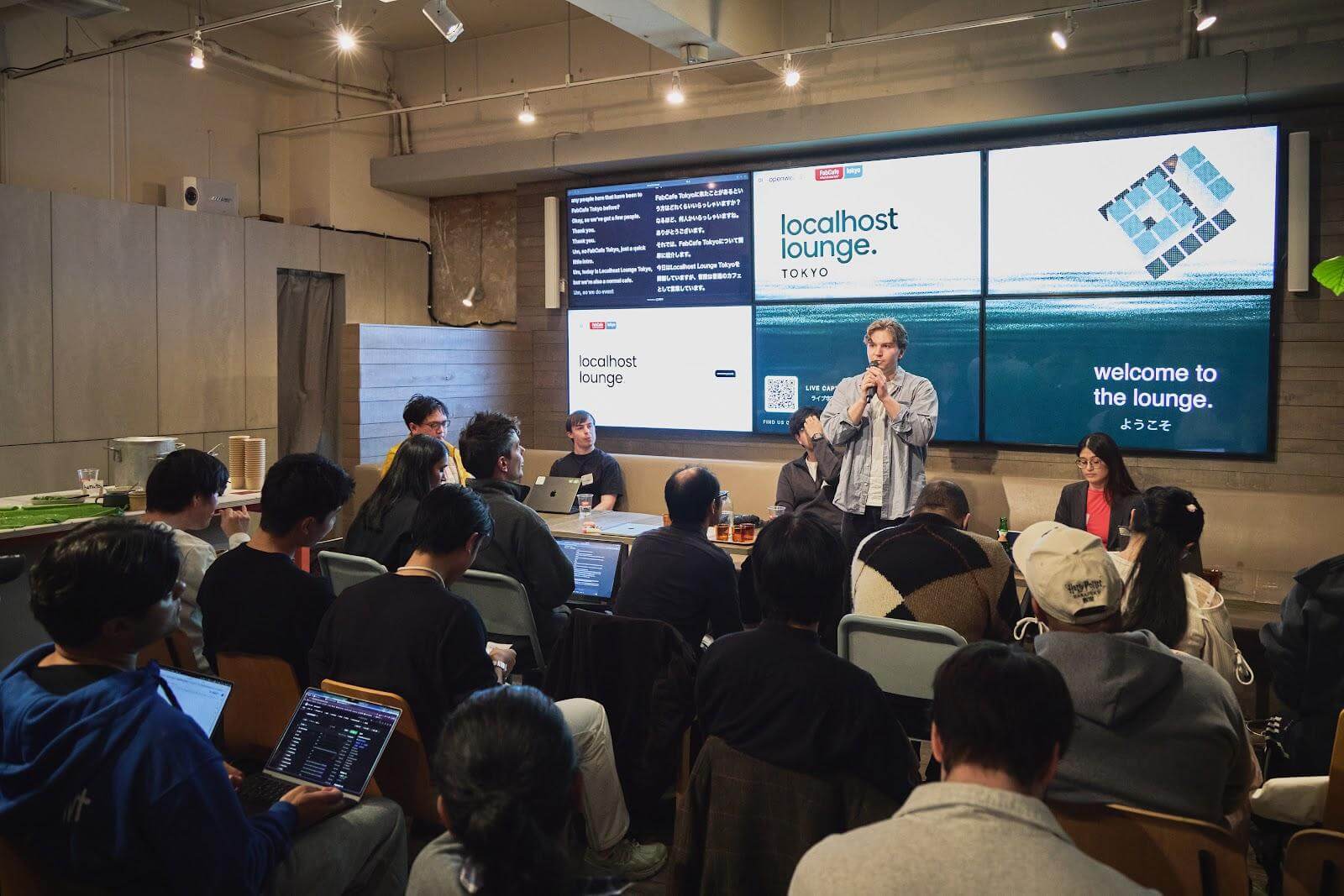
Four views from the speakers on what a resilient AI future means
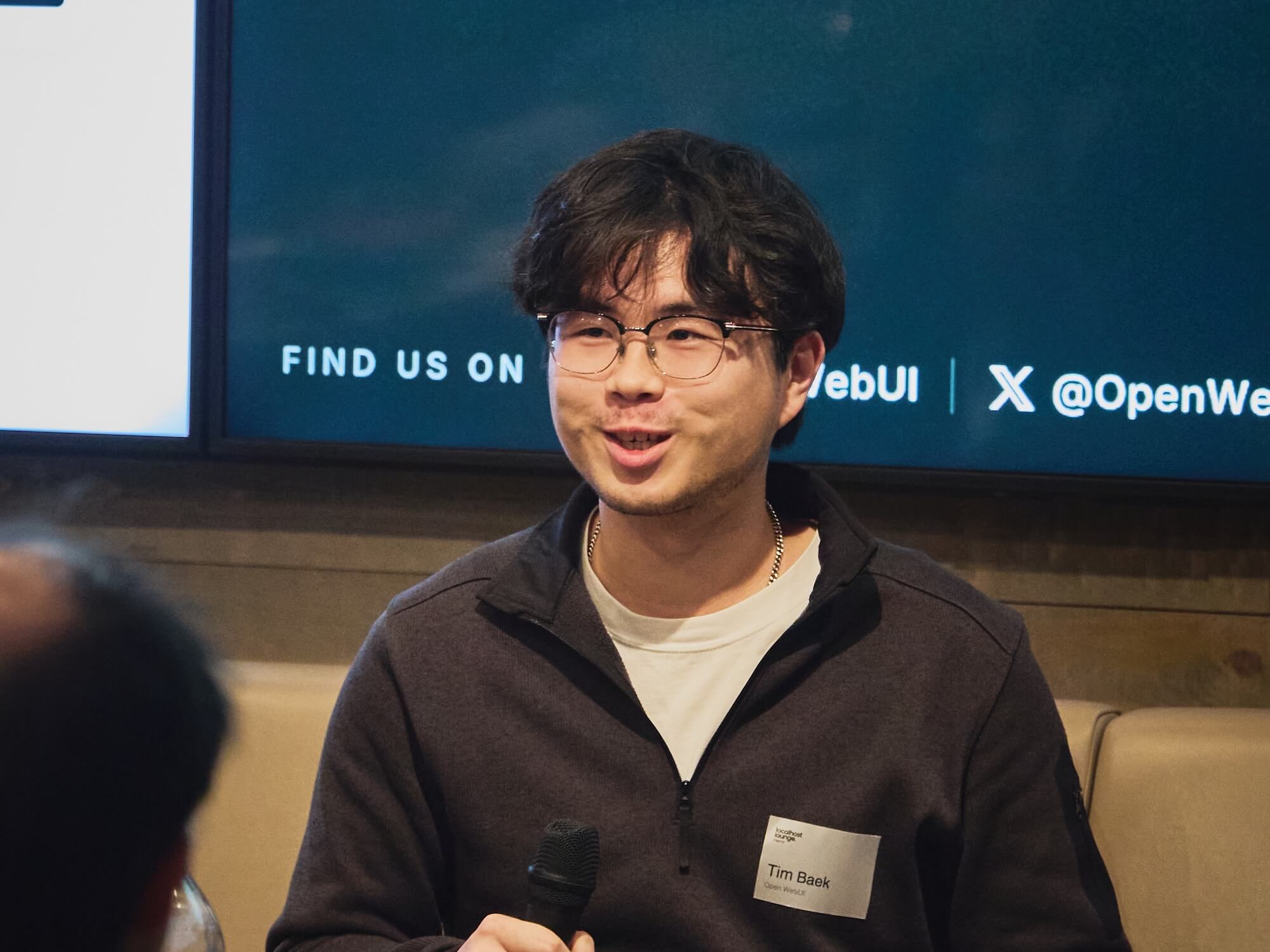
Tim Baek, Open WebUI
Baek started Open WebUI a little over three years ago as a personal project, just as AI coding tools were becoming good enough to build with. After hitting ChatGPT’s free-tier limits, Baek found Ollama, free software that runs AI models on your own computer but only from the command line, a text-only window most people never open. Baek built a chat interface on top of it, first called “Ollama WebUI.” That became Open WebUI, which now has 160,000 stars on GitHub, the site where developers bookmark and follow open-source projects.
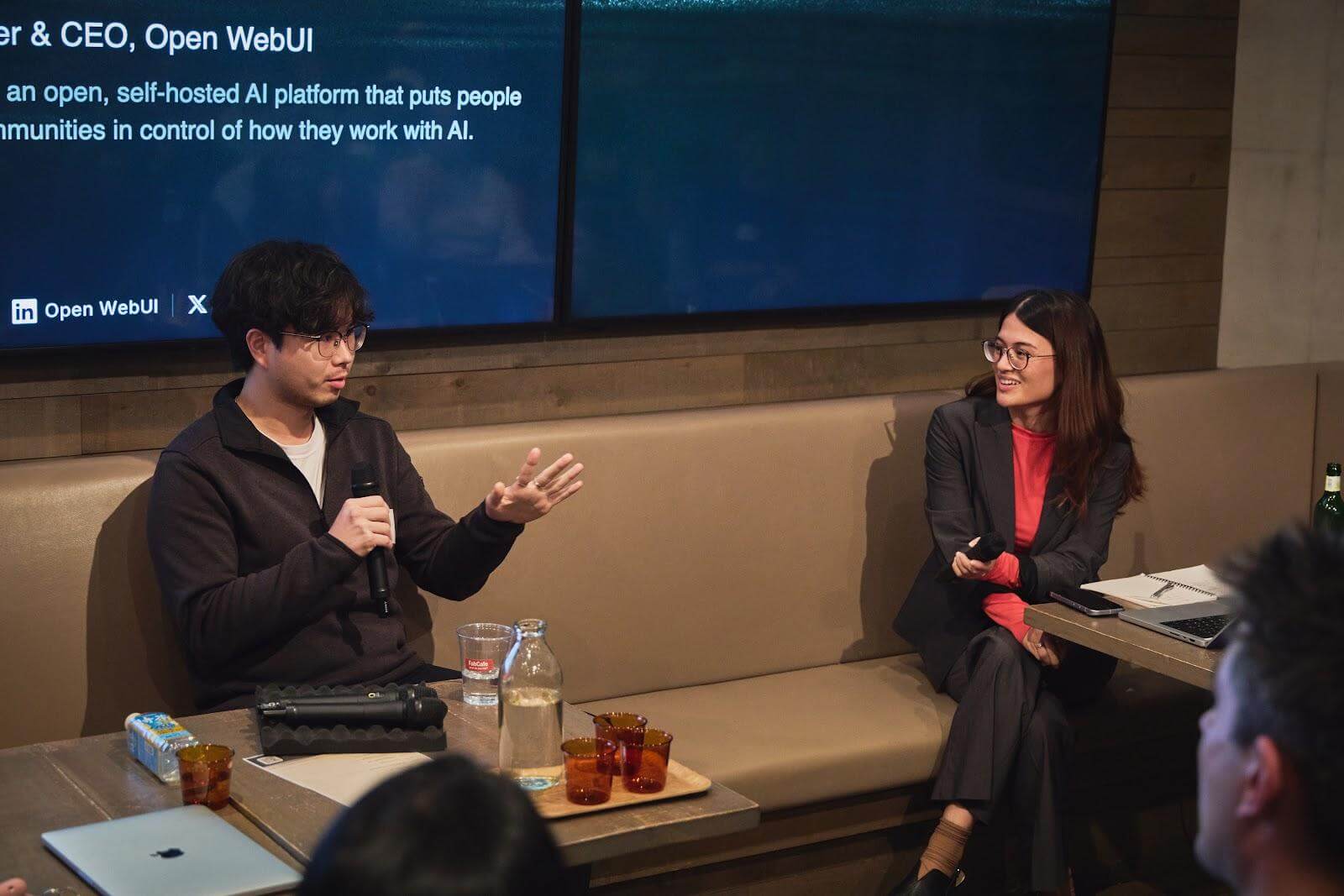
Asked what comes next, Baek answered in one word: community. For an open-source project, community is also related to survivability. Because the code is public, anyone can copy it and keep it going (developers call this “forking”), so software that thousands of people run doesn’t depend on any one company staying around. Baek called Open WebUI a mission-based product built on shared democratic values, and said the people who use it should help it keep adapting.
Jetha Chan, ai&
If Open WebUI is the window people type into, something still has to run the AI model behind it. That step is called inference, and whoever runs it sees your data and decides where it goes.
Chan’s company, ai&, is an inference provider that runs AI models for businesses on servers in Japan, so customer data stays in the country. It also spreads work across chips from different makers, so a shortage or price rise at one company doesn’t stop the service.
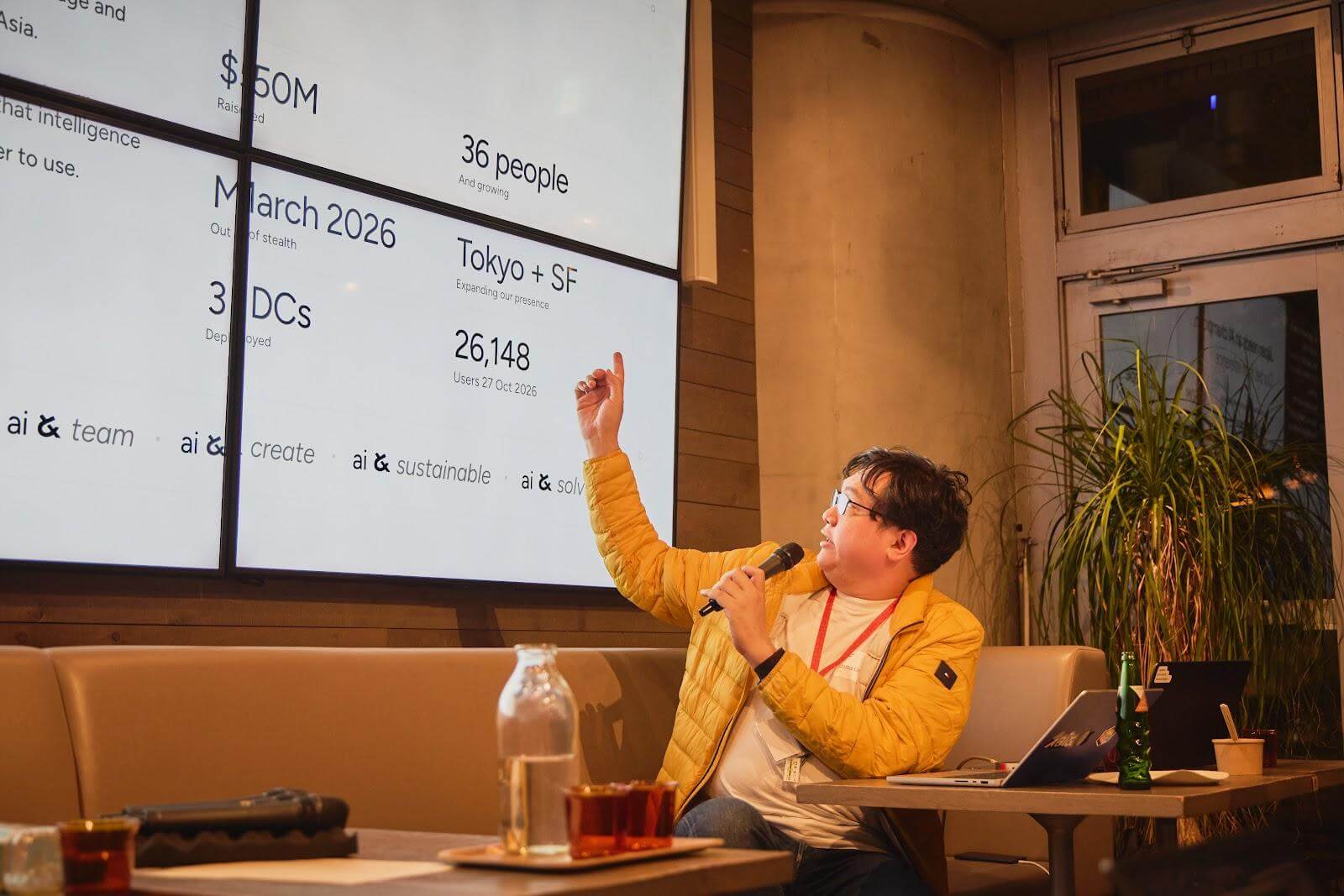
Chan then connected Open WebUI to a toy CRM (a sales database, filled here with made-up deals) and asked in plain English why deals had been lost. The assistant answered from the data: price, budget and perceived value. “If you’re the boss, how much time do you have really to go in deep into all of this stuff?” Chan asked. Chan open-sourced the demo that night so anyone can try it.
Grisha Szep & Fiza Razik, Henkaku Center and Chiba Tech
Szep and Razik opened with two questions. What do you do when you run out of tokens, or lose access to a model you rely on? And how does it feel when a new model generation lands and outpaces you?
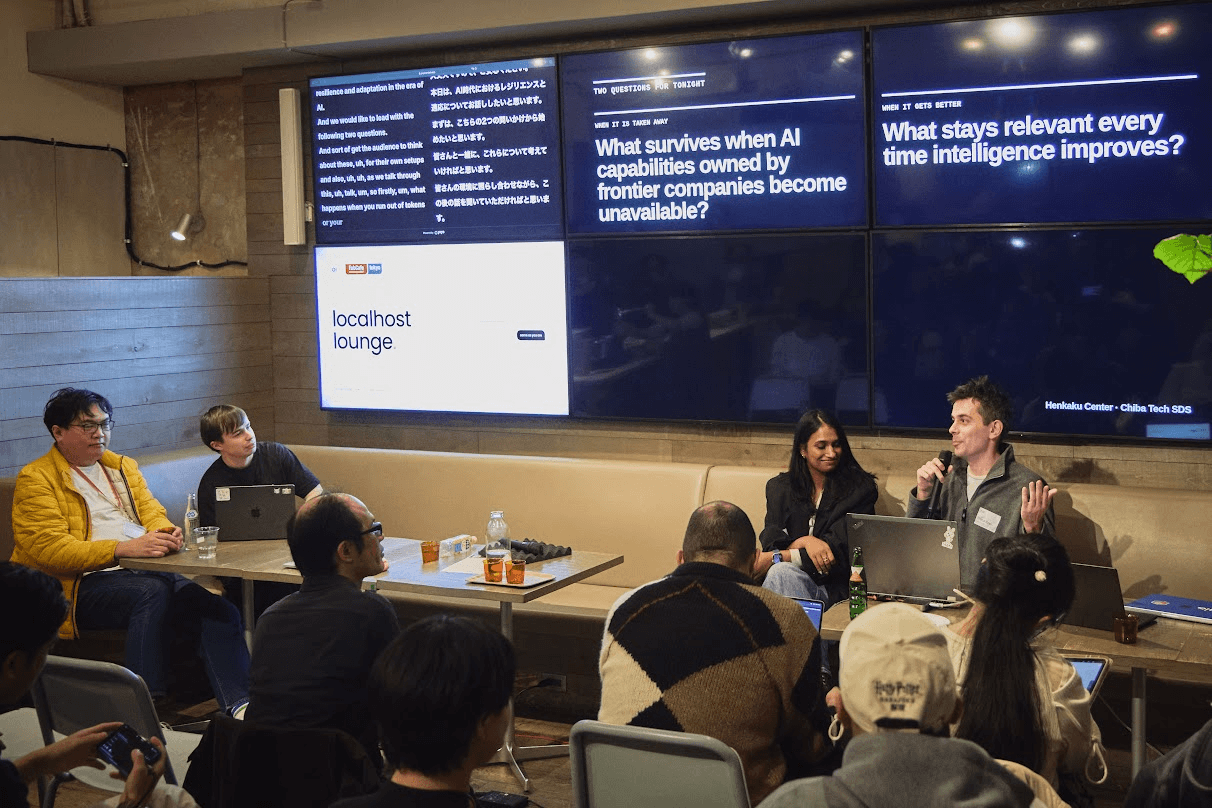
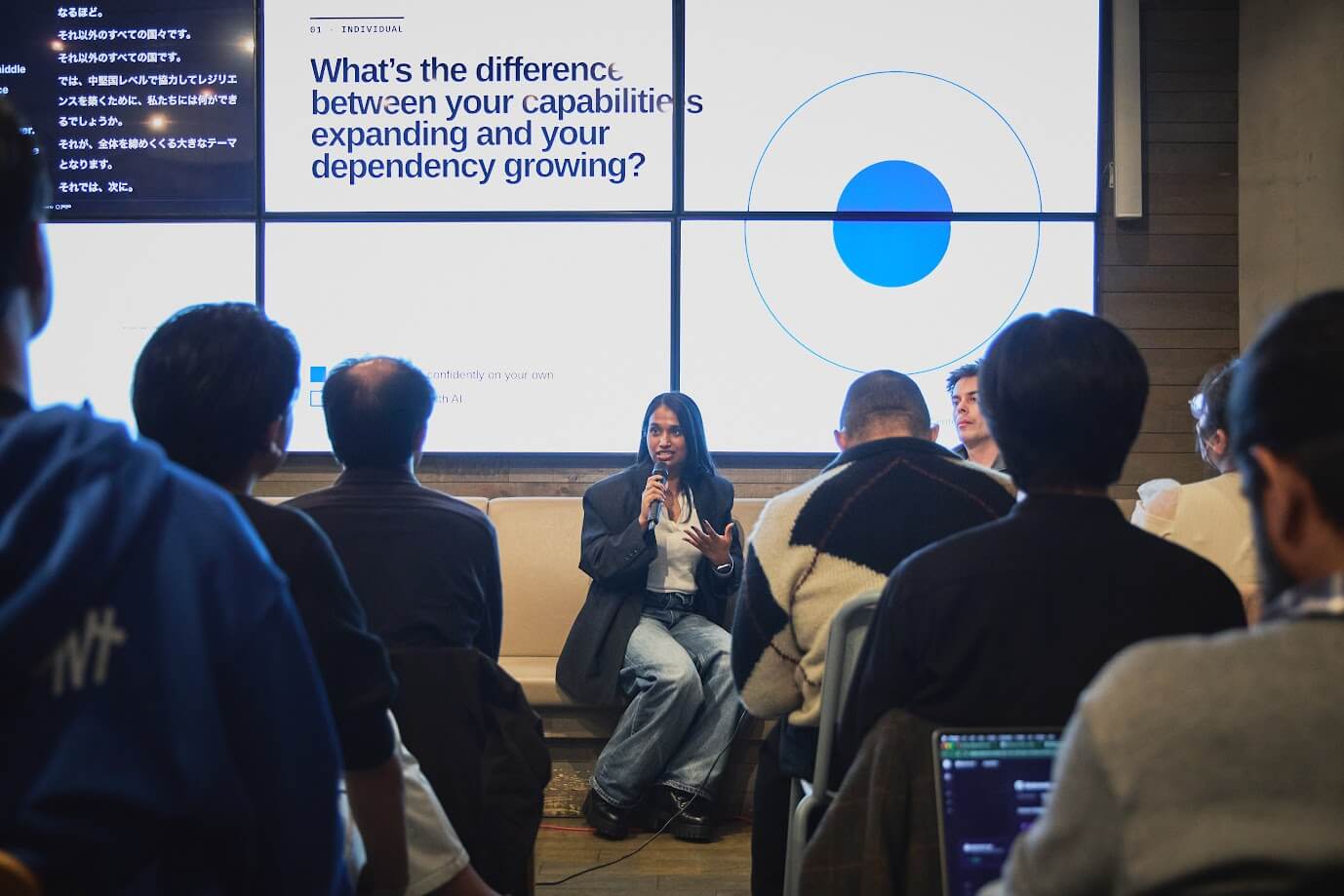
Their answer started with the individual. Think of your own skills as a core, with AI tools as a wider circle around it. The tools will keep changing, running out or disappearing, so what matters is the part that stays yours, and that core is human as well as technical. In Principles of Awareness, a course taught by Venerable Tenzin Priyadarshi, Chiba Tech students practice everything from meditation to hacking, building the spiritual and personal resilience to engage with technology more consciously.
The same idea works for institutions. Instead of watching students, Chiba Tech is testing a way for each student’s own AI agent to gather the records they choose. The student approves what is shared, and staff use it to connect people working on similar things and to provide better support.
Finally, the talk zoomed out to consider countries that serve as stakeholders in the conversation. “Middle powers” such as Japan, Korea and Taiwan don’t build the leading models, but they make much of the chip materials, wafers and memory those models run on. Szep argues they can coordinate without a treaty, by writing the same safety conditions into their own laws and accepting each other’s safety tests, ideally before the Geneva AI Summit in June 2027.
Ciaran Regan, Sakana AI
Regan, a researcher at Sakana AI and PhD student at the University of Tsukuba, presented open-source research building on Sakana’s Continuous Thought Machine (CTM). A standard transformer, the design behind most of today’s AI, gives every token (roughly, every word) the same fixed amount of computation. The brain spends longer on harder problems.
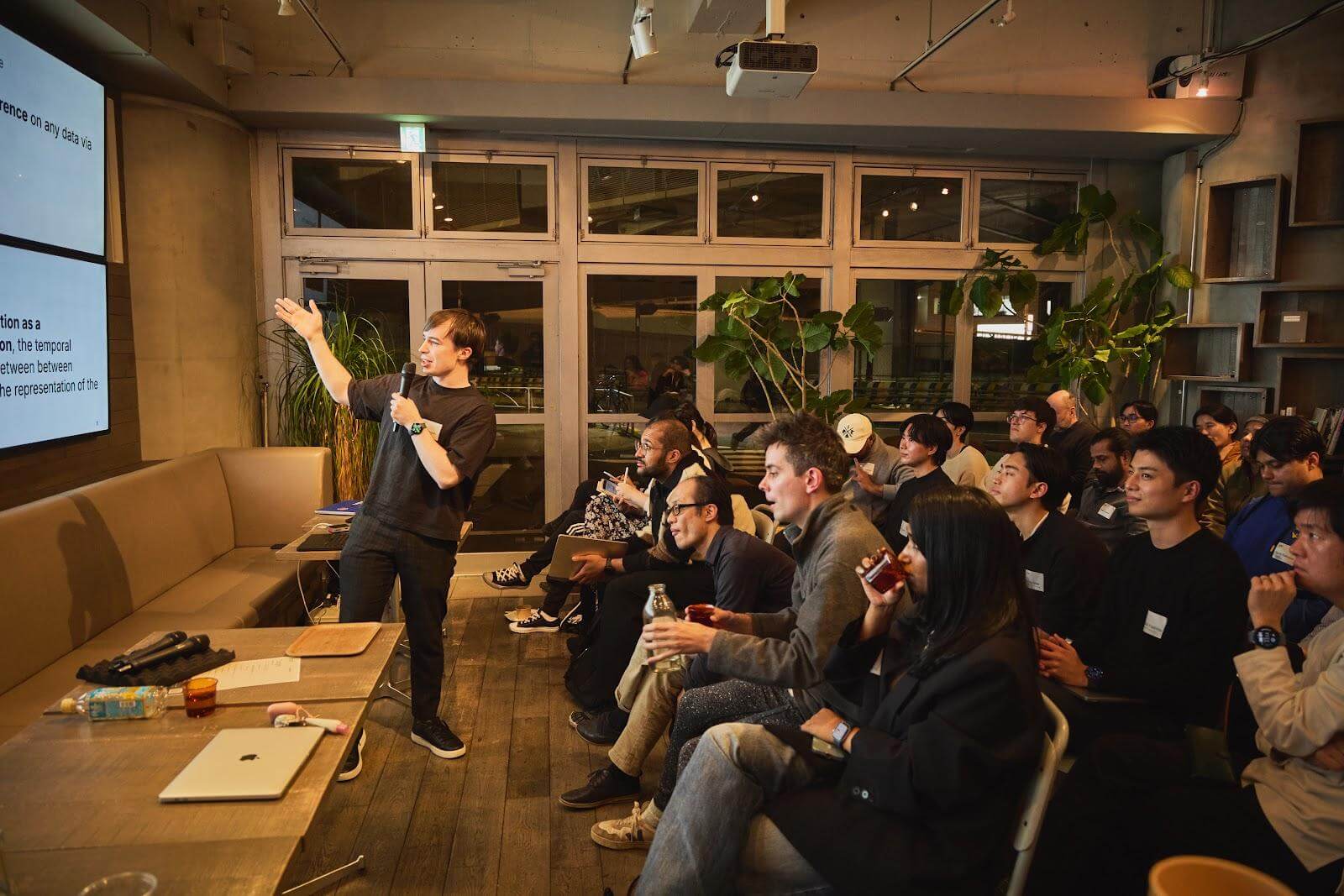
The CTM borrows its design from how biological brains work. It runs on its own internal clock, which lets it stop early on easy inputs and think longer on hard ones. It finds paths through mazes far larger than the ones it trained on. This year’s Continuous Memory Machine adds a long- and short-term memory the model learns to read and write.
The code, trained models and papers are all public, and the models train on a single GPU, so a student, a university lab or a smaller country can reproduce and question the work without a data center.
Panel: what safety and sovereignty mean across the AI spectrum
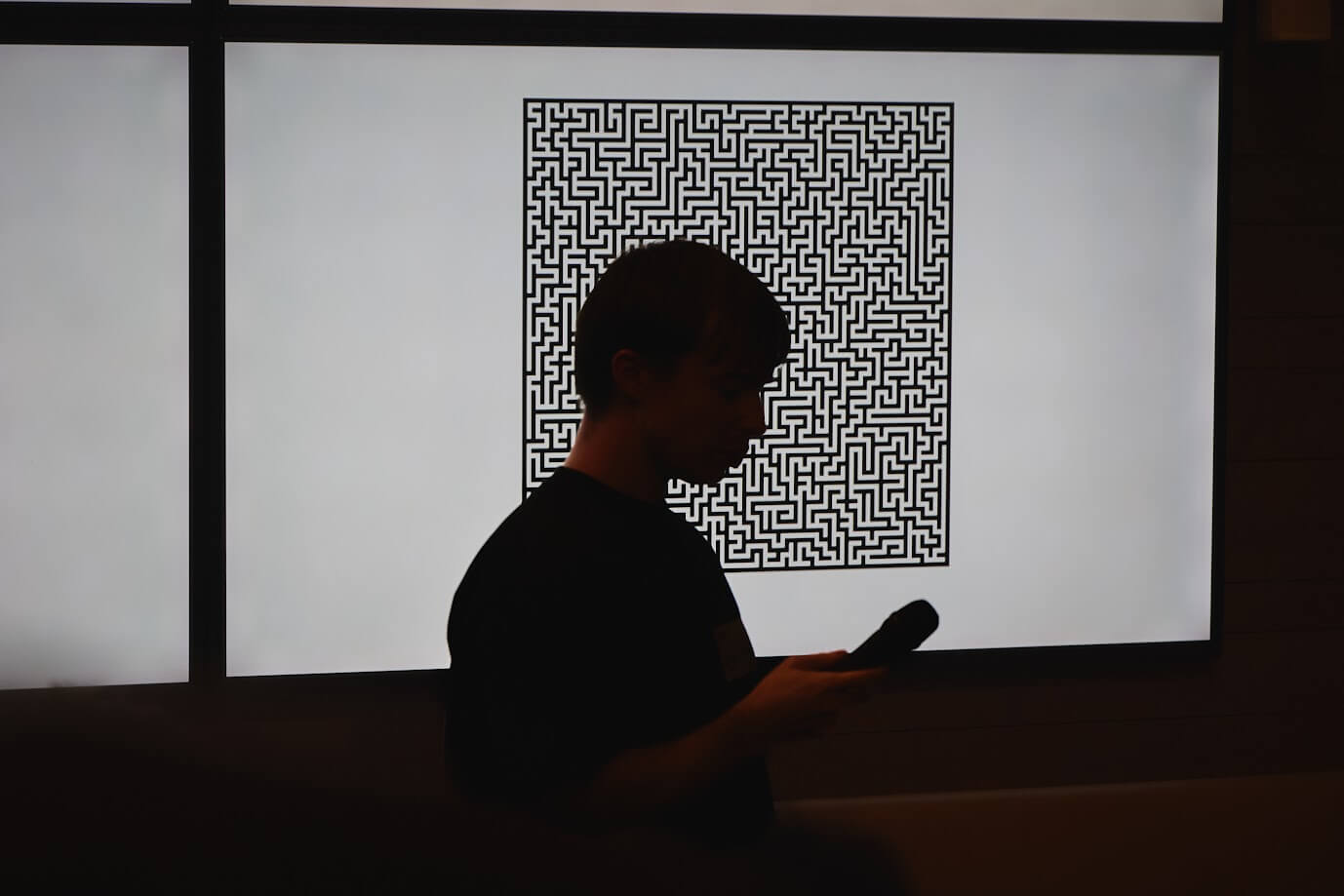
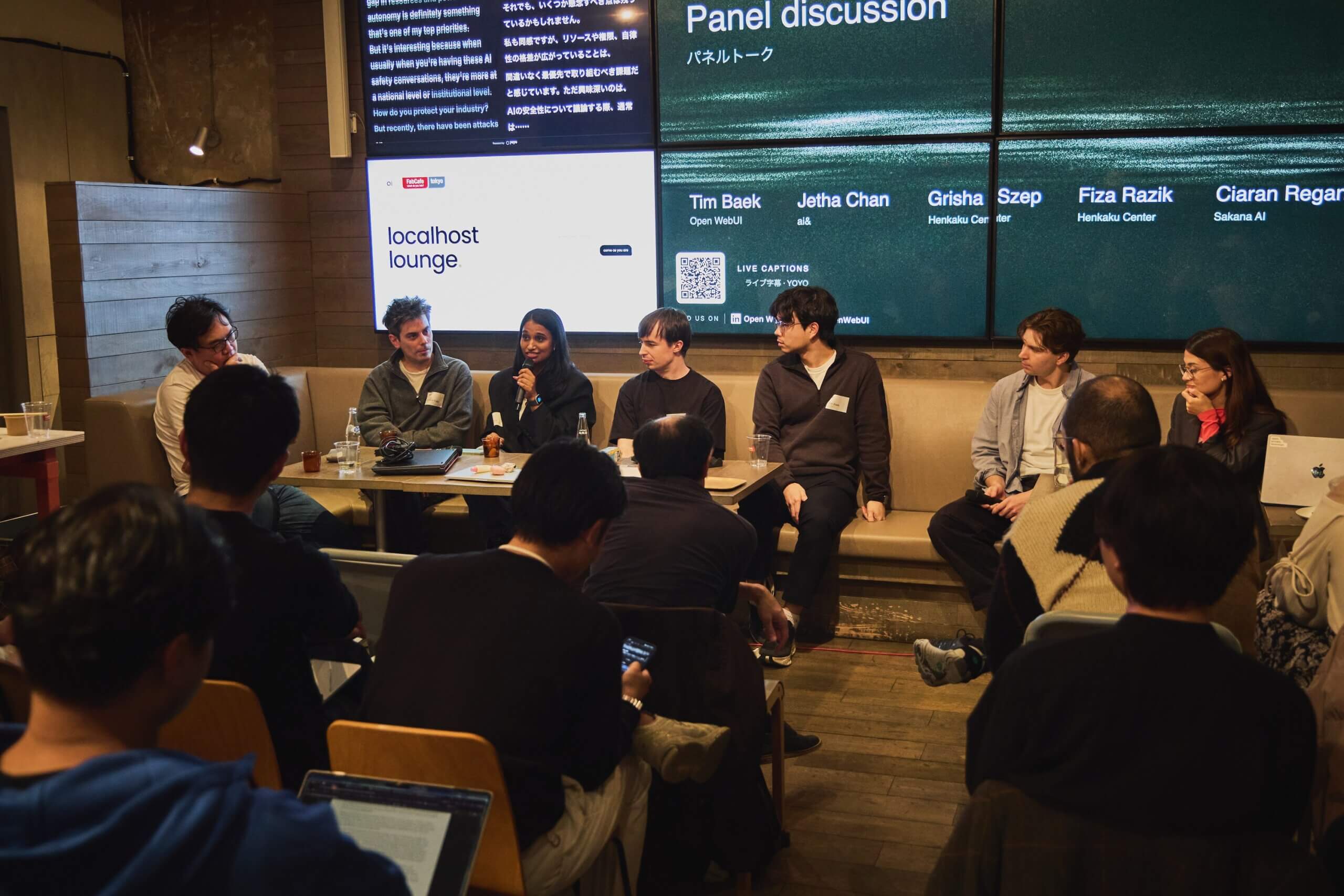
In the panel, moderated by Sarah Pratt (Developer Relations Lead, Open WebUI) and Kalen Windels (Creative Director, FabCafe), the speakers answered questions on AI safety and ownership from very different scales.
Baek saw some concentration of power at the big labs as inevitable, so Baek’s advice started with individual users: own the data you generate, keep fallback models ready and “ride the waves.”
Regan worried less about a “terminator” AI future than about misuse, and about capital and political power concentrating in whoever owns the computing.
Szep’s practical advice was to uncheck the box that lets a provider train on your data, and to guard that data the way a company would.
Razik raised a cultural concern. Much of people’s day-to-day memory now lives inside a few AI tools built mostly in the West. What gets lost when memory is saved through a single cultural lens, and who keeps the right to be forgotten when a digital identity can outlive the person?
Chan built on that from Japan, where decisions often form outside the meeting through nemawashi, weeks of quiet side conversations. This is not intuitive for western AI decision making, and how do we include essential cultural and business practices into AI workflows?
AI safety remains an open question, but the speakers shared a picture of sovereignty that starts with people, not just countries. Who owns the data and the computing, and whose idea of memory gets saved, will shape the conversation around local AI. If AI is becoming the infrastructure for public services and how people think and remember, its standards can come from more than one part of the world.

What we can do now
- For individuals: keep a fallback you could switch to tomorrow, and opt out of training on your data.
- For communities and schools: share machines, models and know-how, and ask people what they need rather than watching what they do.
- For companies and public buyers: know where your data and AI systems live, and keep a tested way to switch providers.
- For countries like Japan: write shared safety conditions into law and recognize each other’s safety tests.
- For everyone: ask whose language and culture are represented in today’s AI systems.
This is what FabCafe is for: a space where there is no right answer to find, only trial and error, and a say for everyone who joins in.
Building, researching or organizing around local AI? Come by FabCafe Tokyo in Shibuya for a coffee and tell us what you’re working on. If you’d like to host your own meetup, our 1F space is available to rent.
Organizers
🌐 Open WebUI
A self-hostable, open-source AI platform: plug in your own models and run it for yourself, your team or your whole organization. openwebui.com
☕ FabCafe Tokyo
“FabCafe is a cafe where people, ideas and things come together through the act of making.”
Located in Shibuya, FabCafe Tokyo hosts and co-creates events on technology, making and open culture, and its 1F space is available to rent for meetups, talks and launches. space.fabcafe.com
Text: Kalen Windels · Photos: Naoki Kuze
Recommended
-

2026.11.09
AI is Not Magic Exhibition Vol. 2: How can AI expand the human experience?
-


2026.11.06
Kuku くく: International animated short film night beyond the ordinary — Dante Zaballa × Ryoji Yamada
-
2026.10.30
Localhost Lounge Tokyo
-
2026.10.29
A year of Loftwork projects, open for conversation Loftwork Project Open Day 2026
-

2023.11.25
SPCS Talks vol.6 Ecological Urban Design With Brian McGrath and Danai Thaitakoo
-

2023.01.24
crQlr Summit 2023 JAPAN 「五感で学ぶ、地域に根ざしたボトムアップな循環型経済」特別ツアー