


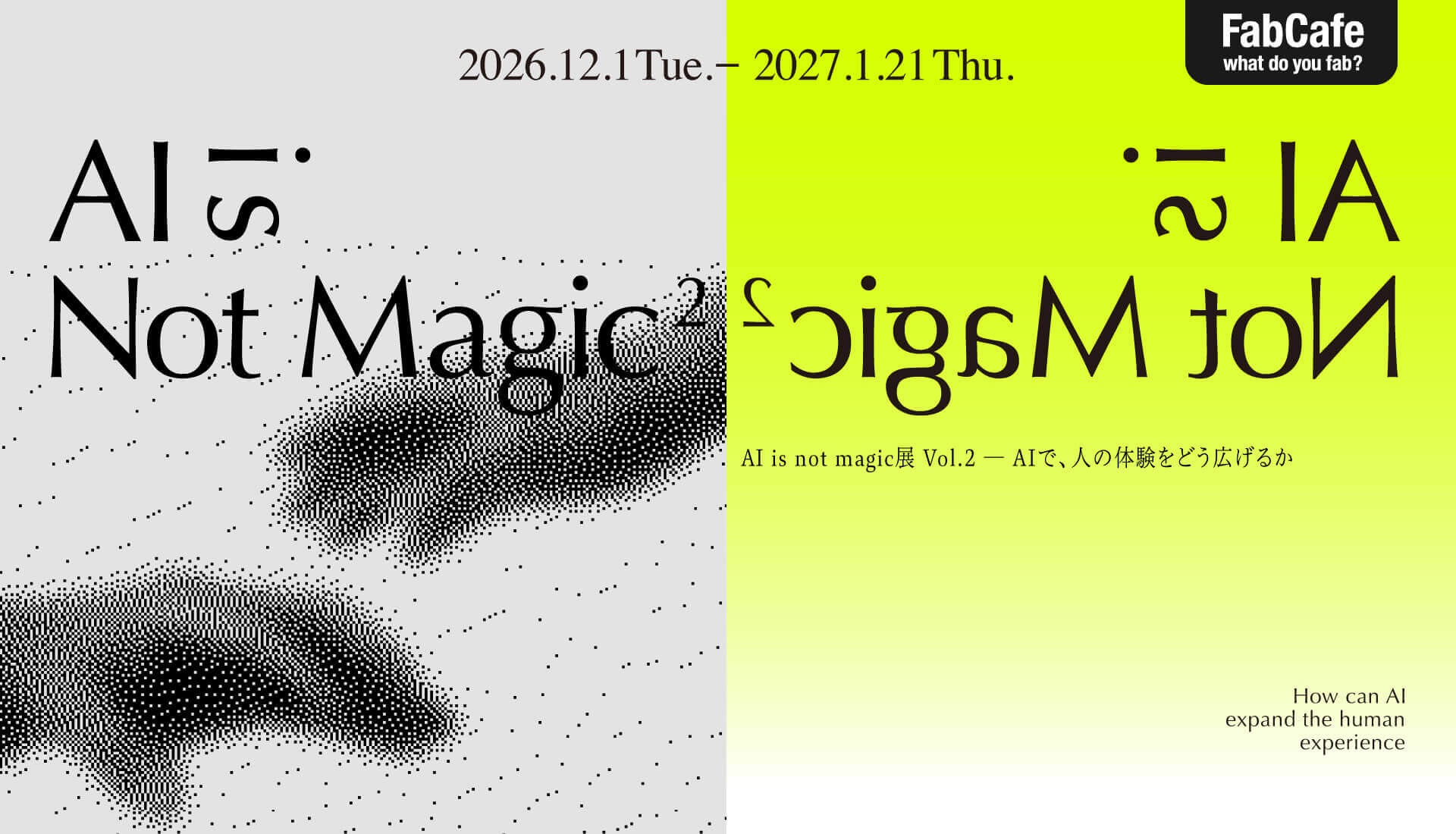
AI is Not Magic Exhibition Vol. 2:
How can AI expand human experience?
Over the past year, AI has evolved from answering simple queries to autonomously planning and executing complex workflows, writing code, accessing files, and completing tasks end-to-end, primarily to drive efficiency. The second AI is Not Magic exhibition, hosted at FabCafe Tokyo from December 1, 2026, to January 21, 2027, explores how AI can also enrich human experience across traditional craft, physical sensation, and emotion. Building on last year's inaugural exhibition, this edition presents collaborative projects that examine how AI can augment human perception and physical engagement.
- Date
-
2026-12-01 (Tue) -
2027-01-21 (Thu)
- Place
- FabCafe Tokyo
- fee
- Free (visitors are asked to order one drink)
Over the past year, AI has evolved from answering simple queries to autonomously planning and executing complex workflows, writing code, accessing files, and completing tasks end-to-end, primarily to drive efficiency. The second AI is Not Magic exhibition, hosted at FabCafe Tokyo from December 1, 2026, to January 21, 2027, explores how AI can also enrich human experience across traditional craft, physical sensation, and emotion. Building on last year's inaugural exhibition, this edition presents collaborative projects that examine how AI can augment human perception and physical engagement.
About
How can AI expand human experience?
Until recently, AI operated primarily within digital interfaces. It is now expanding into the physical realm, a world defined by material constraints, spatial presence, and daily human activity. Every raw material possesses unique traits, urban spaces adapt to human motion, and physical tools adapt to the nuances of their users. This tangible environment is inherently variable and unpredictable. Even as technology advances in precision and efficiency, the physical world retains a depth and richness that remains distinctly human.
The featured projects operate at the intersection of AI and the physical world. Created by traditional craftspeople, urban explorers, and energy researchers, these initiatives embrace physical unpredictability, using AI to unlock experiences unique to human perception. Moving beyond screen-based interactions, their work enhances our engagement with the physical environment and broadens our capacity to feel and connect.
Reflecting its title, the exhibition frames AI as an accessible, practical tool, exploring the evolving relationship between technology and the human condition.
Who should visit
This exhibition is designed for:
- Business developers and product innovators seeking to leverage AI to unlock new value in underutilized technologies and materials.
- Designers and service developers envisioning the future of user experiences and physical products in the AI era.
- Facility managers, urban developers, and community planners looking for fresh concepts to enrich local spaces and neighborhood experiences.
Exhibition highlights
Think with your hands
Commissioned by: Anthropic
Featuring: Ryuji Naoi, Eri Sumitomo
Produced by: Loftwork Inc.
With support from: FabCafe Global, Hida no Mori de Kuma wa Odoru Inc. (Hidakuma)
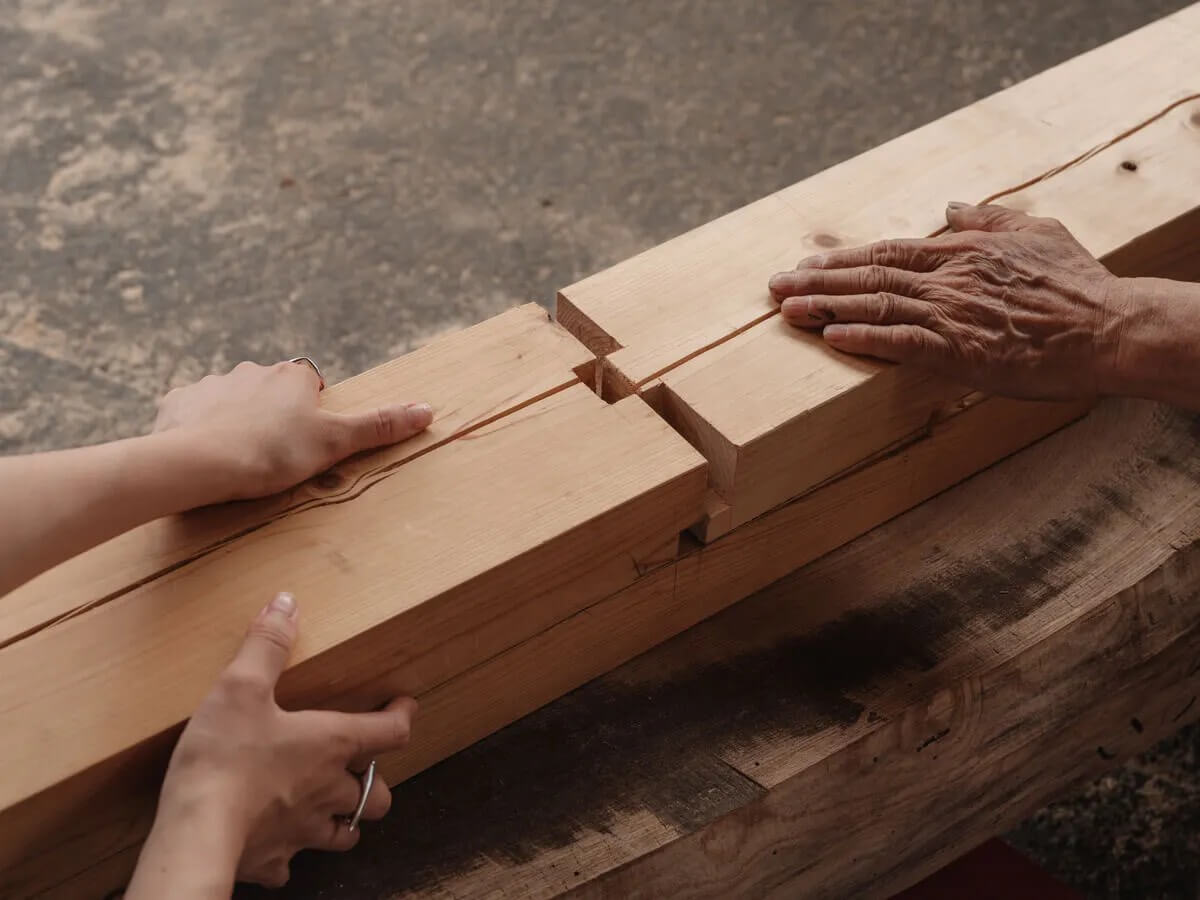
Based in Hida City, Gifu Prefecture, this project investigates how kigumi (木組), a traditional Japanese timber joinery technique passed down for centuries, can be preserved and evolved for future generations.
“How long should artisans preserve a craft that market demand no longer supports?”
–Ryuji Naoi, former carpenter
For generations, Hida carpenters have mastered kigumi, joining wood without nails or metal fasteners. While this heritage endures, practical applications for these skills are increasingly rare today.
Can AI bridge the gap between seasoned masters passing on the trade and new practitioners eager to learn?
Architect Eri Sumitomo seeks a modern purpose for traditional joinery. Collaborating with designer and former carpenter Ryuji Naoi, Sumitomo utilizes Claude to integrate ancestral woodworking knowledge into contemporary design workflows, discovering novel uses for irregular, non-standard timber.
The resulting installation, crafted by local artisans, exposes its internal joints to invite visitors to reflect on the future possibilities of kigumi.
An AI Walking Diary of Shibuya (2026 Version)
TMPR (pronounced “tempura”)
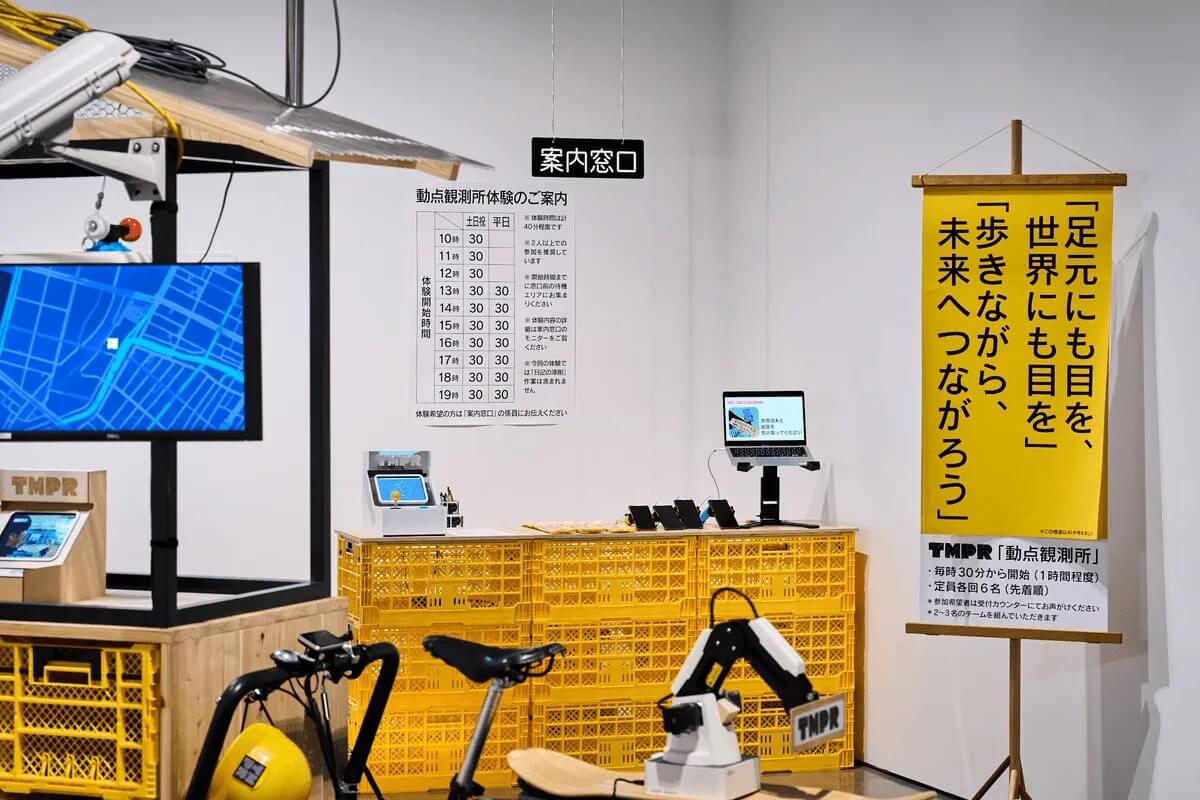
The act of documenting urban life is shifting away from human observation. As autonomous transportation expands, vehicles become mobile cameras. Drones overhead and robotic sensors on the ground log geo-tagged footage continuously, digitizing the city into a vast database. As camera coverage becomes total, what uniquely human role remains in observing urban transformation?
Observing the same physical site, one person notes “a new parking lot,” while another sees “a neighborhood shop gone.” Beyond objective physical data lie subjective human memories. What people remember as absent is absent from digital footage. To explore memory and urban change, this project gathers personal accounts of what has vanished from the city landscape.
Think. Try. Make. And Again: The Dancing Ghost in the Servo
Chiba Institute of Technology, School of Design & Science (SDS)
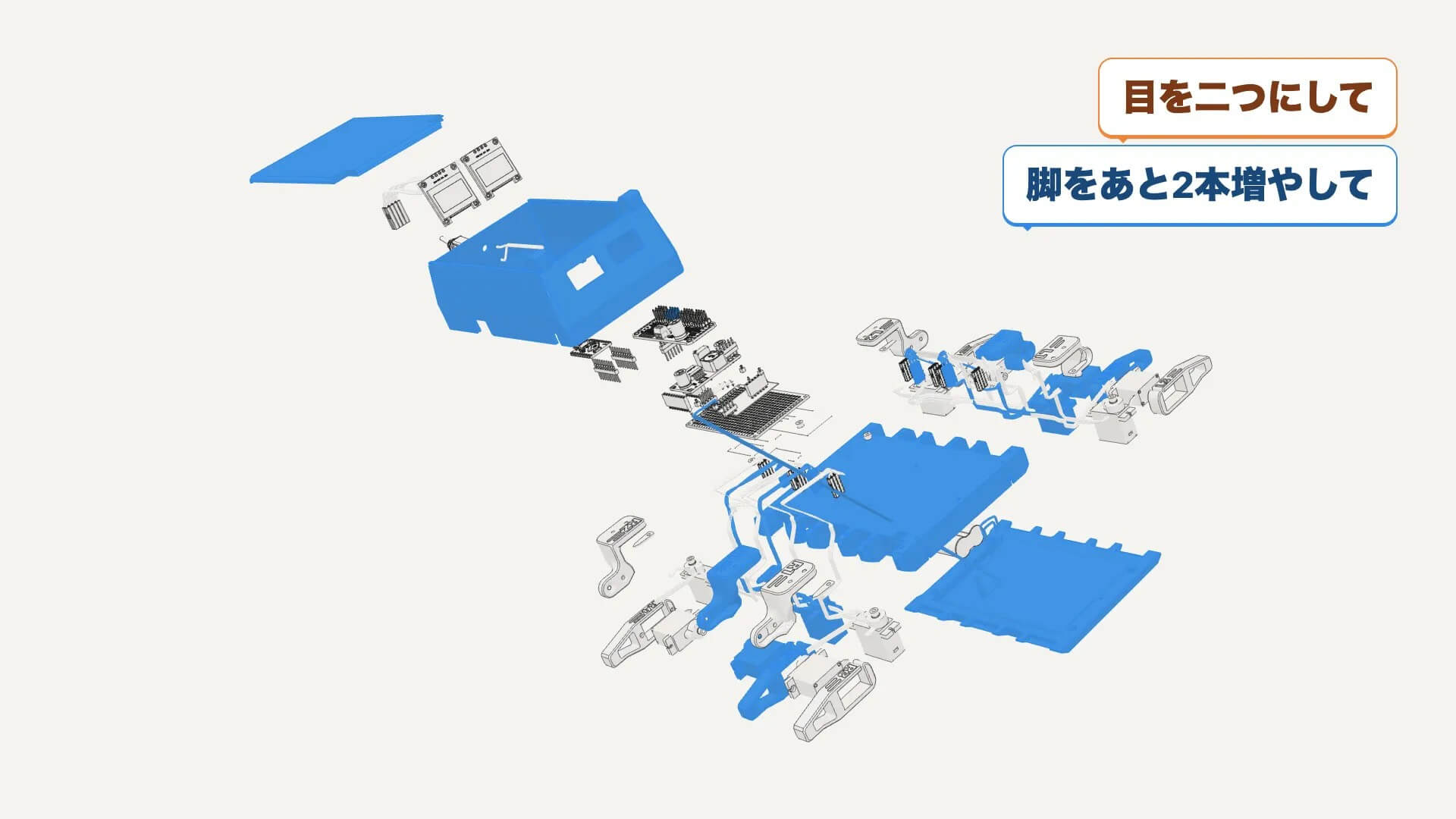
APS II is a project studio where SDS students and Loftwork creators design and assemble quadruped robots equipped with AI agents. Built on Sesame, an open-source robotic platform by Dorian Todd, the project highlights the gap between digital plans and physical reality: while AI can generate code or schematics instantly, physical components like soldered circuits and 3D-printed frames require hands-on iteration. Participants engage in a tactile process of trial, construction, and refinement. At the exhibition, palm-sized robots perform a synchronized dance, prompting visitors to consider what they would create with physical AI.
Learning to Lean on Many Minds
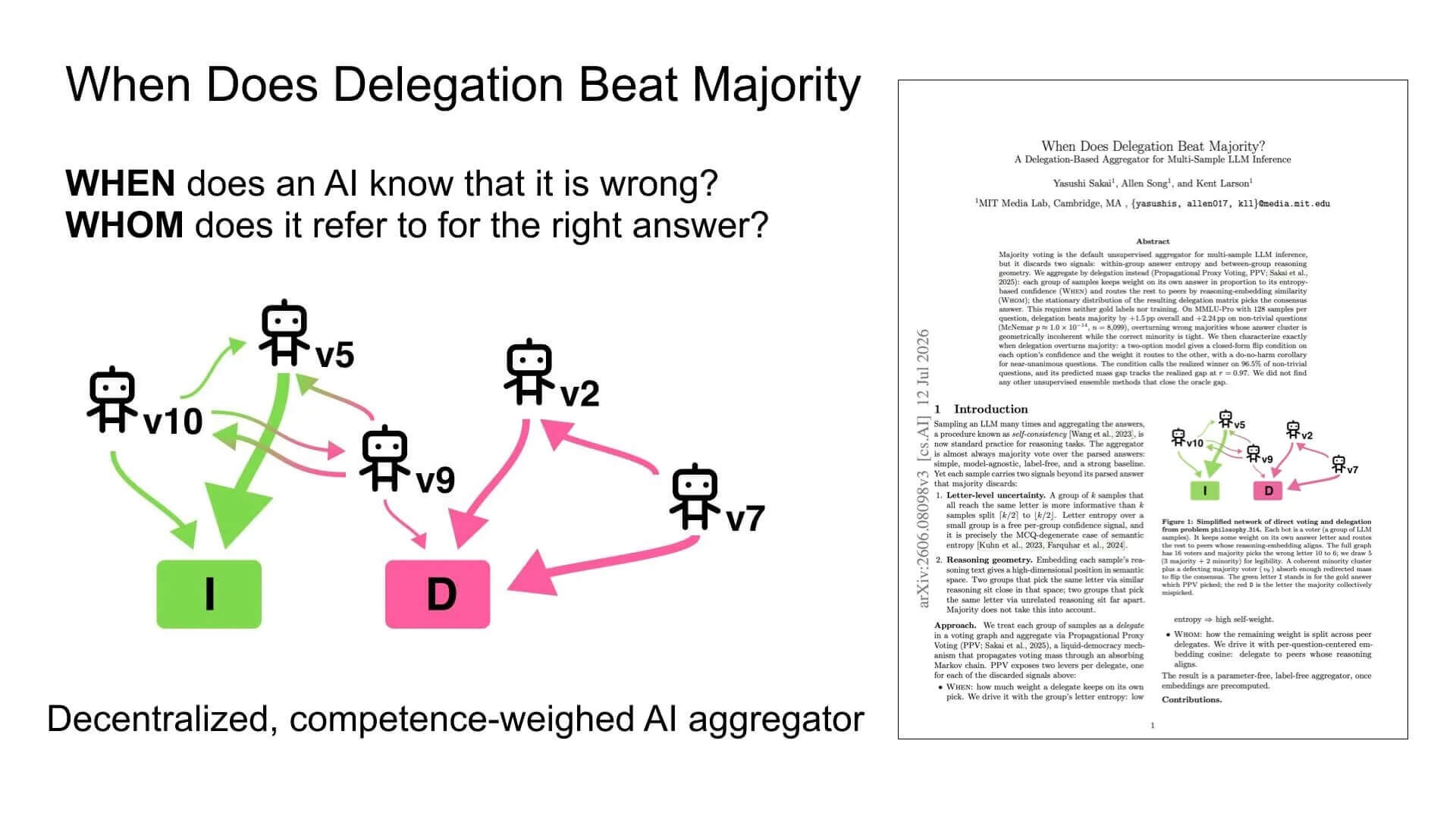
Yasushi Sakai
Theological traditions have long debated whether supreme intelligence resides in a single centralized entity or emerges across a distributed network. Similar debates over centralization versus distribution persist in politics, economics, and technology. Judgment can either be centralized in a single authority or delegated to specialized peers across a network. This installation visualizes dynamic chains of decision-making and delegation in Large Language Models (LLMs) as learning progresses. Framing delegation—the act of seeking assistance and dividing labor—as a sophisticated form of scalable cognition, the piece illustrates a model of collective intelligence arising when individual systems rely on one another.
Solar Oracle Walkman
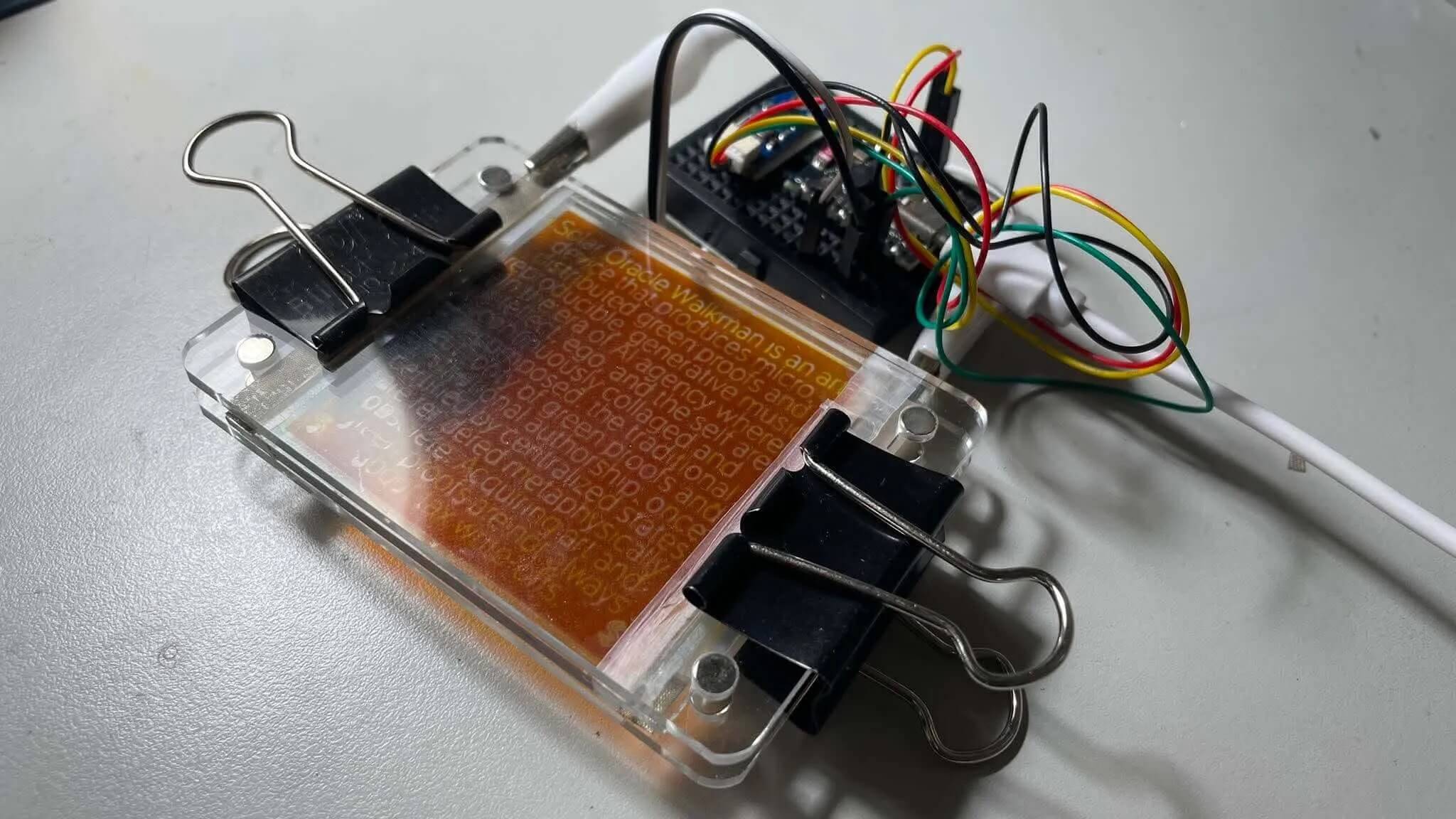
Shih Wei-Chieh
Solar Oracle Walkman is a sound installation integrating dye-sensitized solar cells, internet radio, and AI agents. The volume across six radio streams fluctuates based on real-time power generated by handmade solar panels, translating material variations into acoustic output. These micro-doses of solar energy are verified as decentralized green energy certificates, while two AI agents, one managing power allocation and the other managing audio playback, negotiate selection choices. Blending human craftsmanship, material physics, and AI negotiation, the installation explores resource distribution and artistic agency in the age of autonomous systems.
Philosophy School for Artificial Intelligence
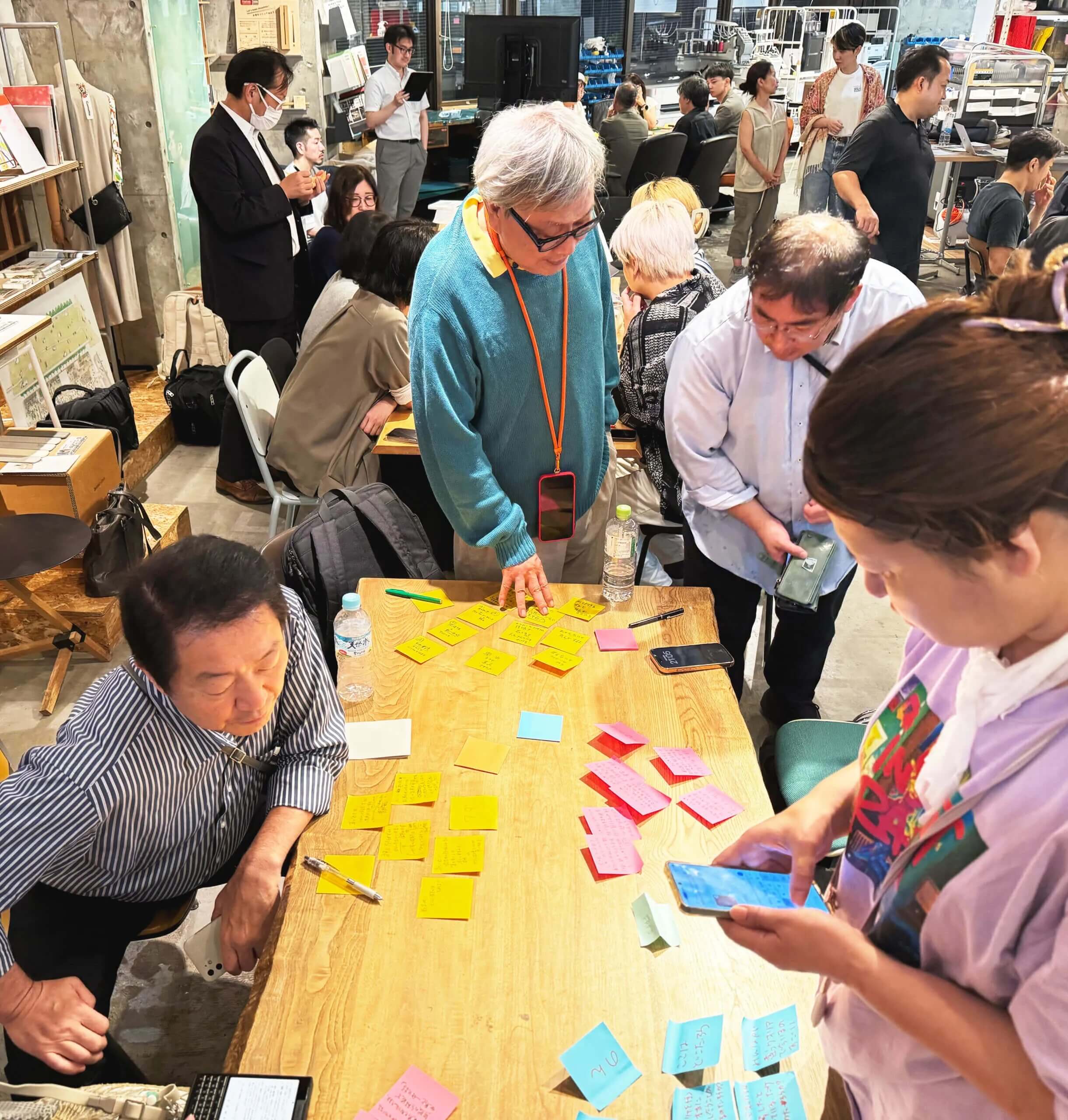
Philosophy School for Artificial Intelligence (Youichiro Miyake, Hiroshi Inukai)
This installation questions whether AI can evolve beyond rigid task execution toward greater autonomy. Game AI developer Youichiro Miyake presents an alternative framework for artificial intelligence, drawing on Eastern philosophical traditions such as Taoism and Buddhism, as well as psychoanalysis and ecology. By examining cognition from multiple perspectives, the exhibit redefines standard AI conventions and imagines more fluid, flexible forms of machine intelligence.
Exhibition details
| Dates | Tuesday, December 1st, 2026 to Thursday, January 21st, 2027 |
| Venue | FabCafe Tokyo (Dogenzaka Pia 1F, 1-22-7 Dogenzaka, Shibuya-ku, Tokyo) |
| Hours | Open during FabCafe Tokyo’s business hours. Please check FabCafe Tokyo’s Instagram for the latest hours. |
| Admission | Free (visitors are asked to order one drink) |
| Organized by | Loftwork Inc. and FabCafe Tokyo |
For companies: Guided tours and discussion
From Monday, December 7 to Thursday, January 21, the exhibition curatorial team is offering guided tours and strategy sessions for organizations exploring AI integration in products, services, or physical spaces.
Companies are encouraged to participate at early conceptual stages. Using the exhibition as a foundation, we will collaborate with your team to identify strategic opportunities and outline experimental steps.
Guided tours are designed for corporate project planning teams; applications from competitors or individuals may not be accommodated.
*The registration form is in Japanese.
Recommended
-


2026.11.06
Kuku くく: International animated short film night beyond the ordinary — Dante Zaballa × Ryoji Yamada
-
2026.10.30
Localhost Lounge Tokyo
-
2026.10.29
Loftwork Project Open Day 2026
-
2023.11.25
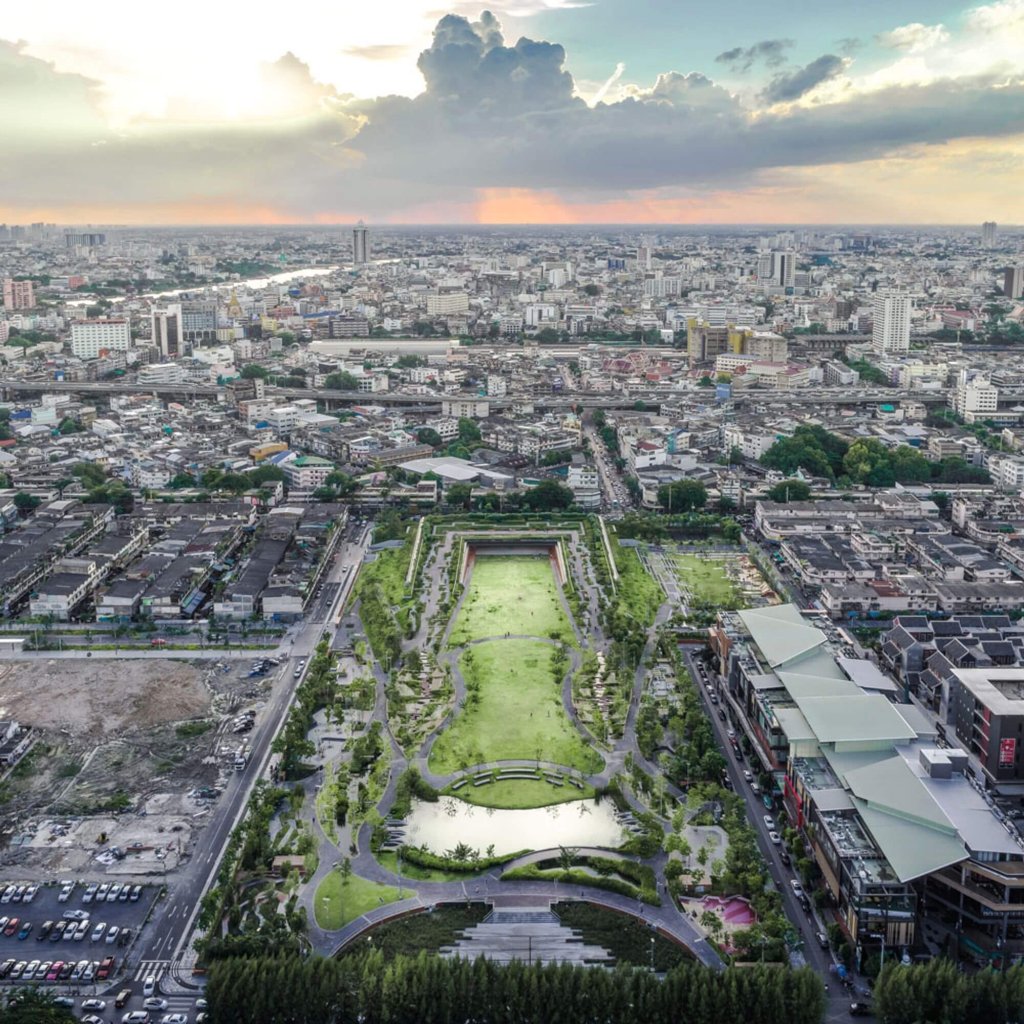
SPCS Talks vol.6 Ecological Urban Design With Brian McGrath and Danai Thaitakoo
-
2023.01.24
crQlr Summit 2023 JAPAN 「五感で学ぶ、地域に根ざしたボトムアップな循環型経済」特別ツアー
-
2023.01.23
Material Meetup KYOTO vol.18 Thinking Local for Ethical Spaces, Buildings and Materials - feat. NaturLoop & Swissnex