


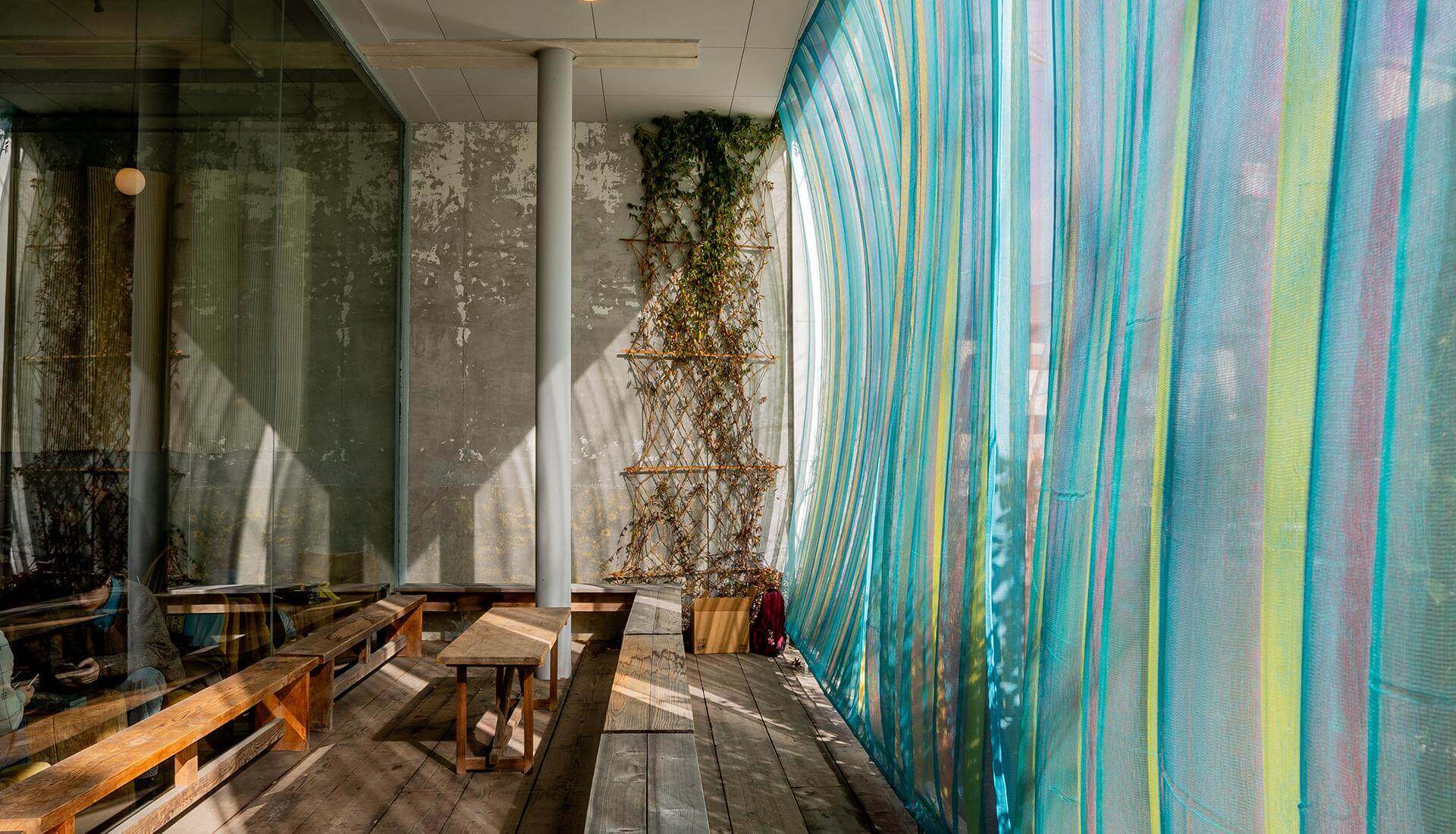
What happens when vacant spaces are unlocked?
The people and stories weaving the connections behind FUJI TEXTILE WEEK
The 4th edition of "FUJI TEXTILE WEEK" was held in Fujiyoshida City, Yamanashi Prefecture, from November 22 to December 14, 2025. This article explores the perspective of Tsuyoshi Yagi, representative of FabCafe Fuji and Secretariat Director of the FUJI TEXTILE WEEK Executive Committee. we will trace how the festival has triggered changes in the city, its people, and the usage of vacant spaces, outlining the subtle transformations born from long-term community engagement.
How Tsuyoshi Yagi and FUJI TEXTILE WEEK changed Fujiyoshida
Walking through the streets of Fujiyoshida, what catches the eye, more than the artworks themselves, is how many buildings that are usually shuttered are now naturally open to the public.
FUJI TEXTILE WEEK is a festival of textiles and art set in Fujiyoshida City, Yamanashi Prefecture, Japan. Built upon a thousand-year history as a textile production hub, the festival repurposes abandoned factories, warehouses, shops, and residences as exhibition venues. Through collaborations between international artists and local makers, it creates new forms of expression and relationships.
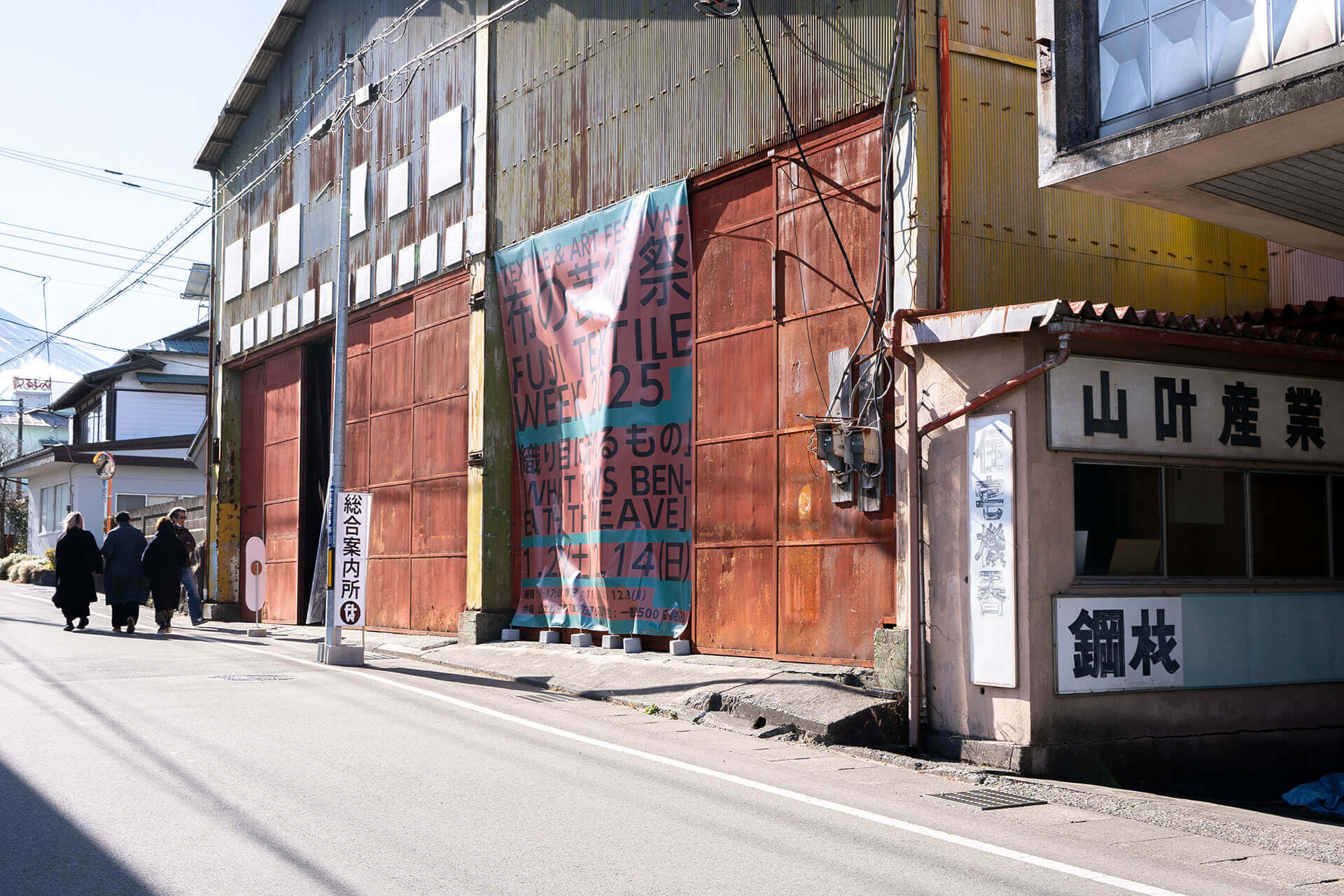
While the theme is textile, visiting the site reveals that it is about much more than viewing art. As buildings open up and people flow in, conversations begin. Through these accumulated interactions, the way the city is used is being rewritten step by step.
In this article, we trace the contours of the transformations occurring within the city through the perspective of a key individual who has supported and continuously woven this festival from the inside. We spoke with Tsuyoshi Yagi, who manages FabCafe Fuji and leads DOSO Inc., while also serving as the Secretariat Director for the FUJI TEXTILE WEEK Executive Committee.
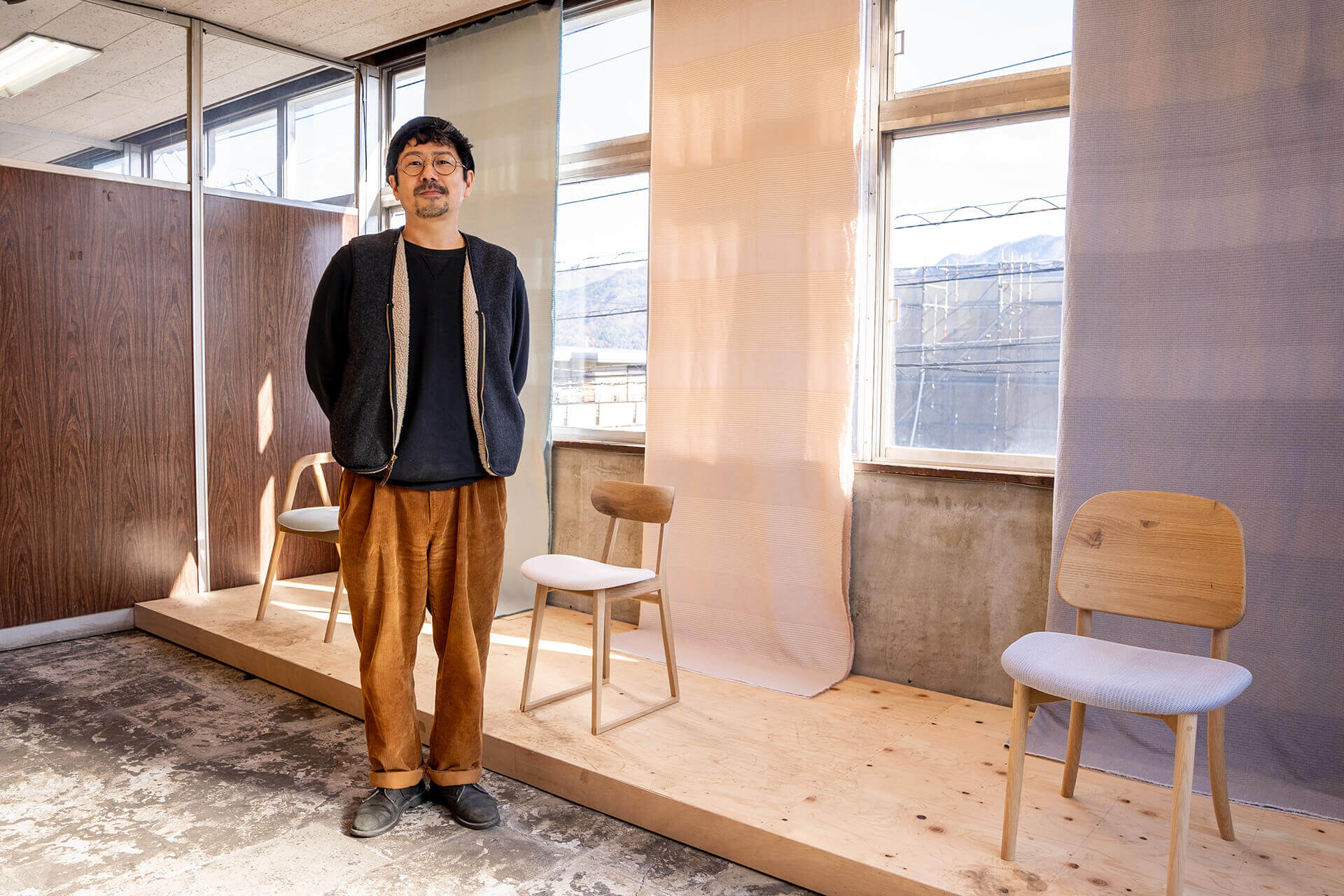
An outsider who settled to weave new threads of community
Yagi has been involved with Fujiyoshida for about 11 years. Originally moving here as staff for a foundation supporting civic activities, he initially worked as a designer. Originally as an outsider, he admits he didn’t start with a grand master plan to change the city.
Tsuyoshi Yagi: When I first encountered Fujiyoshida, I felt the city needed an Artist-in-Residence program. To discuss culture in the future, we needed a place where artists could stay long-term. I also felt that having outsiders join the community would be a great stimulus for me.
Then, after I started running a guesthouse, I realized there was nowhere to eat breakfast, so I felt a cafe open from the morning was necessary. As the number of visitors grew, functions like the residency, lodging, and the cafe naturally overlapped.
FabCafe Fuji was also renovated from a vacant building. Its development involved navigating ownership changes and coordinating with contractors. Even before construction began, Yagi maintained a continuous dialogue with the owner about using the space for a cafe, venue of FUJI TEXTILE WEEK, and eventually a lodging facility. Throughout this process, he used his background as a designer to conceptualize how the space should function.
Looking back, the residency, the accommodation, the cafe, and the art festival seem to form a single line. However, this line wasn’t drawn from the start; it was woven together as spaces were designed around needs and adjusted through face-to-face interactions.
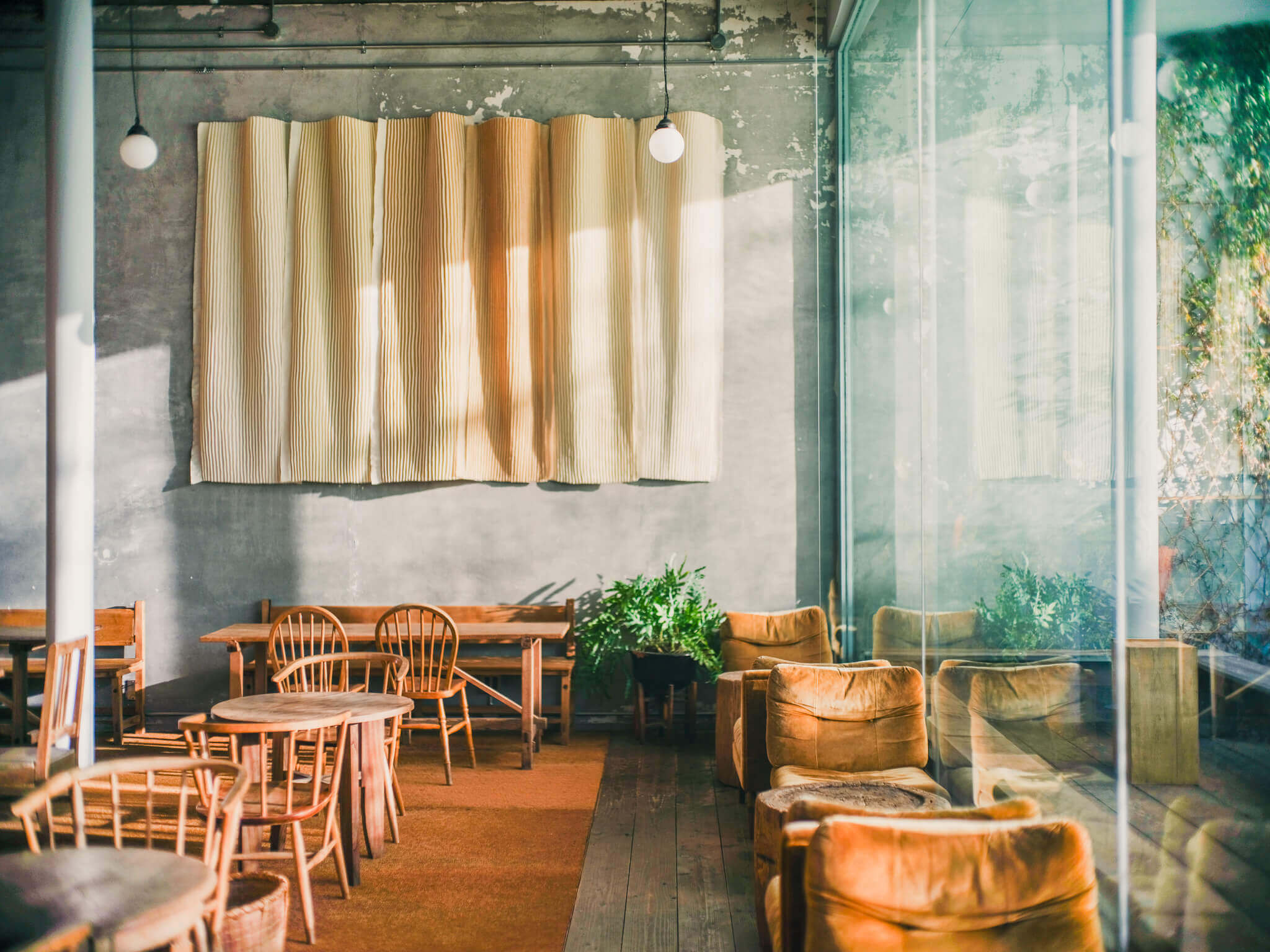
A collaborative work by Juliette Berthonneau and Muto Co., Ltd. Inspired by Shoji (traditional Japanese paper screens), the piece is woven from Washi (traditional Japanese paper) yarn. The structure stands independently while allowing light and wind to pass through, featuring rhythmic lines reminiscent of corrugated metal sheets. (Photo credit: FabCafe Fuji)

A collaborative work by Juliette Berthonneau and Muto Co., Ltd. Inspired by Shoji (traditional Japanese paper screens), the piece is woven from Washi (traditional Japanese paper) yarn. The structure stands independently while allowing light and wind to pass through, featuring rhythmic lines reminiscent of corrugated metal sheets. (Photo credit: FabCafe Fuji)
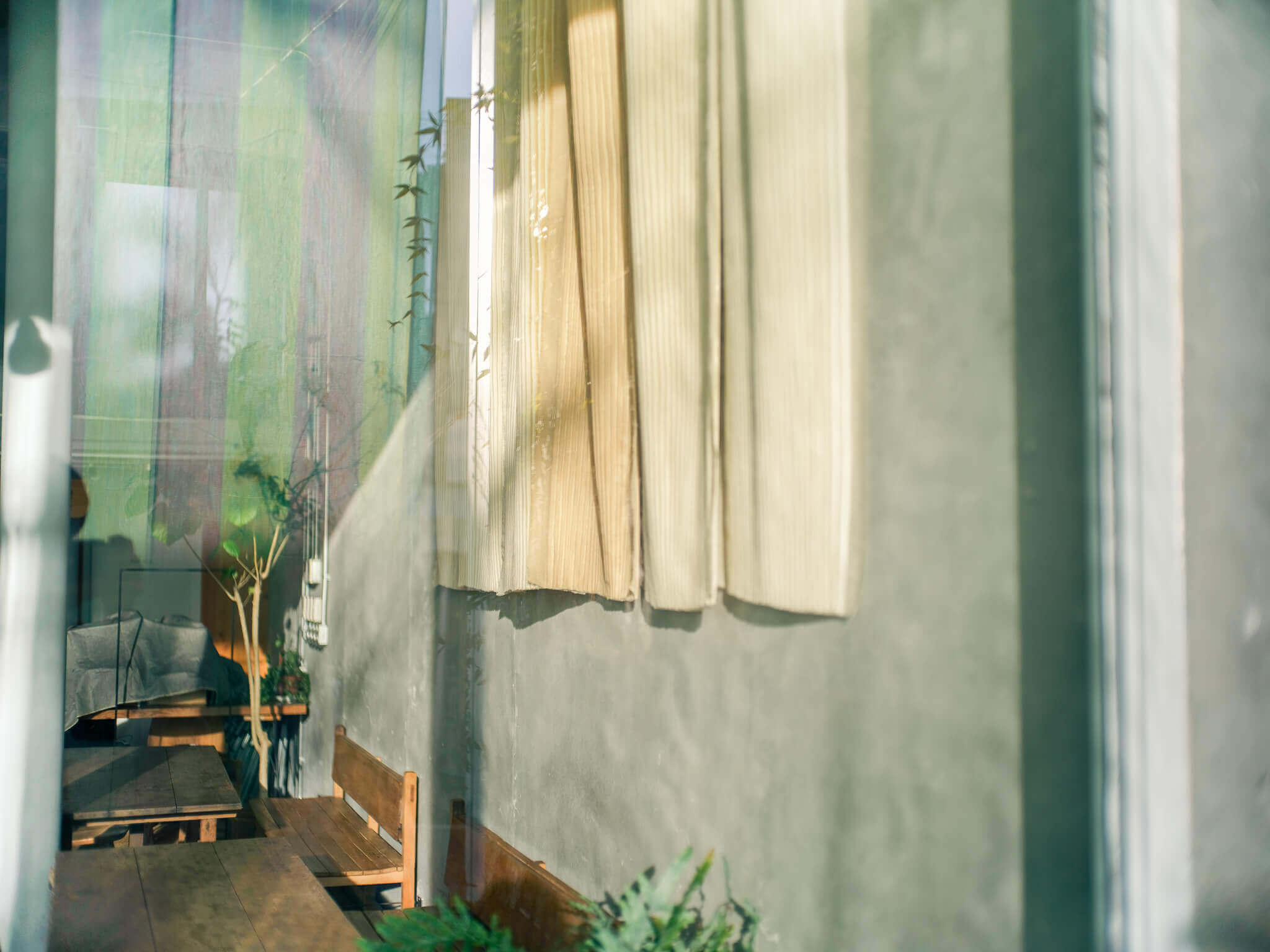
A collaborative work by Juliette Berthonneau and Muto Co., Ltd. Inspired by Shoji (traditional Japanese paper screens), the piece is woven from Washi (traditional Japanese paper) yarn. The structure stands independently while allowing light and wind to pass through, featuring rhythmic lines reminiscent of corrugated metal sheets. (Photo credit: FabCafe Fuji)
The launch of FUJI TEXTILE WEEK was driven by the drastic changes brought by the pandemic. When exhibitions and business meetings in Tokyo came to a halt, the production region was forced to rethink how to connect with the outside world.
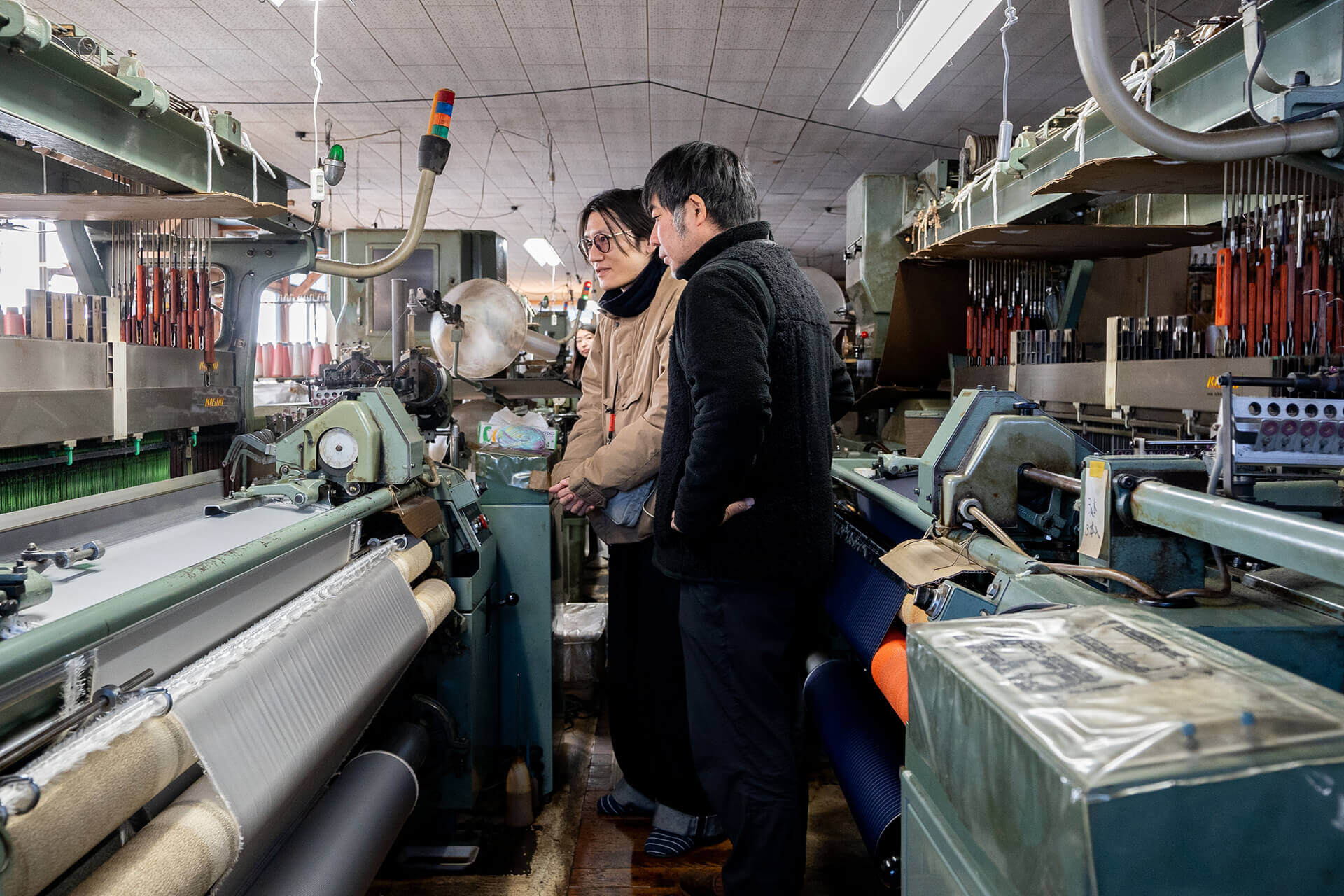
Yagi: When you lead people on factory tours, those who see the site firsthand gain a much deeper understanding. Knowing who makes the product, in what environment, and how, changes your perspective on the object itself. This realization made us see that instead of taking works elsewhere to show them, inviting people here would convey much more value.
The festival, which treats the production hub itself as the venue, serves as both a communication tool and a device for building relationships. Temporarily opening vacant buildings awakened memories of the industry and allowed the city’s silhouette to re-emerge.
What changes have occurred in the city?
How did the art festival actually change the city?
Yagi: Simply cleaning a space and using it for an exhibition completely changes the impression of a building. When owners see a space become clean, they start considering renting it out; similarly, people looking for space appear. Some vacant houses have even been converted into permanent shops. Places that once had their shutters down are gradually returning to life.
While an art festival is not a magic bullet, it may have created the margin necessary for change to occur in the city. Based on my conversations while walking through the streets, this was a sentiment shared by many.
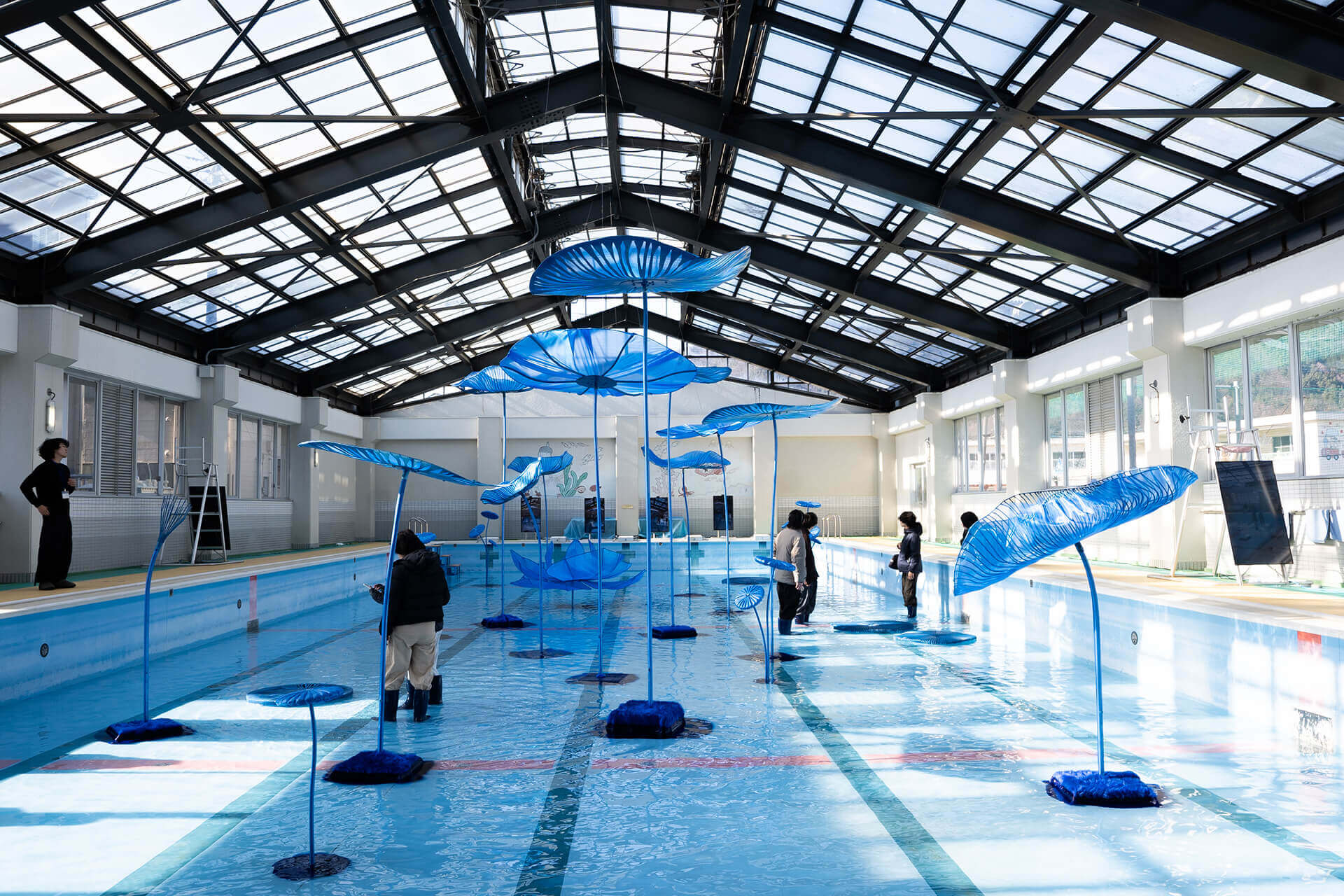
Mao Shibata, Blue Lotus (2025) | The swimming pool at Shimoyoshida First Elementary School, previously abandoned due to aging and the pandemic, has been revitalized as an exhibition space through the cleaning efforts of the organizers and local residents.
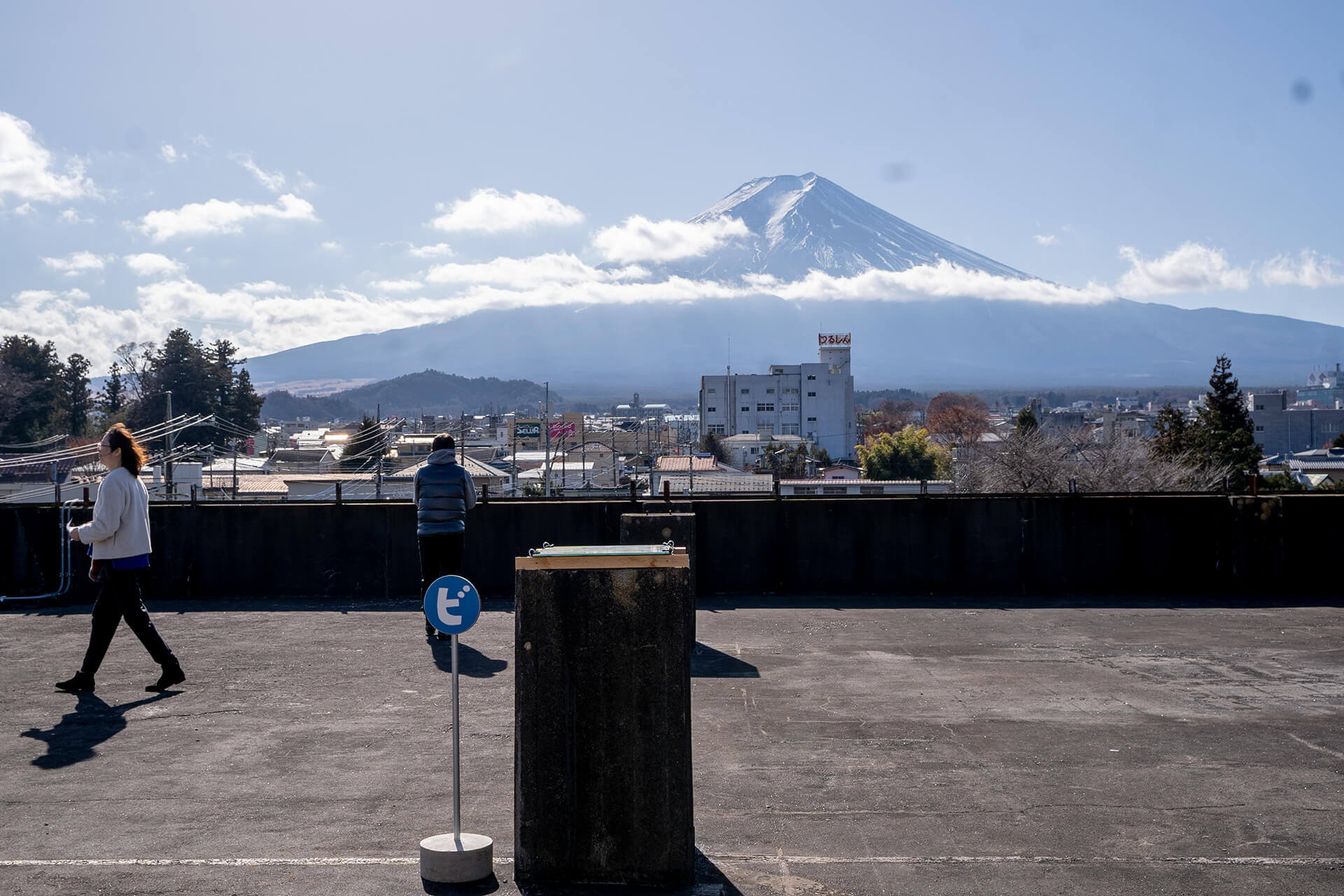
The rooftop of the Former Yamakano Sangyo (Fujiyoshida, Yamanashi), once a trading company for weaving machines, opens exclusively during the arts festival, serving as a prime photography spot with breathtaking views.
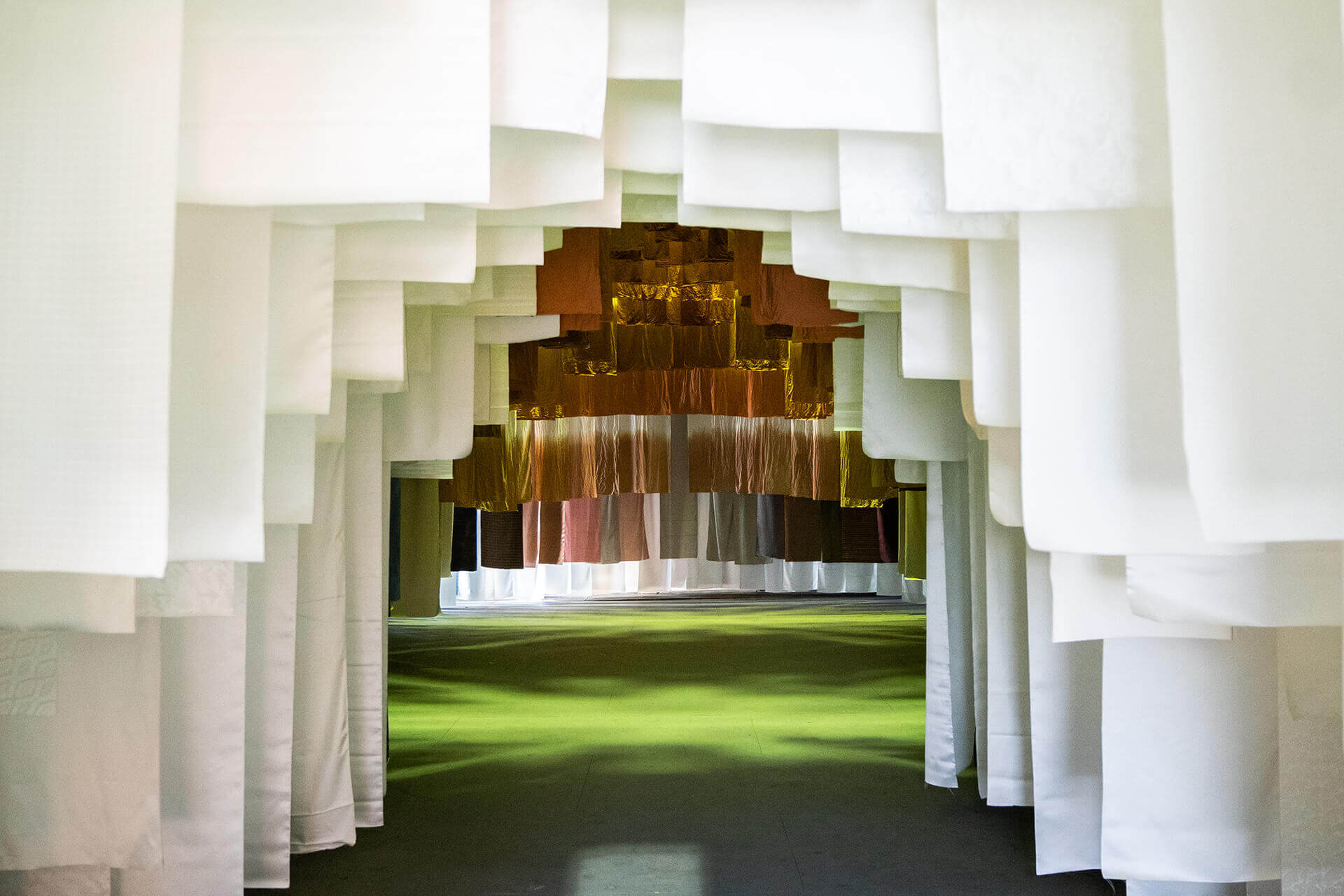
Atsushi Aizawa, How The Wilderness Thinks (2025) | Using approximately 800 pieces of deadstock silk fabric collected in Fujiyoshida, the artist created a space reminiscent of Tainai Meguri (womb traversal), a spiritual practice in Mount Fuji worship. Production support: Maruko Sangyo Co., Ltd., Toho Silk.
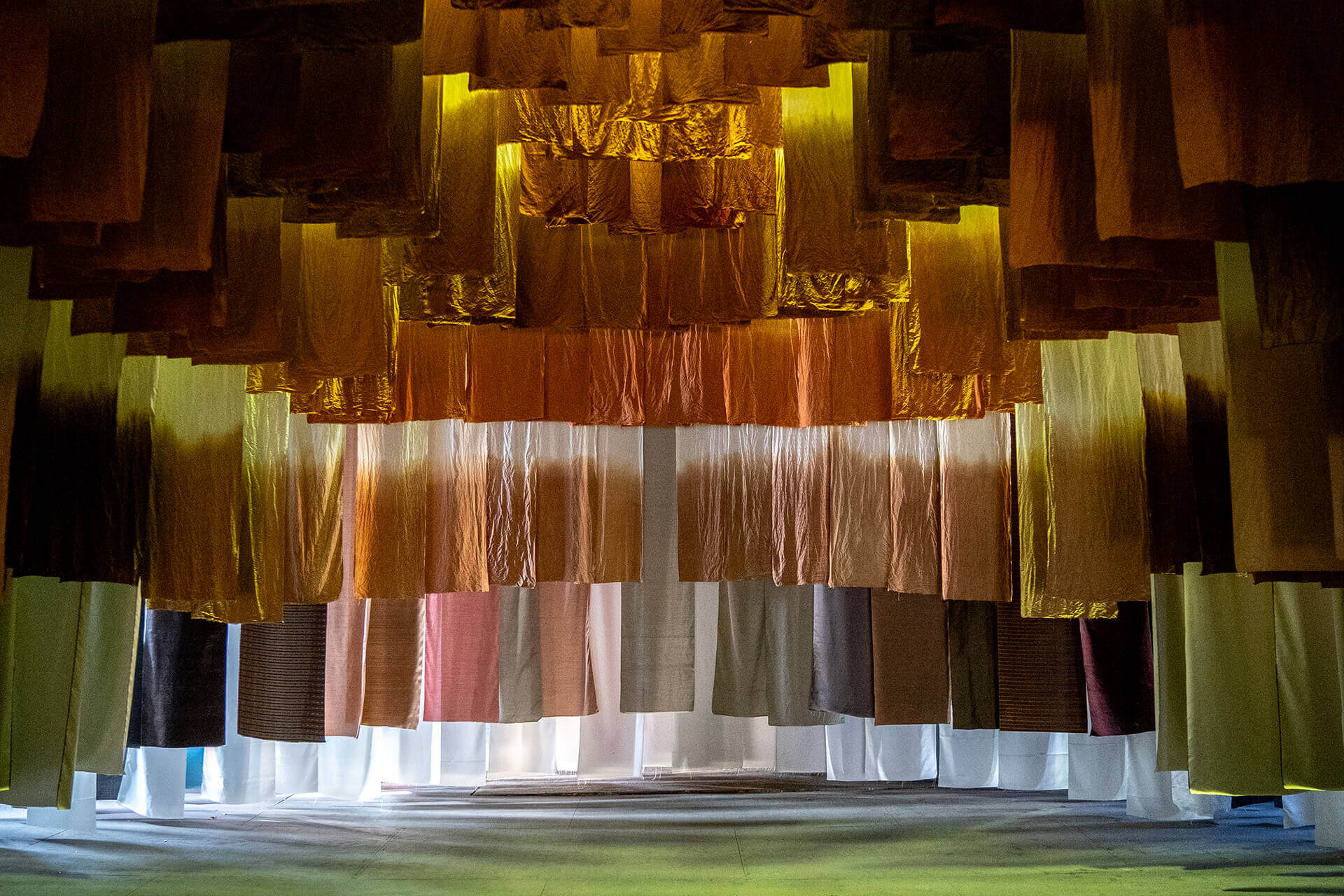
Atsushi Aizawa, How The Wilderness Thinks (2025) | Using approximately 800 pieces of deadstock silk fabric collected in Fujiyoshida, the artist created a space reminiscent of Tainai Meguri (womb traversal), a spiritual practice in Mount Fuji worship. Production support: Maruko Sangyo Co., Ltd., Toho Silk.
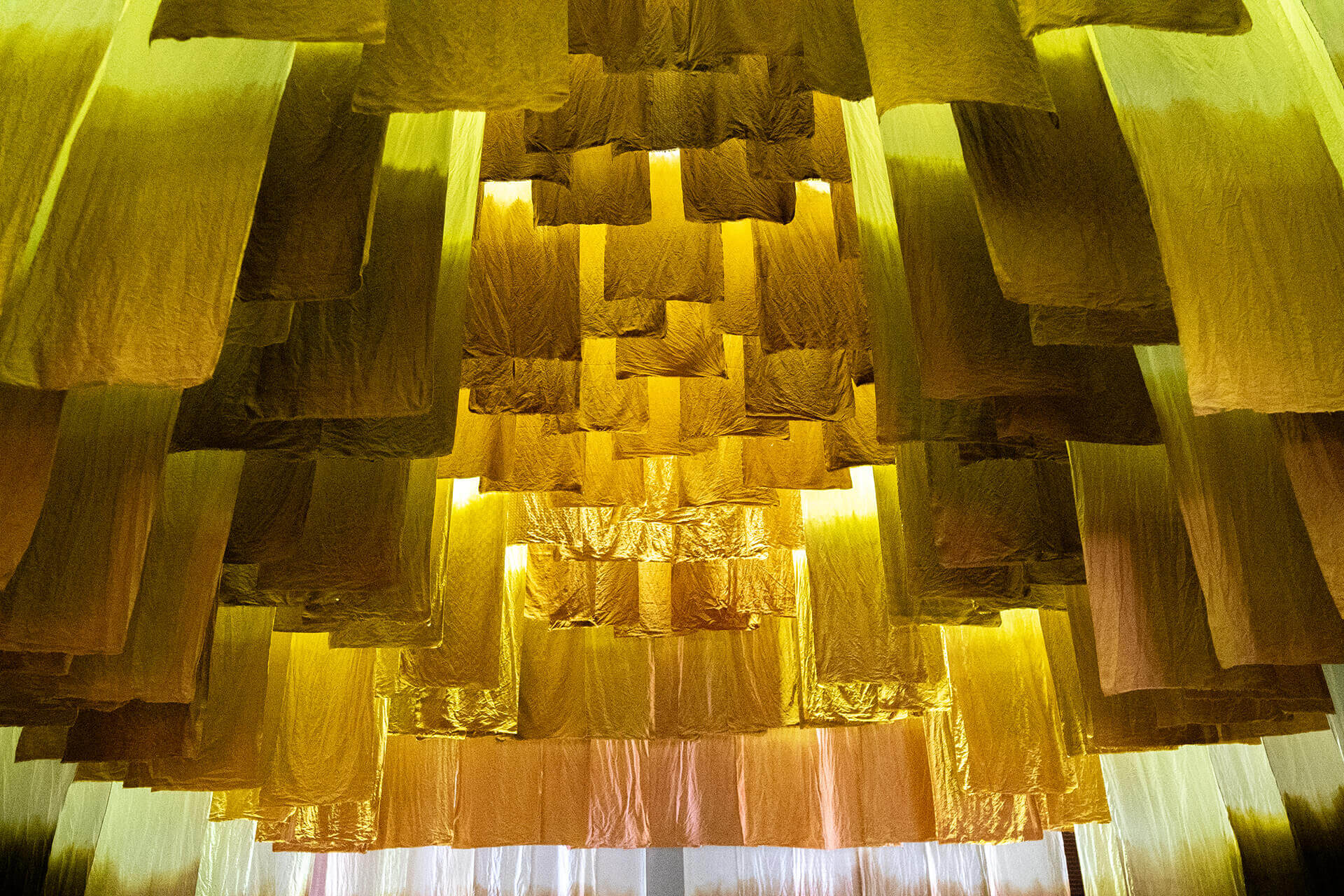
Atsushi Aizawa, How The Wilderness Thinks (2025) | Using approximately 800 pieces of deadstock silk fabric collected in Fujiyoshida, the artist created a space reminiscent of Tainai Meguri (womb traversal), a spiritual practice in Mount Fuji worship. Production support: Maruko Sangyo Co., Ltd., Toho Silk.
One of the most notable changes brought about by the festival is the relationship between local businesses and creators. Rather than short-term exhibitions, long-term collaboration has led to the evolution of technical skills themselves. As the resulting expressions received acclaim, it instilled confidence in the manufacturers and broadened their horizons. One local weaver I interviewed noted: “It’s not just about my own success. I want myself, others, and the entire production region to move forward together.” This mindset seems to have been nurtured through the collaborative process of the art festival.
What the scenery of the art festival revealed
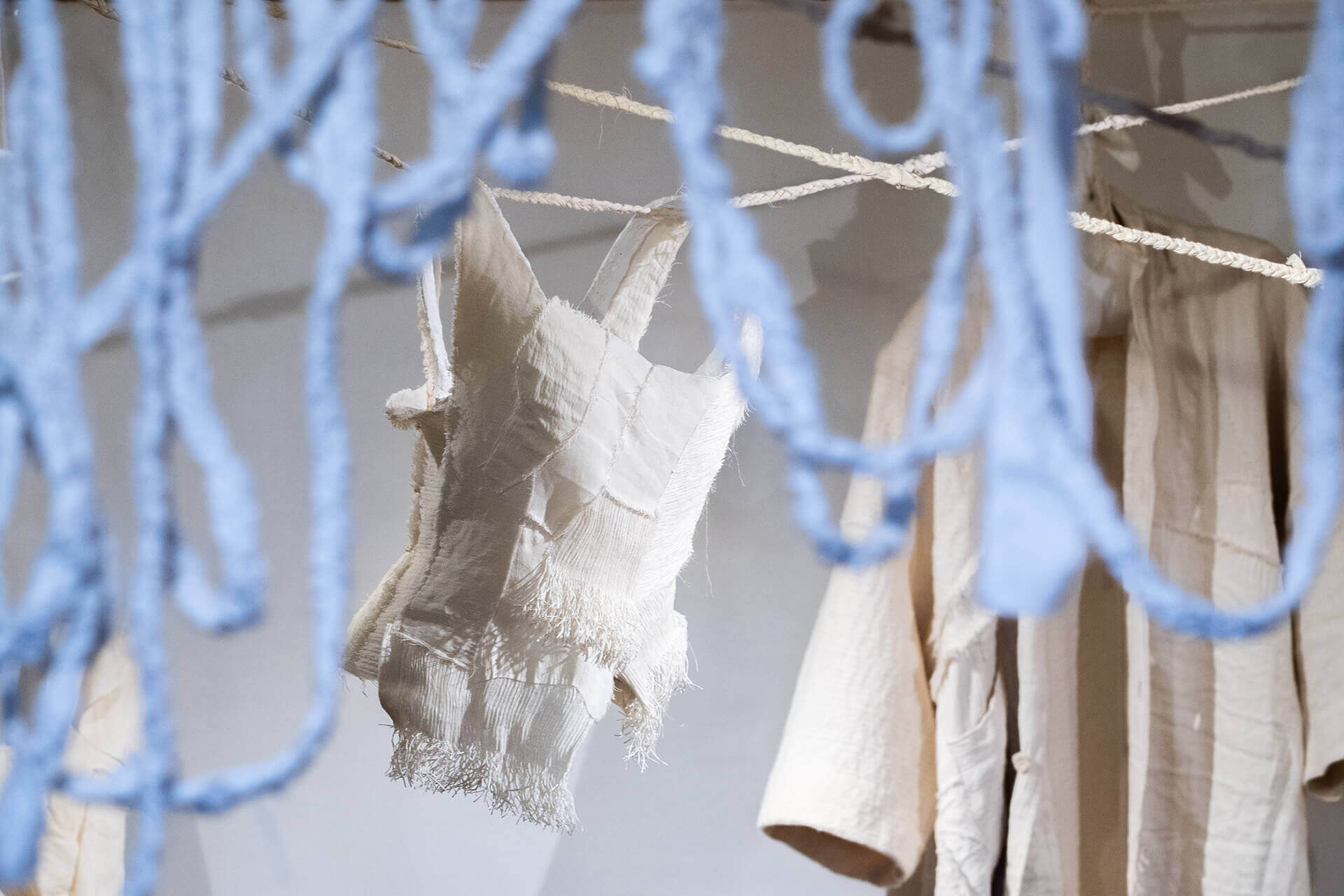
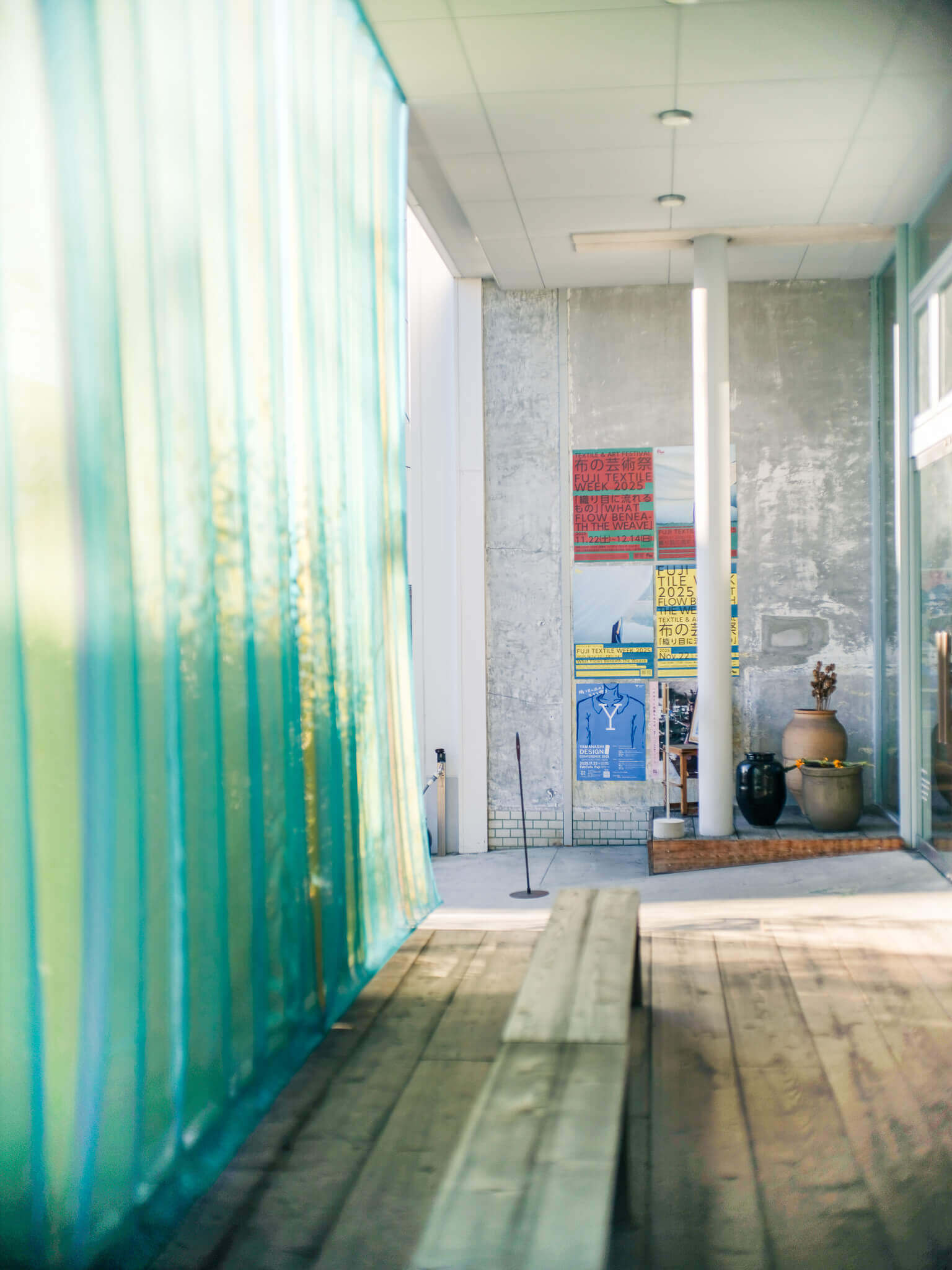
A Textile Landscape Emerges Outside FabCafe Fuji Outside the FabCafe Fuji space, a textile installation by artist Akane Moriyama and local weaver Funakubo Orimoto came to life. Fabric with a gradient that seemed to capture the very colors of the sky swayed gently in the outdoor light.
Funakubo’s words embodied the spirit of constantly evolving the expression of textiles through collaboration.
You won’t know if it’s interesting until you try it.
The production region cannot survive without evolving.
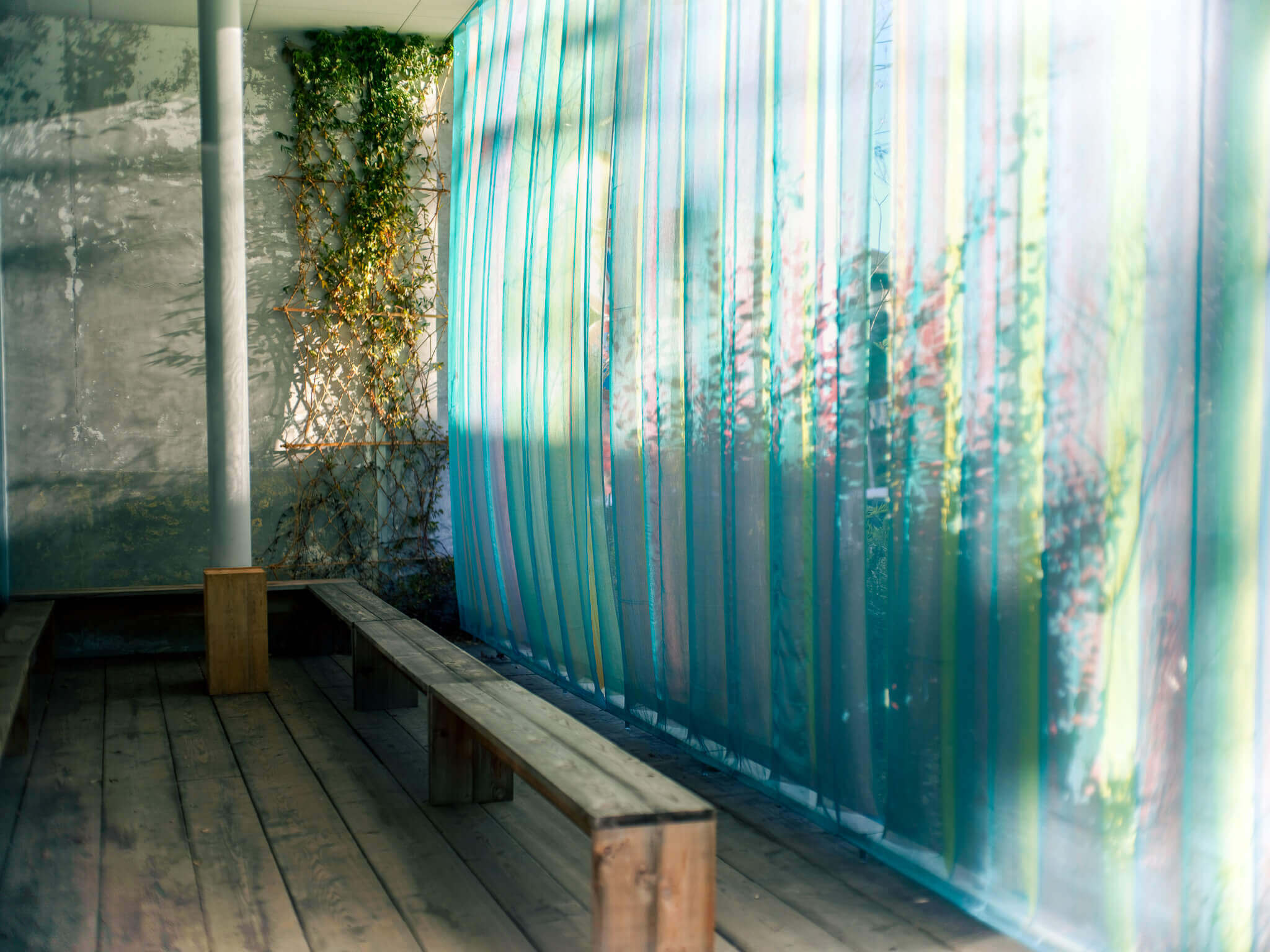
Photo credit: FabCafe Fuji
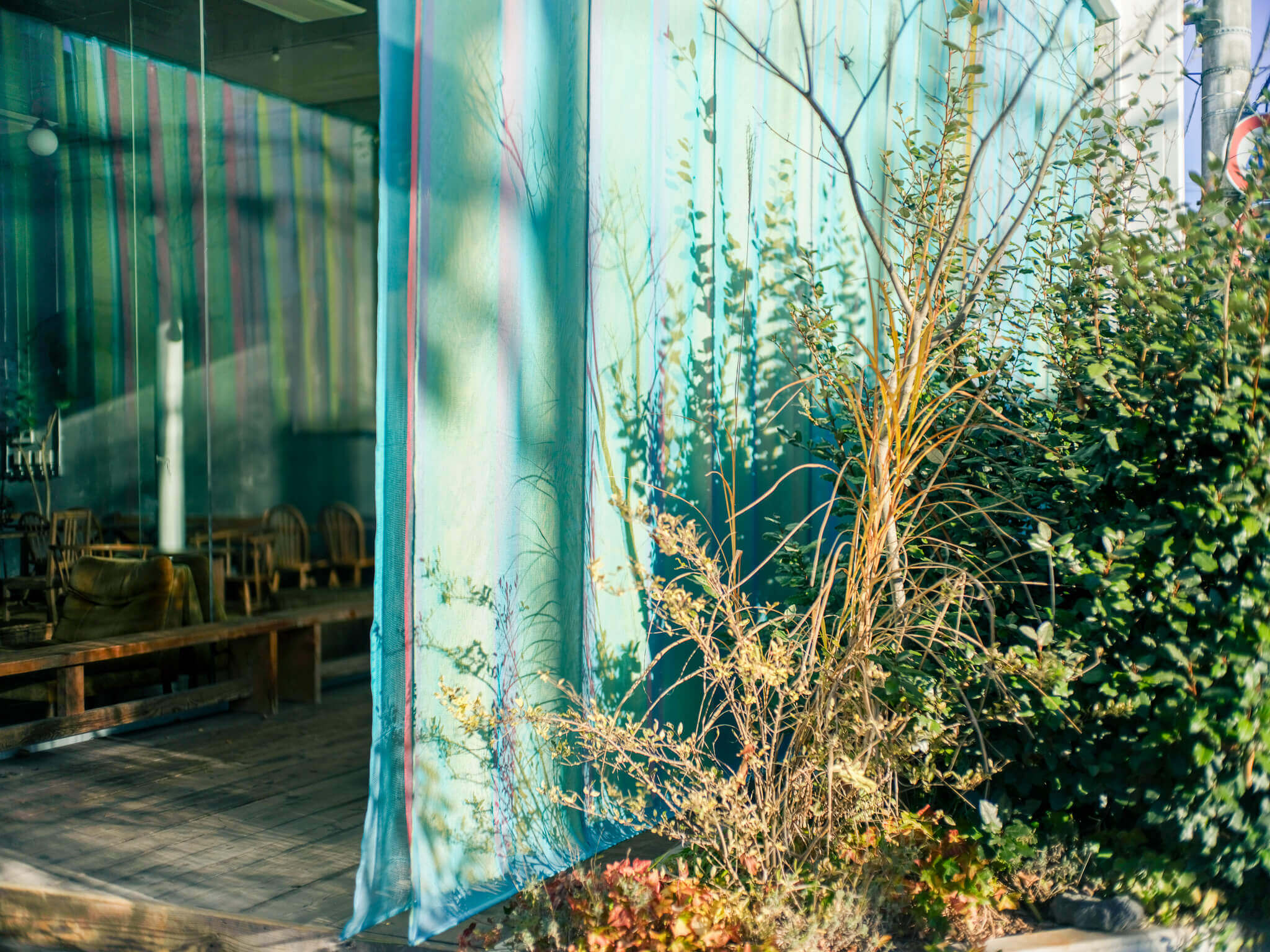
Photo credit: FabCafe Fuji
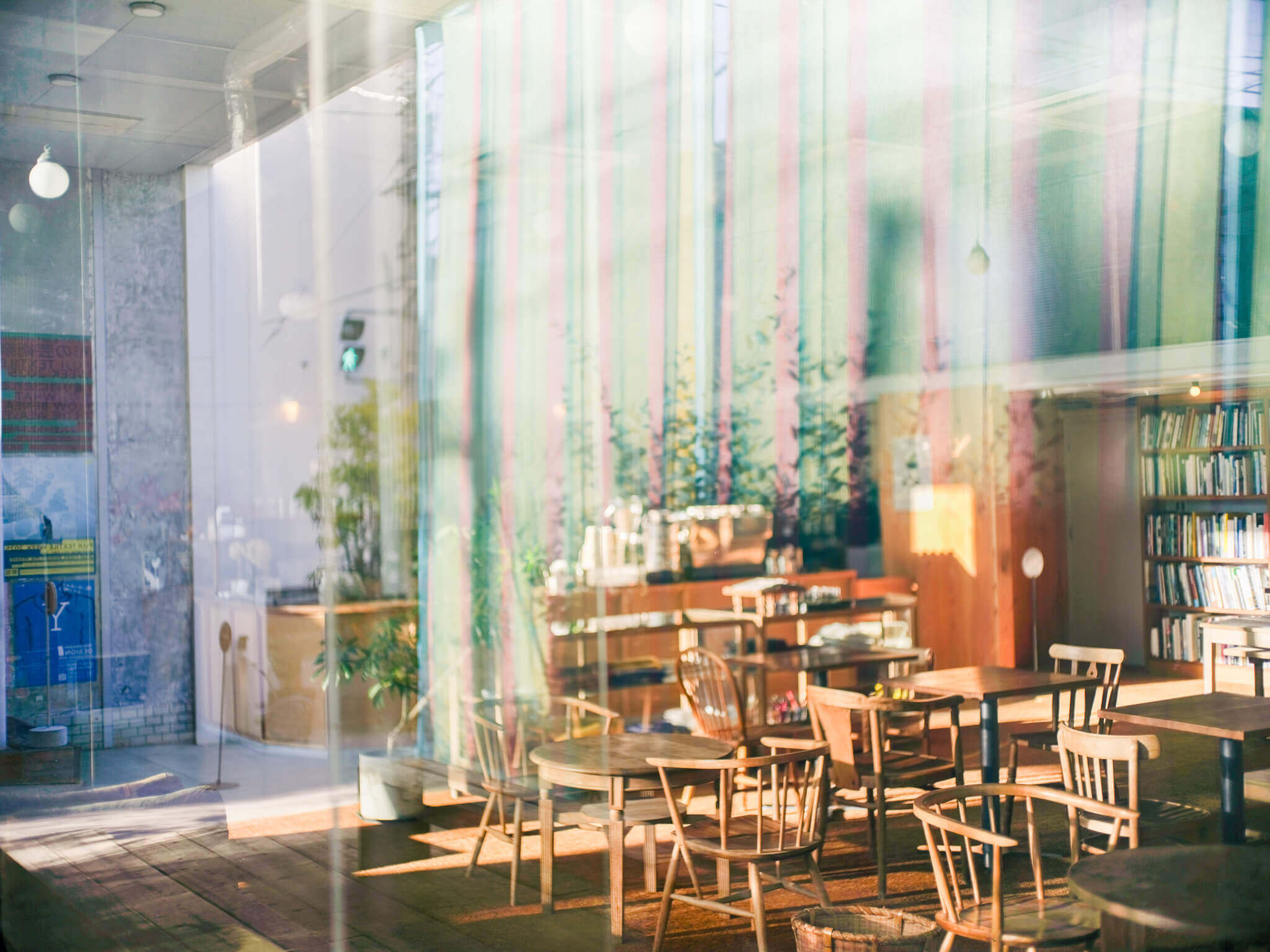
Photo credit: FabCafe Fuji
Seeing the other side of the festival through vacant houses and people
The festival venues utilize former factories and vacant houses once used for textile-related businesses. These spaces, which had fulfilled their roles and stood in silence for a long time, are being reopened as places to welcome people once again through the festival.
The presence of local residents volunteering as gallery guides was particularly striking. As the festival grows with each edition, shuttered doors are opening, and old houses are transforming into shops. They say the daily scenery has quietly begun to change.
I’ve witnessed places that were once shuttered slowly opening up. Through the indirect influence of Fuji Textile Week, the everyday landscape is changing.
Other volunteers shared personal stories: one at the repurposed elementary school pool venue mentioned their grandchild attends that very school; another resident from a neighboring town joined for the first time because the festival looked so intriguing.
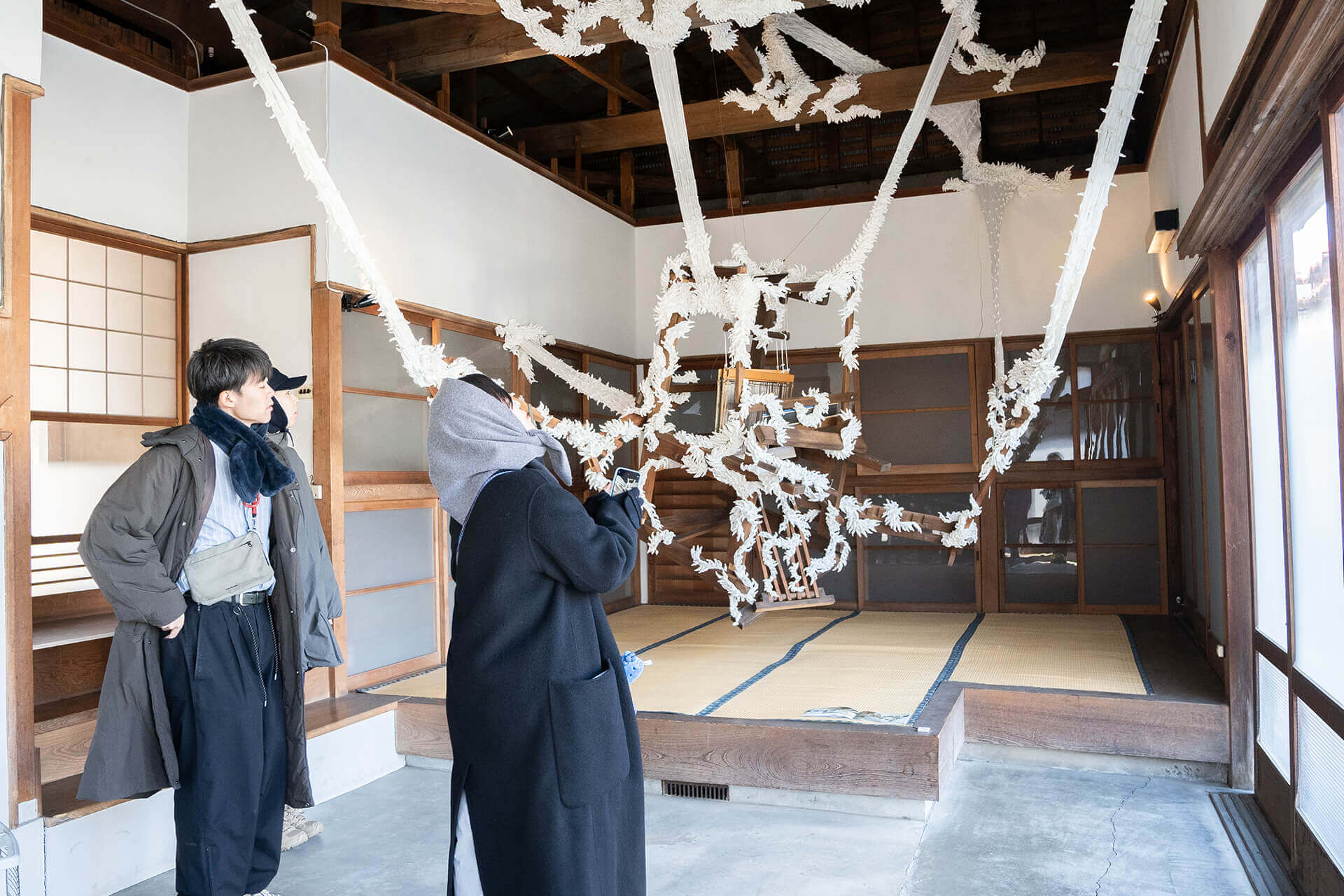
Chisato Matsumoto, Embracing Loom (2025) | Installed in the Tatami room of the former Itoya (Old Silk Shop), where yarn and looms once gathered. The work blends hand-shibori dyed fabrics with an authentic vintage loom.
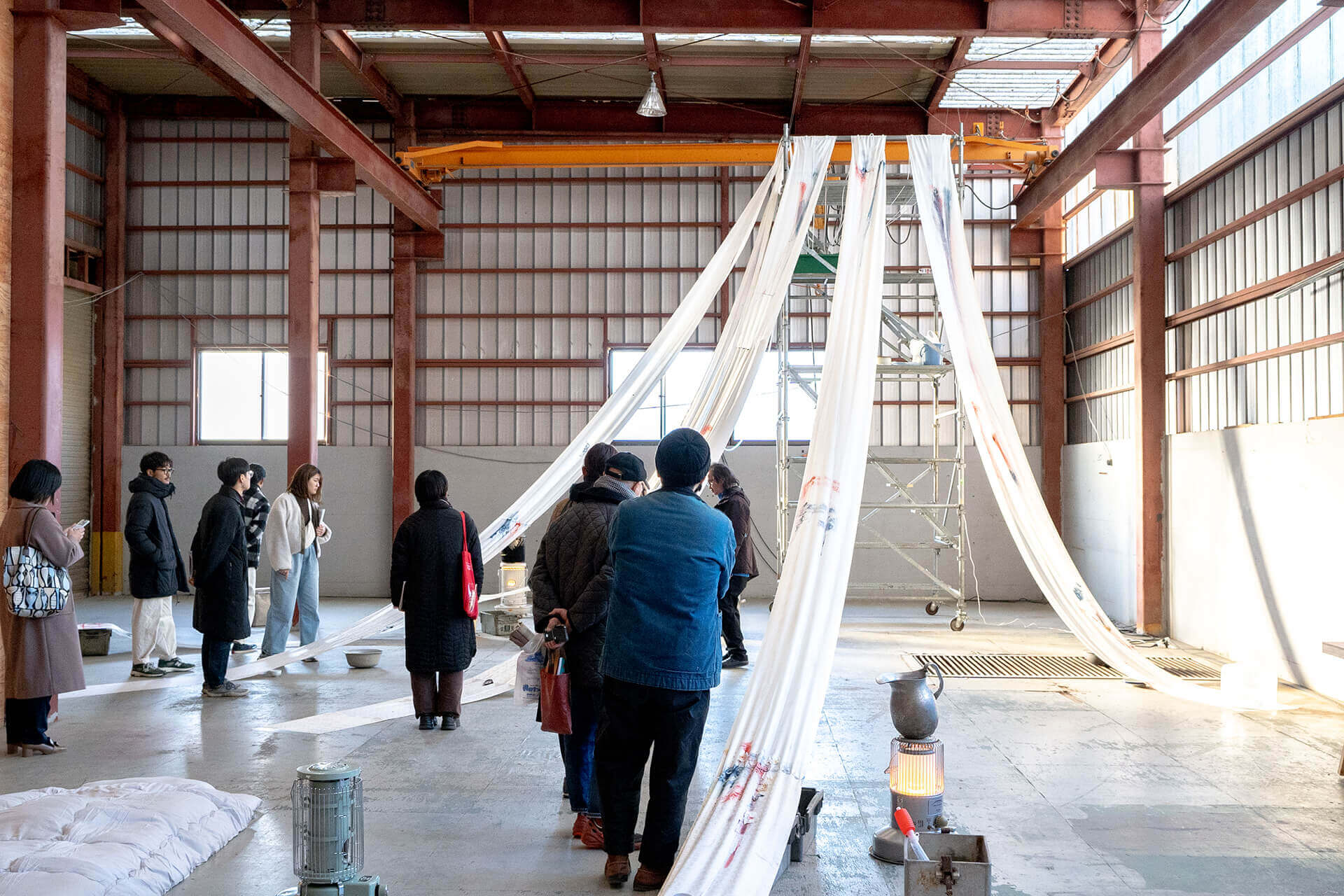
Hana Saito, Flowing along and straying from the weave (2025). This work involves planting myxomycete (slime mold) plasmodia onto patterned silk fabric to capture the trails of their movement and excretion. The mold's growth follows or diverges from the weave to visualize its interaction with the textile as layers of time.
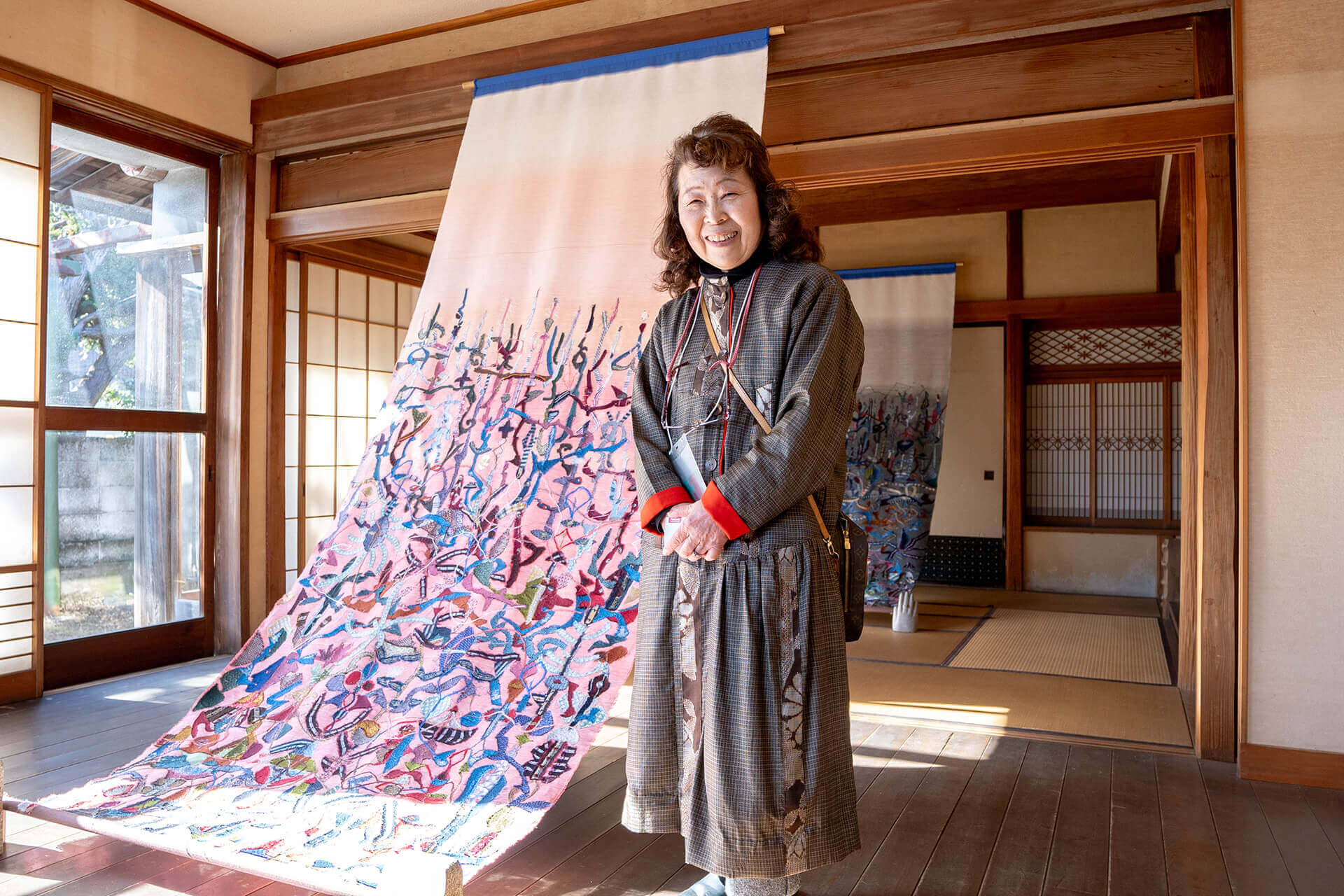
A volunteer shared that this building previously served as a practice space for traditional tea ceremonies and dance.
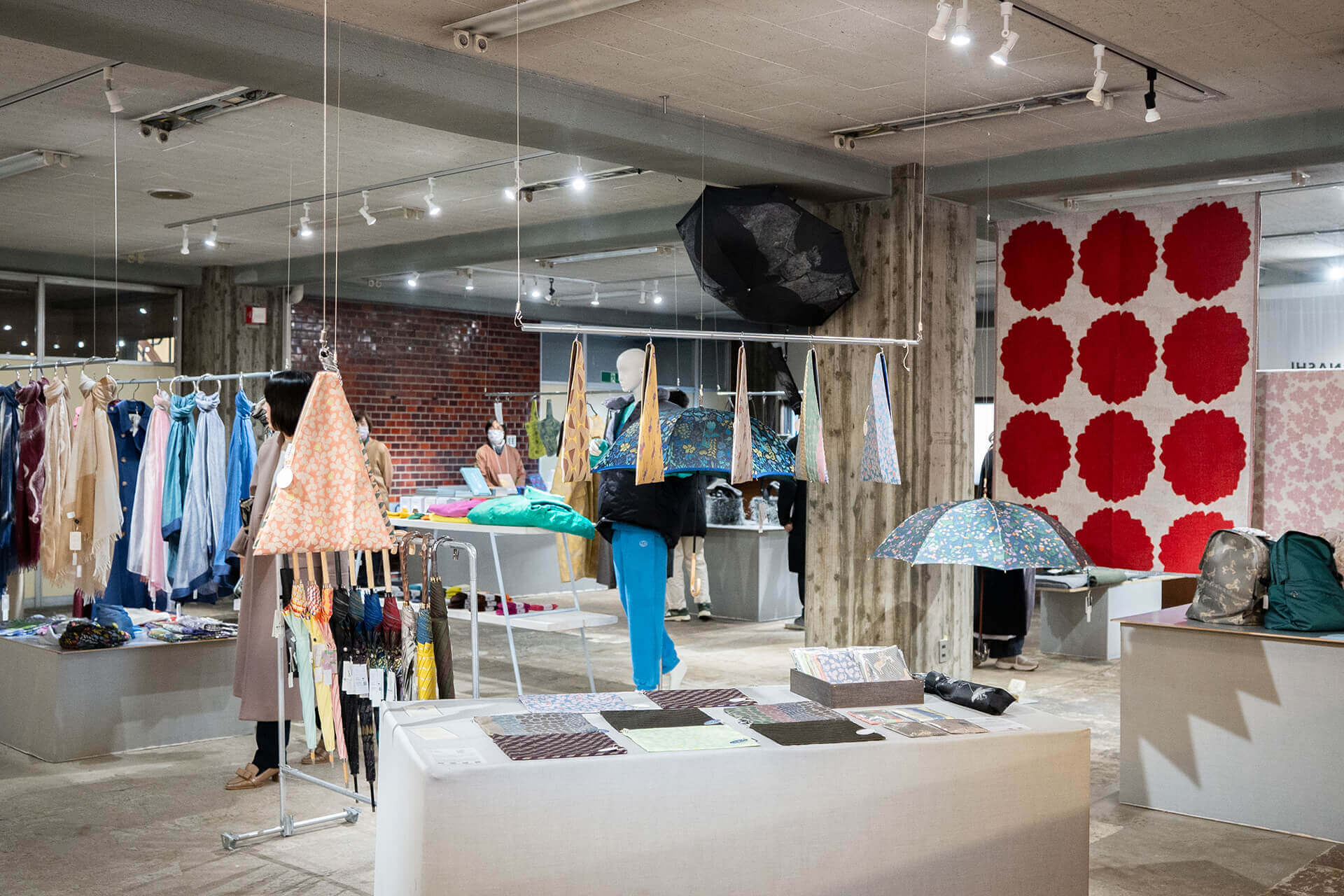
Yamanashi-based textile factories and creators collaborate to showcase the current state of textiles. This space gathers products born from natural resources and techniques developed throughout a long history.
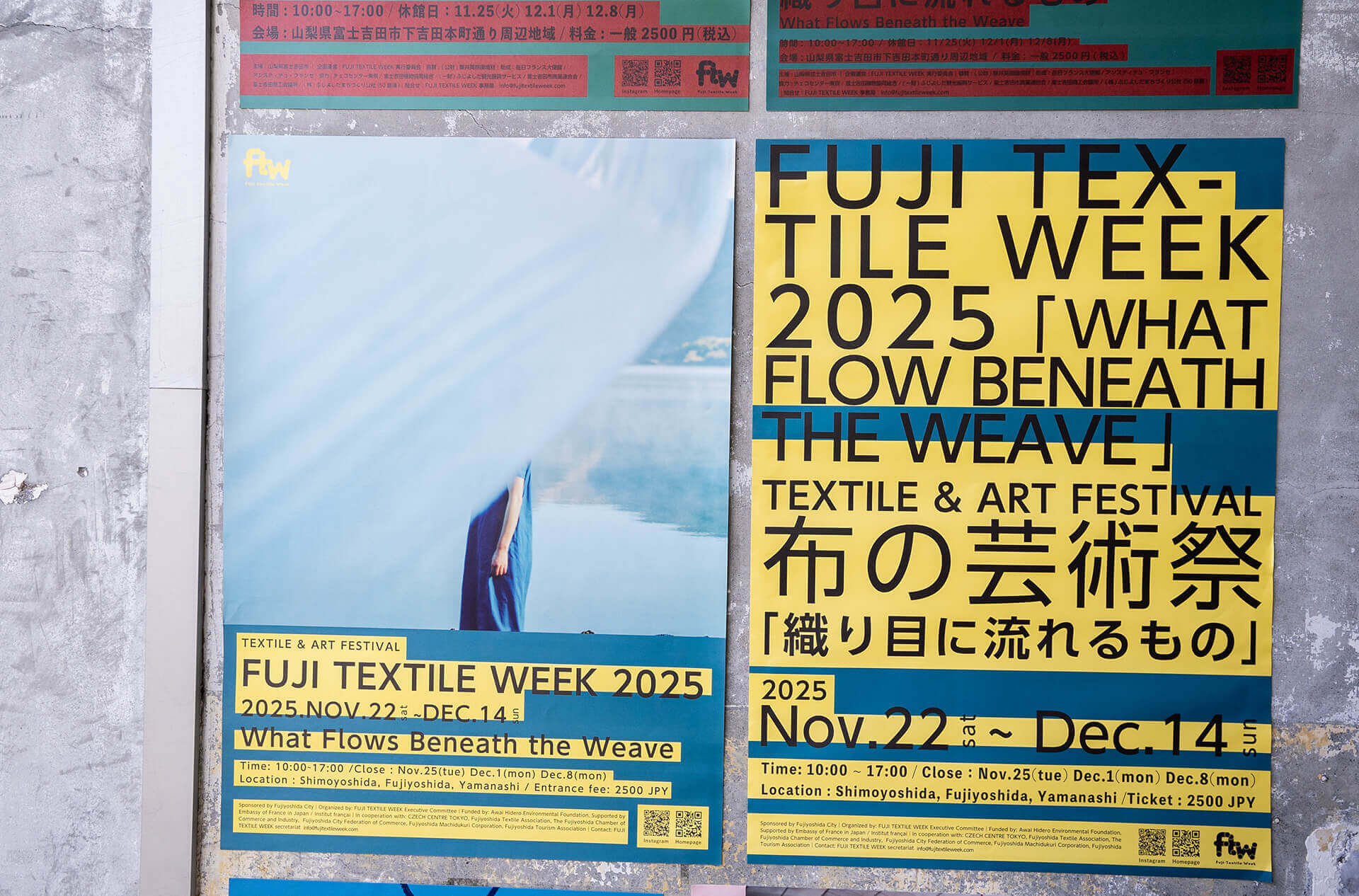
The entire city transforms into a stage for the arts festival. Posters line the streets while large tarpaulin banners mark the entrance to each venue.
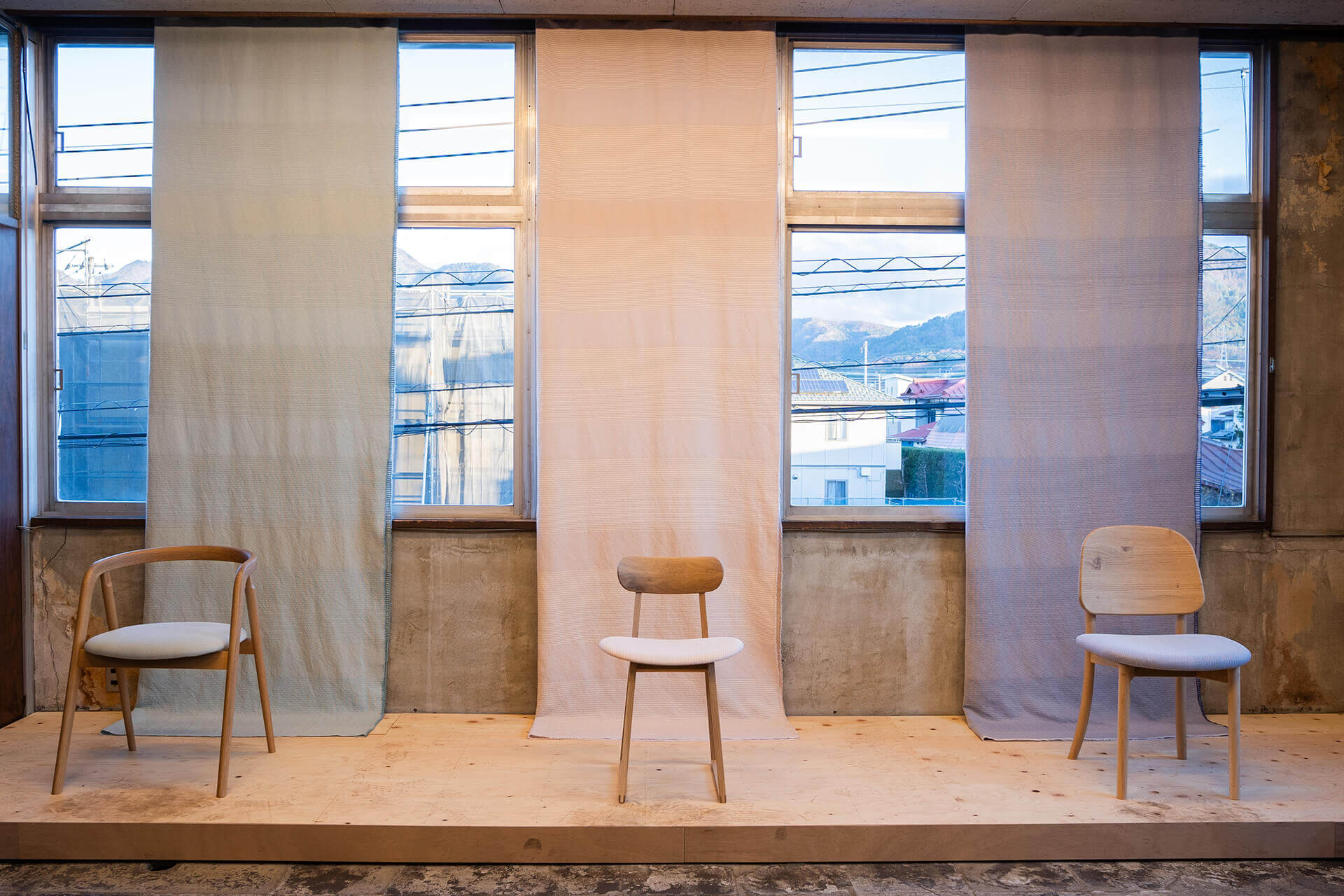
A chair from the long-established furniture manufacturer Hida Sangyo in Takayama. The upholstery features an experimental fabric created through a collaboration between the Dutch design studio Raw Color and TENJIN-factory in Fujiyoshida.
The next FUJI TEXTILE WEEK is scheduled for 2027. While the event itself is periodic, the buildings opened and the relationships nurtured during this edition will remain in the city.
FUJI TEXTILE WEEK has created a margi” where change can occur. What is happening in Fujiyoshida challenges us all with a question: how can we re-weave the relationships between vacant spaces, industry, and people?
Written and photographed by: Mai Miyazaki
Translated by: Pinhua Chen
FUJI TEXTILE WEEK 2025
FUJI TEXTILE WEEK launched in 2021 as Japan’s only textile-based arts festival, blending traditional industry with artistic expression. Rooted in the thousand-year history of Fujiyoshida, Yamanashi, the festival aims to revitalize the local community and its traditional crafts. By placing textiles in the spotlight, the event explores and discovers new possibilities for the medium through the lens of art and design.
The festival also serves as a creative hub connecting the local manufacturing base with diverse global communities. By repurposing abandoned textile factories, warehouses, and storefronts into exhibition venues, the project works to preserve industrial memories and shape the city’s cultural identity.
Dates: Saturday, November 22 – Sunday, December 14, 2025
Upcomming Exhibition in Taipei
KYODO PROJECT: Textile & Collaboration Exhibition in Taipei
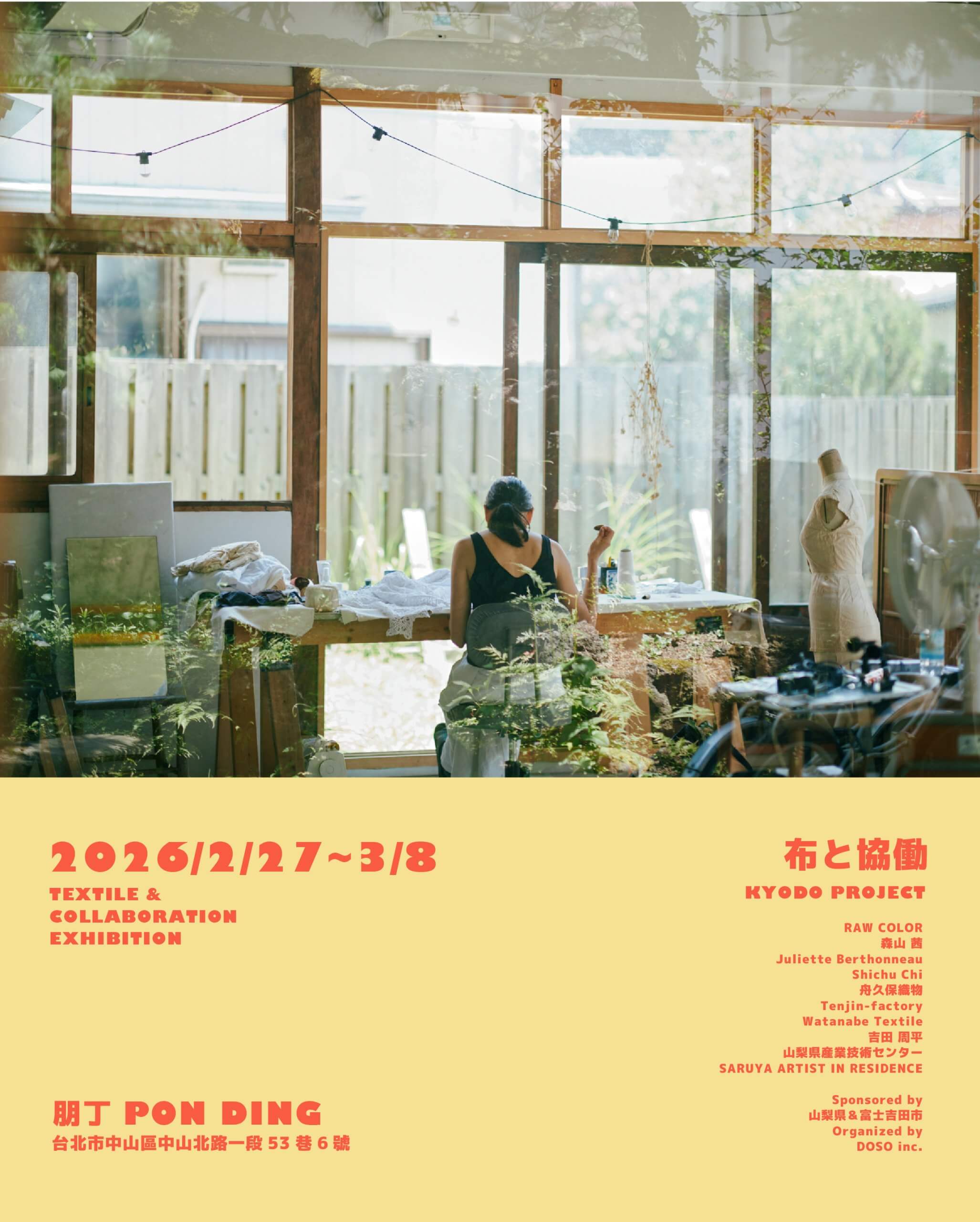
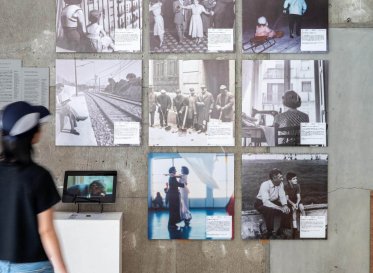
The KYODO PROJECT, launched by the DOSO Inc. in Fujiyoshida City, Yamanashi, Japan, connects creators with local weaving mills to push the boundaries of traditional textile production through dialogue and experimentation. This exhibition showcases the collaborative frameworks, photographic documentation, and fabric samples developed in Fujiyoshida, highlighting the spirit of creativity and partnership at the foot of Mount Fuji.
- Exhibition Dates::2026/2/27 – 3/8 (12:00–19:00, Closed on Monday)
Note: Closing at 17:00 on the final day. - Location:朋丁 pon ding (No. 6, Ln. 53, Sec. 1, Zhongshan N. Rd., Zhongshan Dist., Taipei City 104, Taiwan)>Details
Recommended
-
2026.02.17
The ripple effect of MVMNT Behind the scenes of the [UN]REAL ESTATE exhibition at MAB25, Bangkok
-
2025.12.02
AI is not magic: FabCafe’s ongoing quest to define our relationship with technology
-

2025.05.13
Flavors Without Borders: Rethinking Japanese Seaweed with Malaysian Burgers & Kuala Lumpur food influencers
-

2024.03.13
A style of gardening that renews our sense of beauty and order
-

2024.03.13
Two forests residing in a single tabletop, the “Forest Bank”
-

2024.02.28
The Fuji Textile Collaborative Project kicks off in Fujiyoshida City (II)Samira Boon Studio’s textile research report
Next Contents