


From 2050 to now: Transforming future research into immersive experiences at
The Moonshot Park at Expo 2025 Osaka
Outline
How can cutting-edge science and technology become relatable to the general public?
The Moonshot Research and Development Program is an ambitious national initiative led by the Cabinet Office of Japan. The program aims to spark disruptive, Japan-led innovations to solve global issues like climate change and aging societies by 2040 or 2050. As a key partner in this mission, the Japan Science and Technology Agency (JST) manages seven of the program’s 10 goals.
At Expo 2025 Osaka, JST transformed these visionary goals into interactive exhibits within the Future Life Experience area. The agency faced two primary challenges. First, it had to integrate numerous research projects into a clear, accessible story for visitors. Second, it needed to align the goals and expectations of diverse stakeholders, including the Cabinet Office and individual researchers, into a single direction.
Loftwork served as the lead producer to solve these challenges. By connecting partners and providing support from planning through operations, the team brought diverse research topics together under a unified concept, with a complex system to rotate 15 different programs every one to two weeks. The resulting exhibition allowed visitors to see, touch, and feel the future society of 2050. The interactive displays targeted younger generations, encouraging them to think personally about how society and humanity might evolve.
Loftwork managed the overall narrative, stakeholder coordination, and creative execution. This project showcased the appeal of Japanese research on a global stage, drawing approximately 38,000 visitors, exceeding initial targets. By gathering valuable public feedback, the exhibition also contributed to the real-world implementation of these advanced technologies.
Project Scope
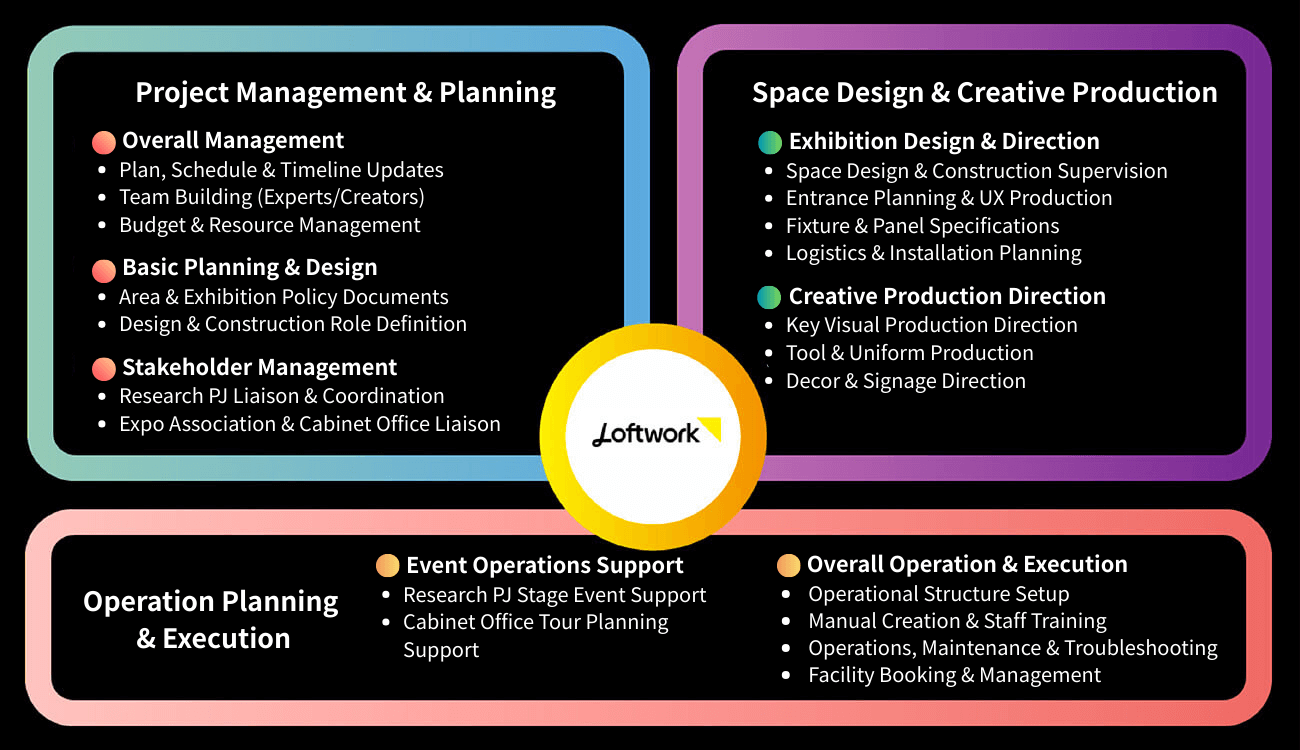
Loftwork managed the project from concept to completion, translating complex scientific data into interactive, human-centered experiences. This end-to-end support comprised three pillars: strategic planning and management, spatial and creative design and operational execution.
Process
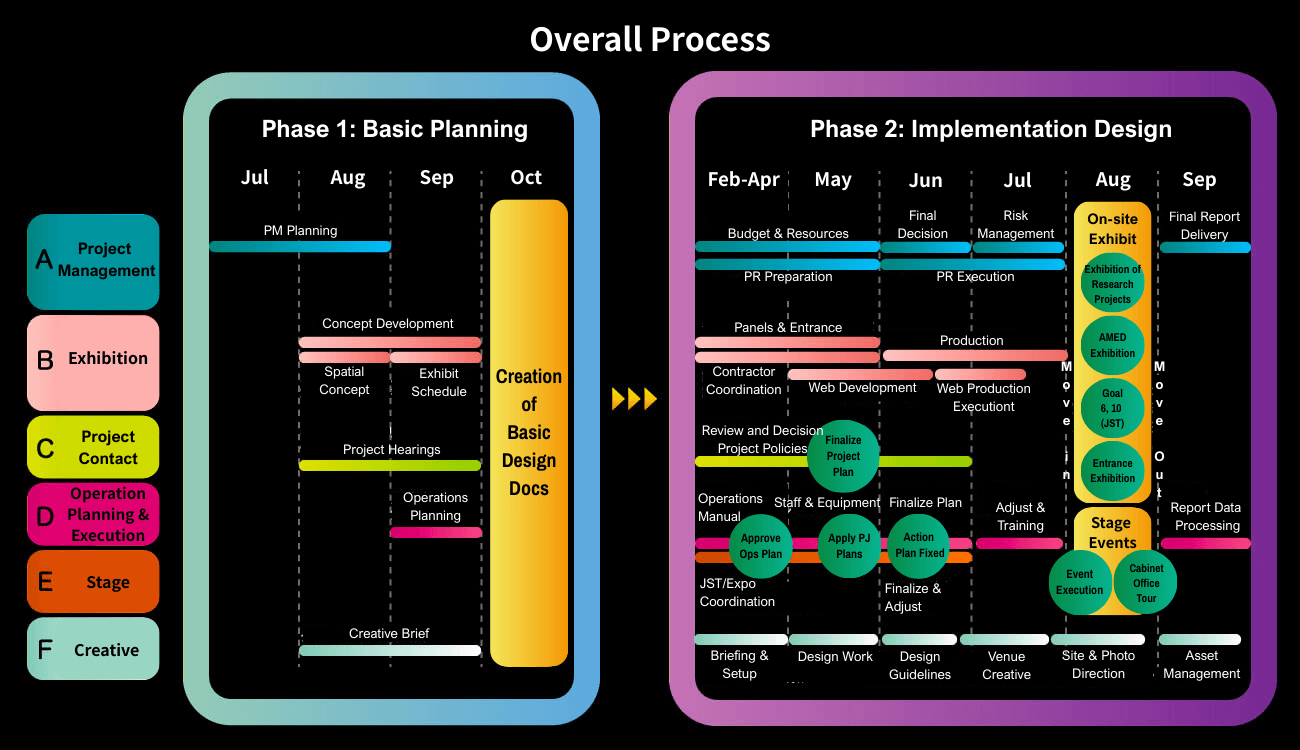
The project moved in two stages. Phase 1 established the foundational design, while Phase 2 focused on detailed implementation. To maintain momentum, specialized teams were assembled for different tasks, all working together under a centralized management structure. This approach allowed the team to handle complex requirements across multiple workflows, providing steady support from the initial concept to the final launch.
Rotating 15 Unique Exhibits
To showcase as much research as possible, the project had an ambitious goal: rotating 15 different programs every one to two weeks across five distinct periods. This was undeniably the biggest challenge. To make it happen, Loftwork designed a flexible space and a precise logistics plan, while keeping communication open and clear with every research team involved.
|
Dates |
Title |
Goal |
Lead |
|
July 23–28 |
「Cybernetic being Life」 |
Goal 1 |
Kouta Minamizawa Project |
|
July 23–28 |
Future Healthy Society with In-body Cybernetic Avatars |
Goal 1 |
Fumihito Arai Project |
|
July 30–Aug. 4 |
Future Robot Partners to Support New Challenges |
Goal 3 |
Yasuhisa Hirata Project |
| July 30–Aug. 4 | Welcome to a 2050 Future with Robots | Goal 3 | Shingo Shimoda Project |
| Aug. 6–11 | See and Touch the Future of Human-Robot Symbiosis | Goal 3 | Shigeki Sugano Project |
| Aug. 6–11 | Experience Future Health Checks Integrated into the City | Goal 2 | Hideki Katagiri Project |
| Aug. 6–11 | What Kind of Future Would You Design for the Moon? | Goal 3 | Kazuya Yoshida Project |
| Aug. 6–11 | What is a Quantum Computer? | Goal 6 | Japan Science and Technology Agency (JST) |
| Aug. 6–11 | Imagining a Future Society Powered by Fusion Energy | Goal 10 | Japan Science and Technology Agency (JST) |
| Aug. 13–18 | A Glimpse into the Mind via Brainwaves | Goal 9 | Ken-Ichiro Tsutsui Project |
| Aug. 13–18 | Have Fun at Avatar Land! | Goal 1 | Hiroshi Ishiguro Project |
| Aug. 20–31 | Control Games with Brainwaves: The Brainpic Experience | Goal 1 | Ryota Kanai Project |
| Aug. 20–31 | What Will Future Weather-Control Dolls Look Like? | Goal 8 | Kosei Yamaguchi Project |
| Aug. 20–31 | Turning Typhoons from Threats into Blessings | Goal 8 | Hironori Fudeyasu Project |
Output
Building a narrative: Designing the exhibition space
Journey through a time warp into future realities
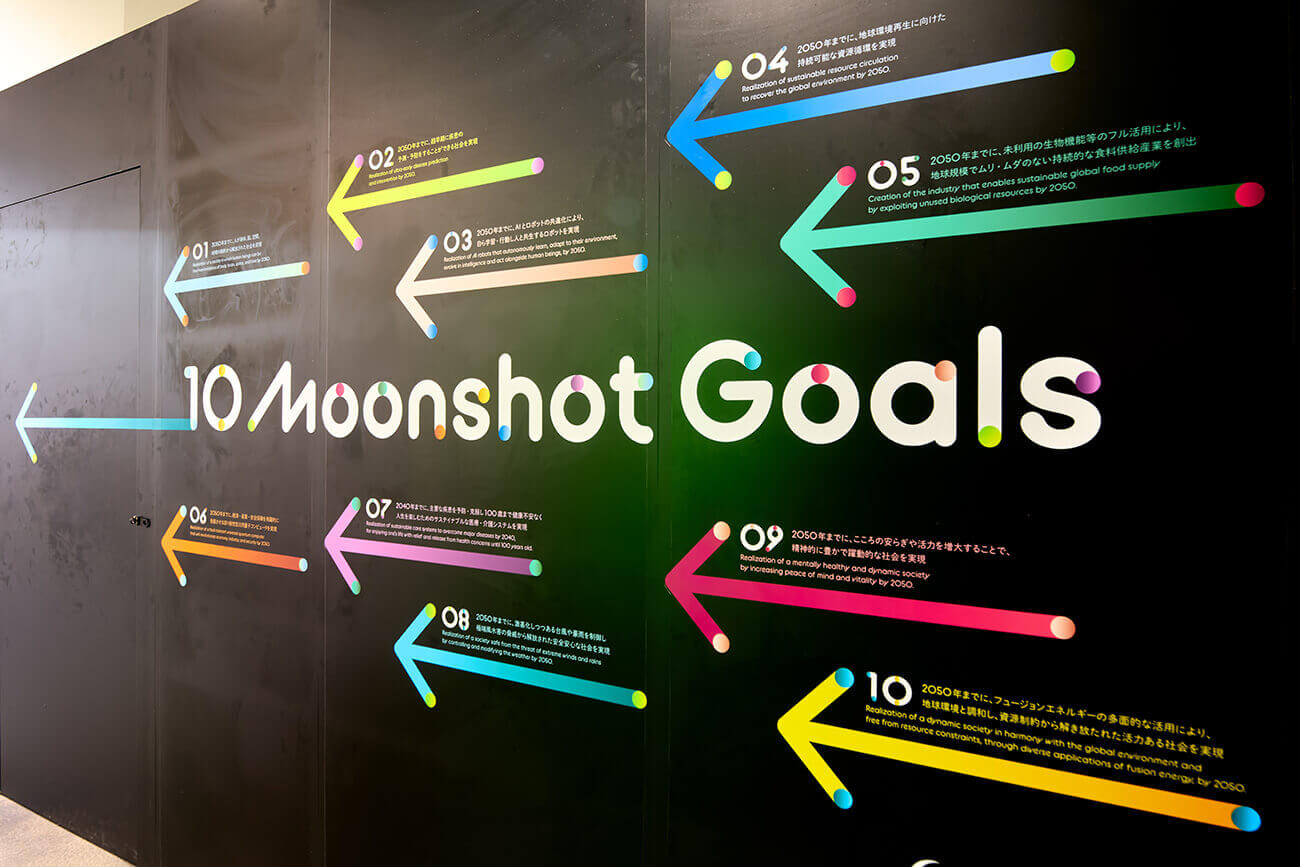
Visuals at the entrance. These provide an overview of the ten Moonshot Goals.
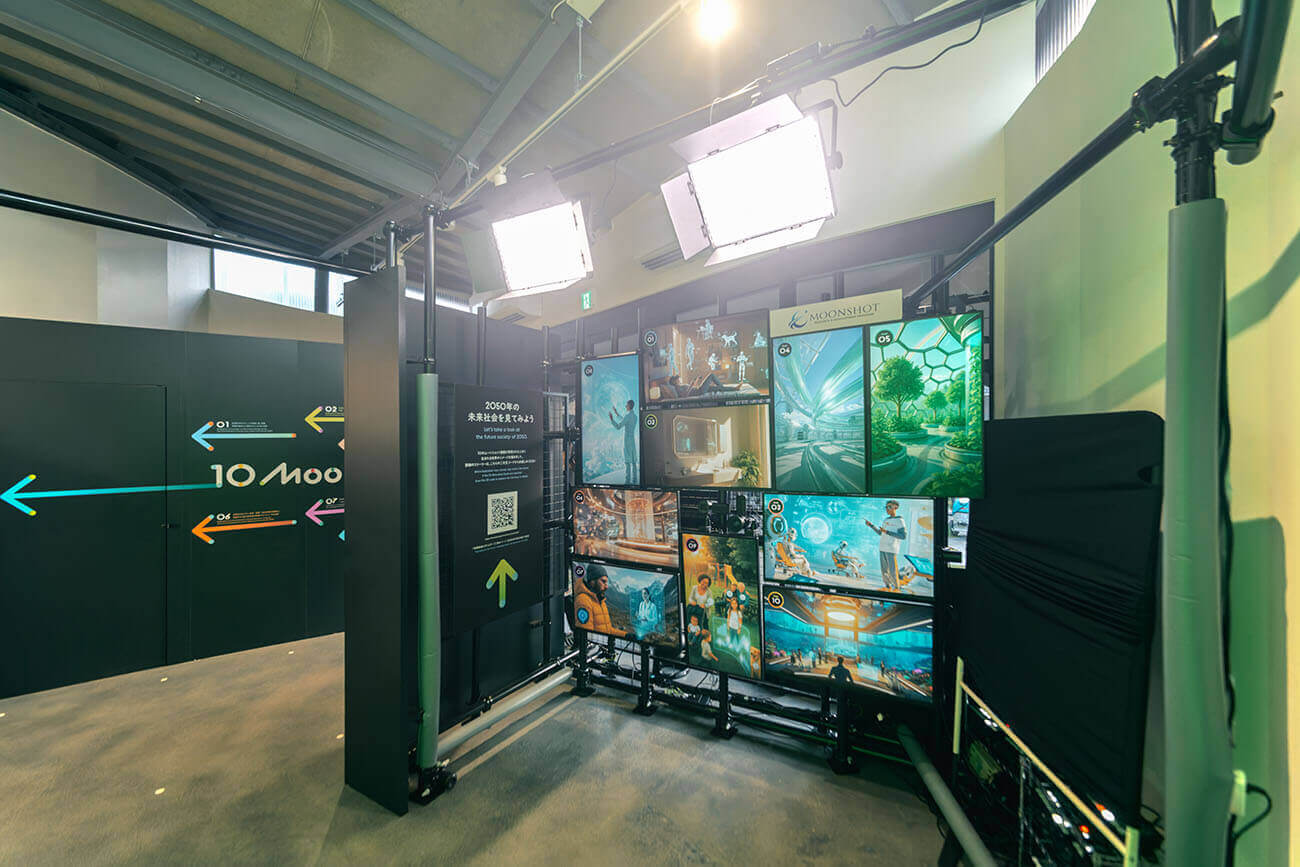
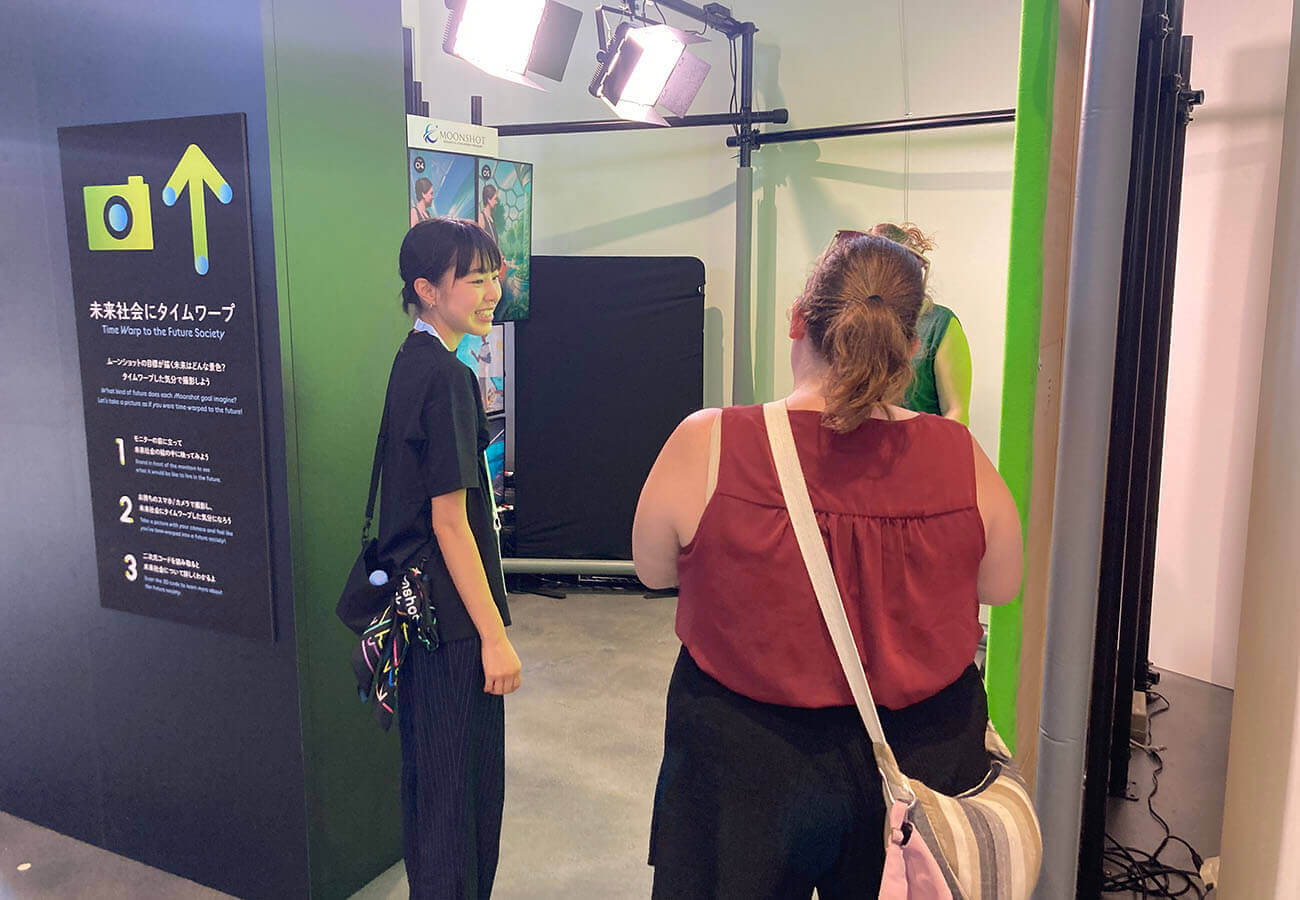
At the exit, an interactive photo booth was set up, allowing visitors to take commemorative photos against a backdrop of a future society.
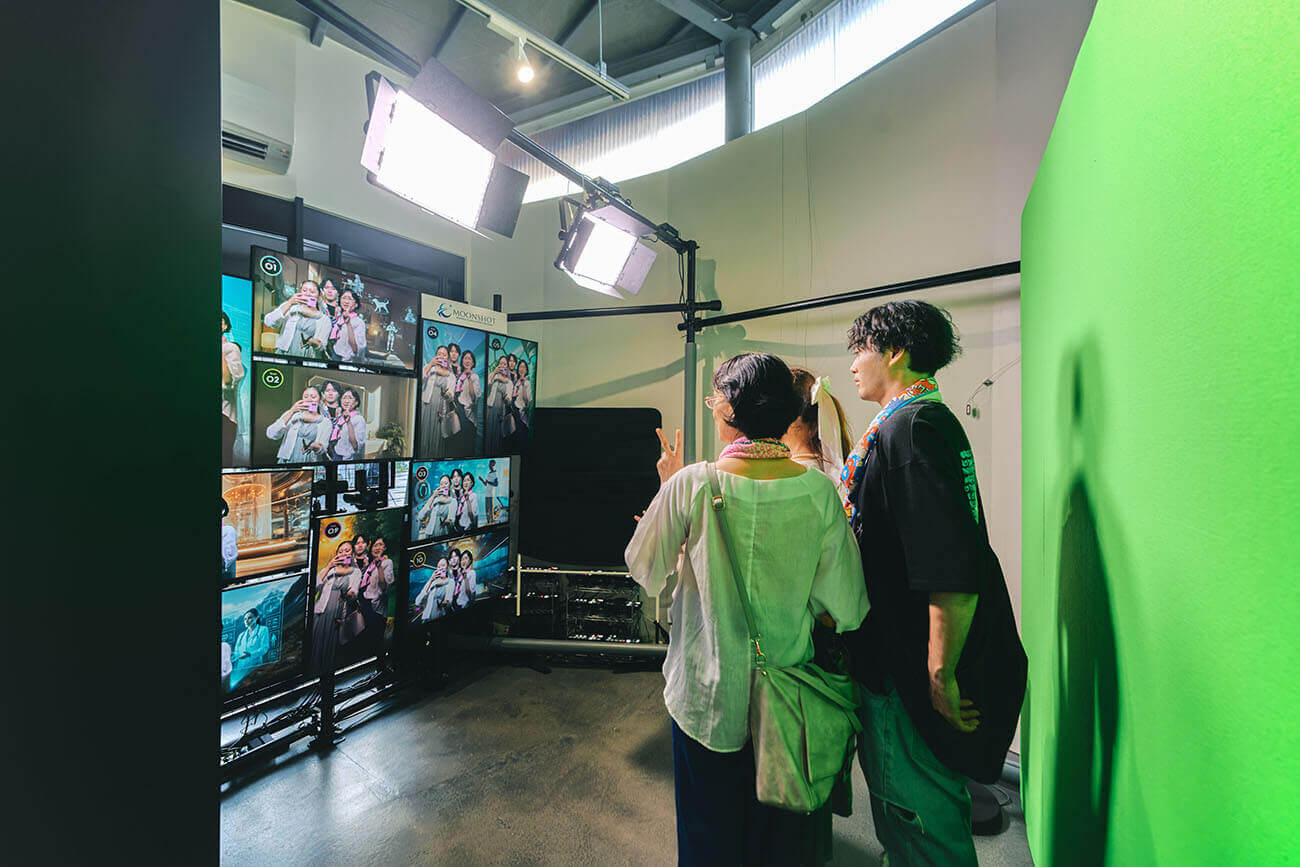
At the exit, an interactive photo booth was set up, allowing visitors to take commemorative photos against a backdrop of a future society.
The entrance serves as a gateway designed around the theme “Time Warp to the Future.” This space creates a continuous narrative loop that builds excitement by introducing various Moonshot goals. At the exit, a photo studio integrates visitors into the experience by projecting their images into real-time scenes of a future society. This immersive approach encourages people to imagine themselves in that future, turning abstract research into a personal realization.
Balancing consistency and flexibility in design
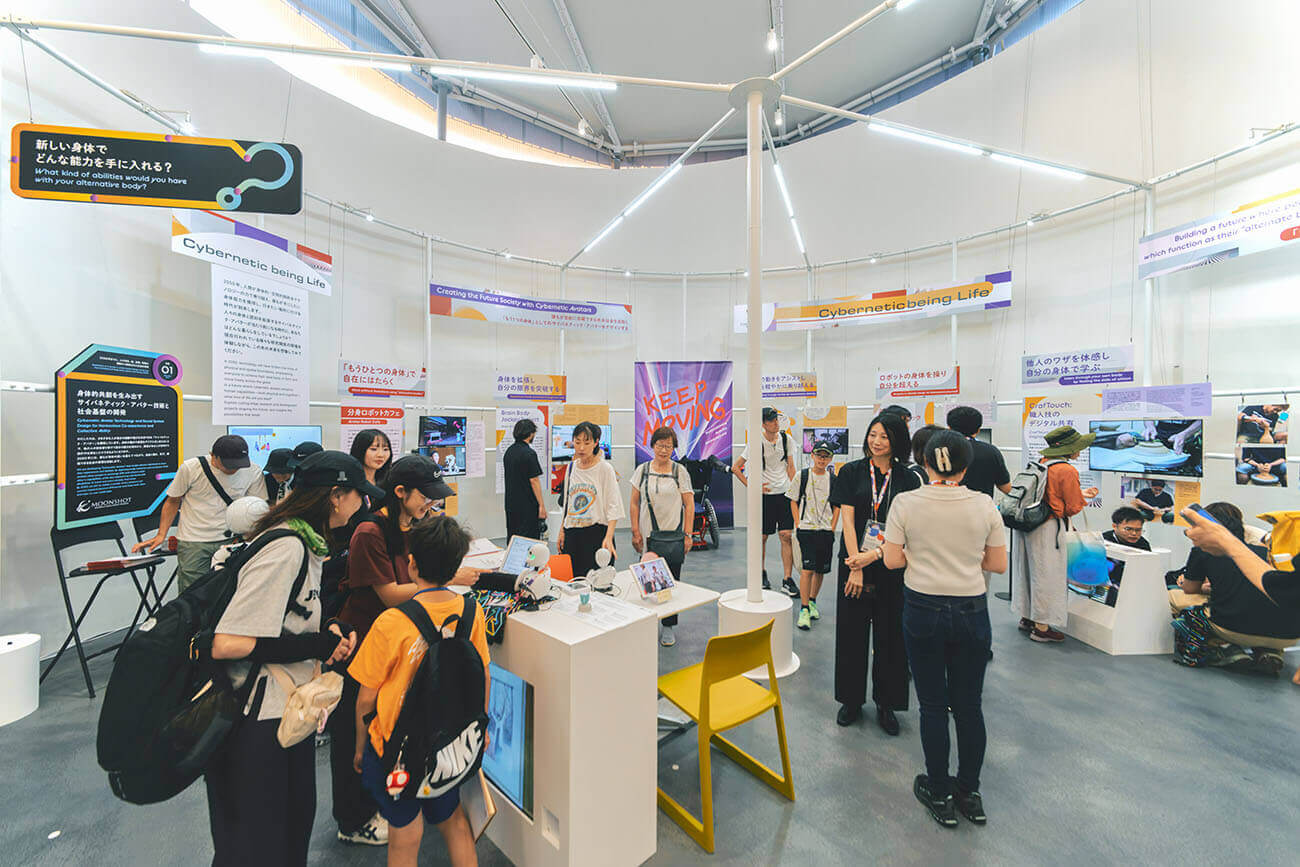
The exhibition space
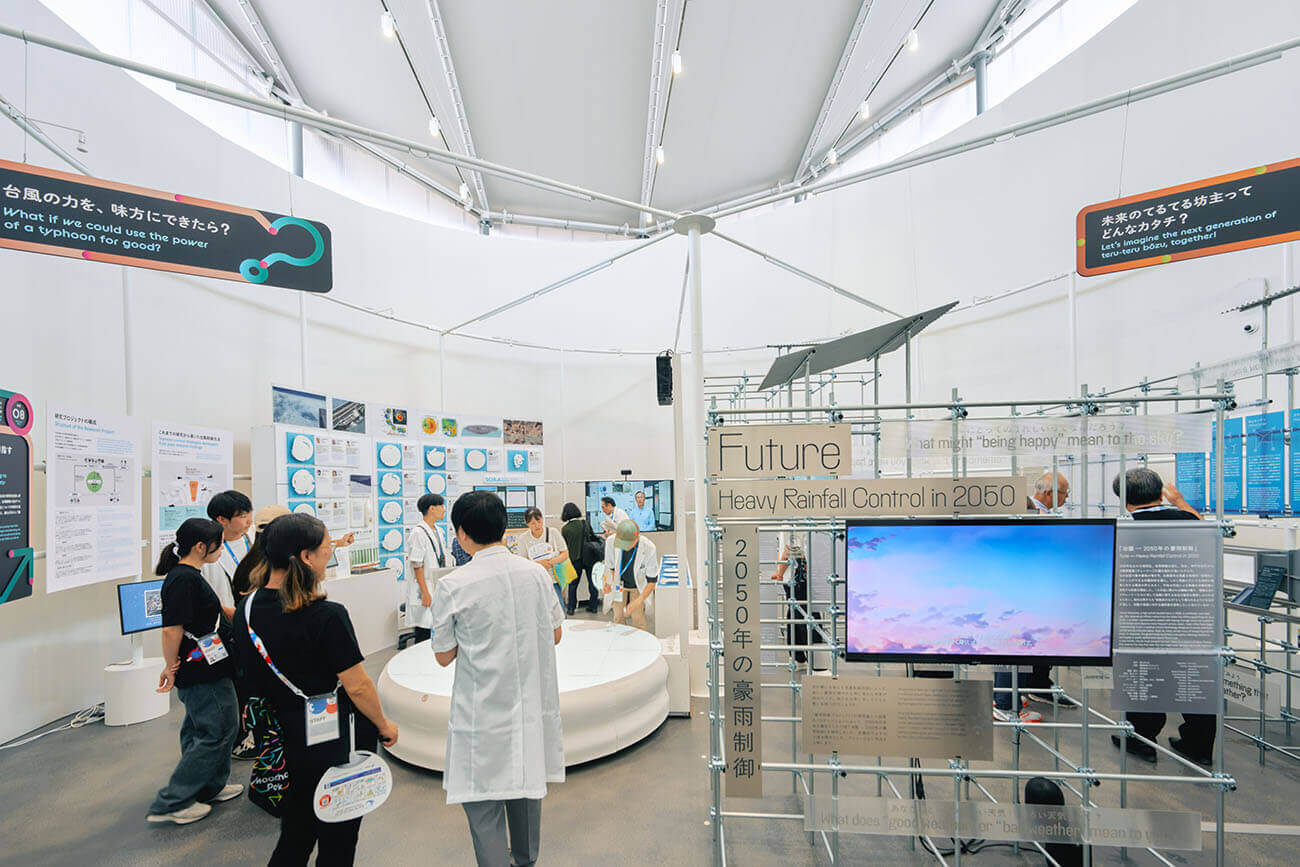
The exhibition space
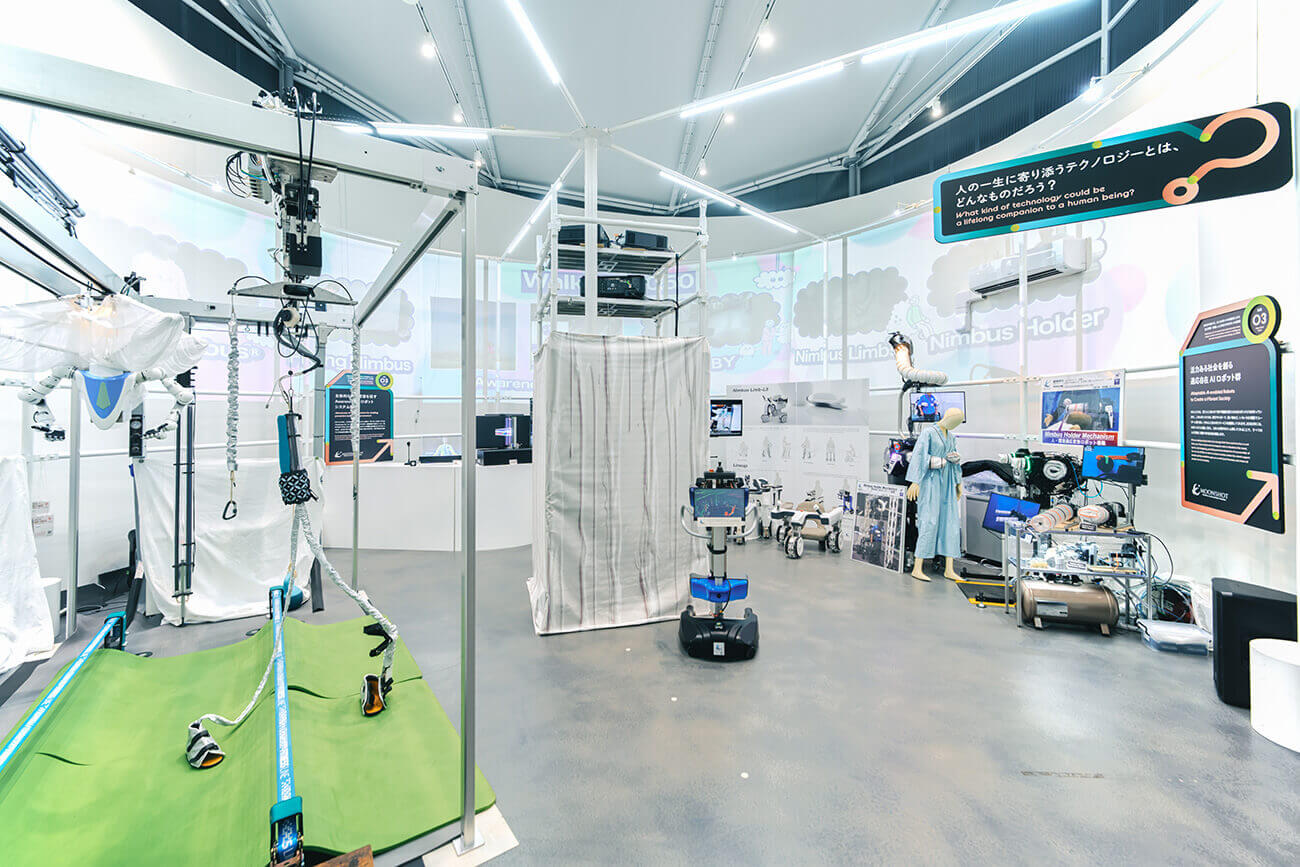
The exhibition space
The main exhibition area was built to accommodate 15 rotating programs. In partnership with Hakuten Co., Ltd., Loftwork developed a modular spatial frame that could be reconfigured for different content. This flexible system allowed for the showcase of interactive exhibits, products and future-focused narratives while navigating the venue’s strict technical constraints.
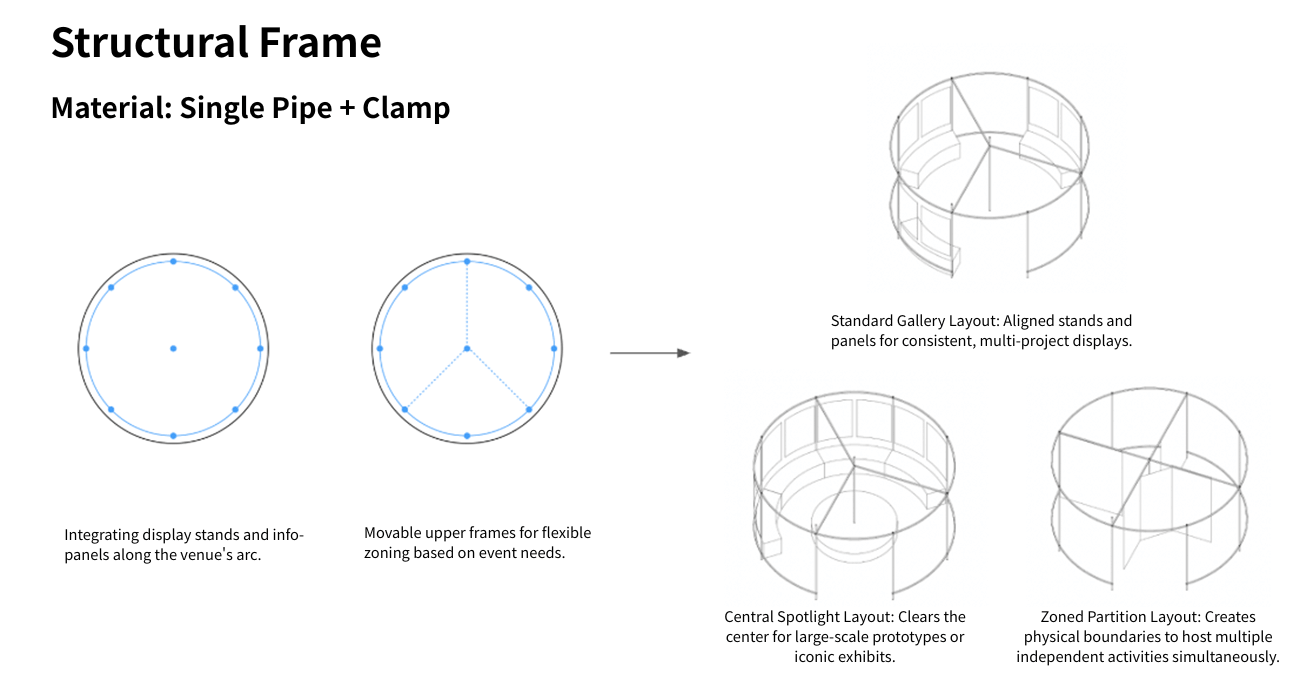
Standardized fixtures and design elements maintained a sense of unity across diverse research topics. A key feature was the strategic use of Question Panels. Since most visitors are unfamiliar with the specific research, rather than technical jargon, the exhibition asked universal questions designed to spark curiosity, such as: “What if you could look inside your own body?” These prompts helped visitors intuitively grasp how technology might impact their daily lives and values.
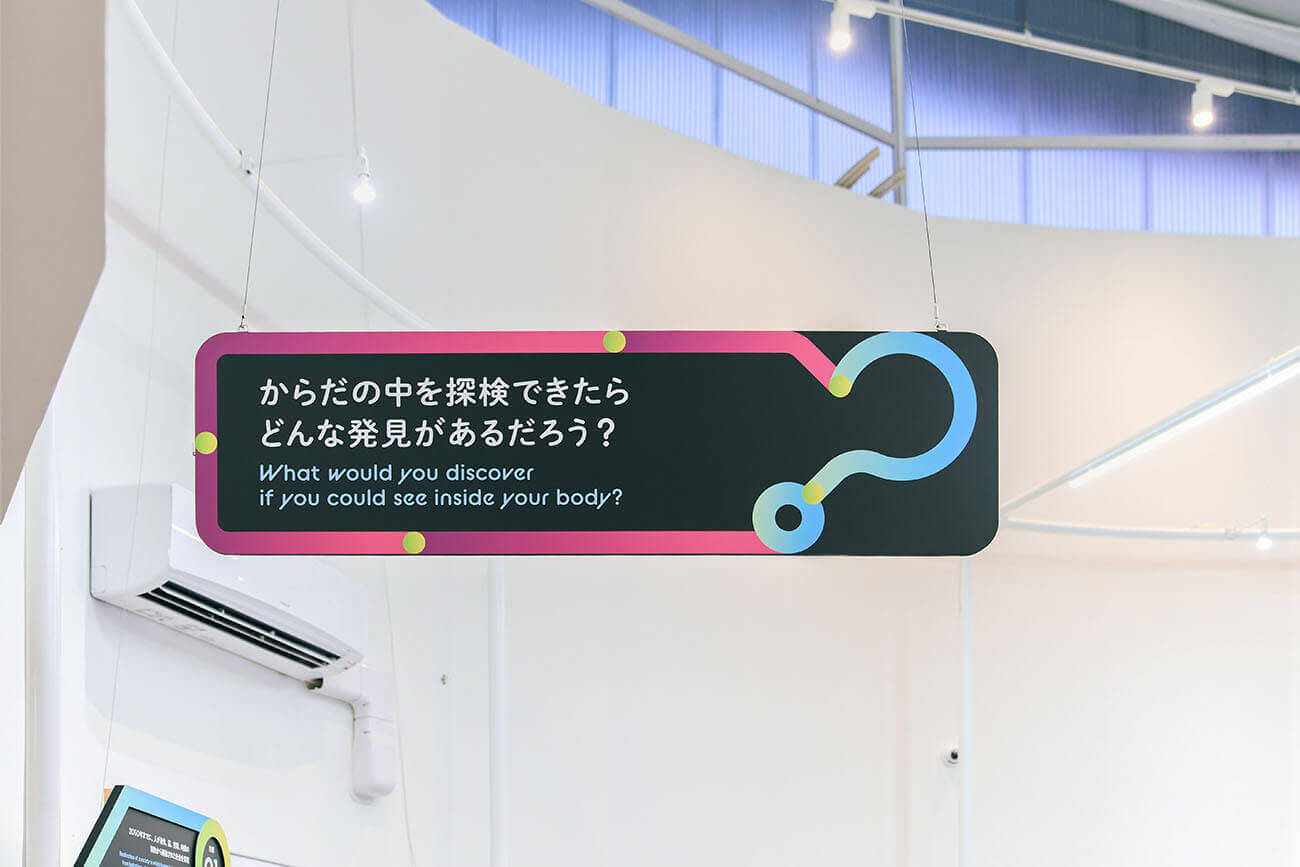
空間の中に設置された、問いのパネル
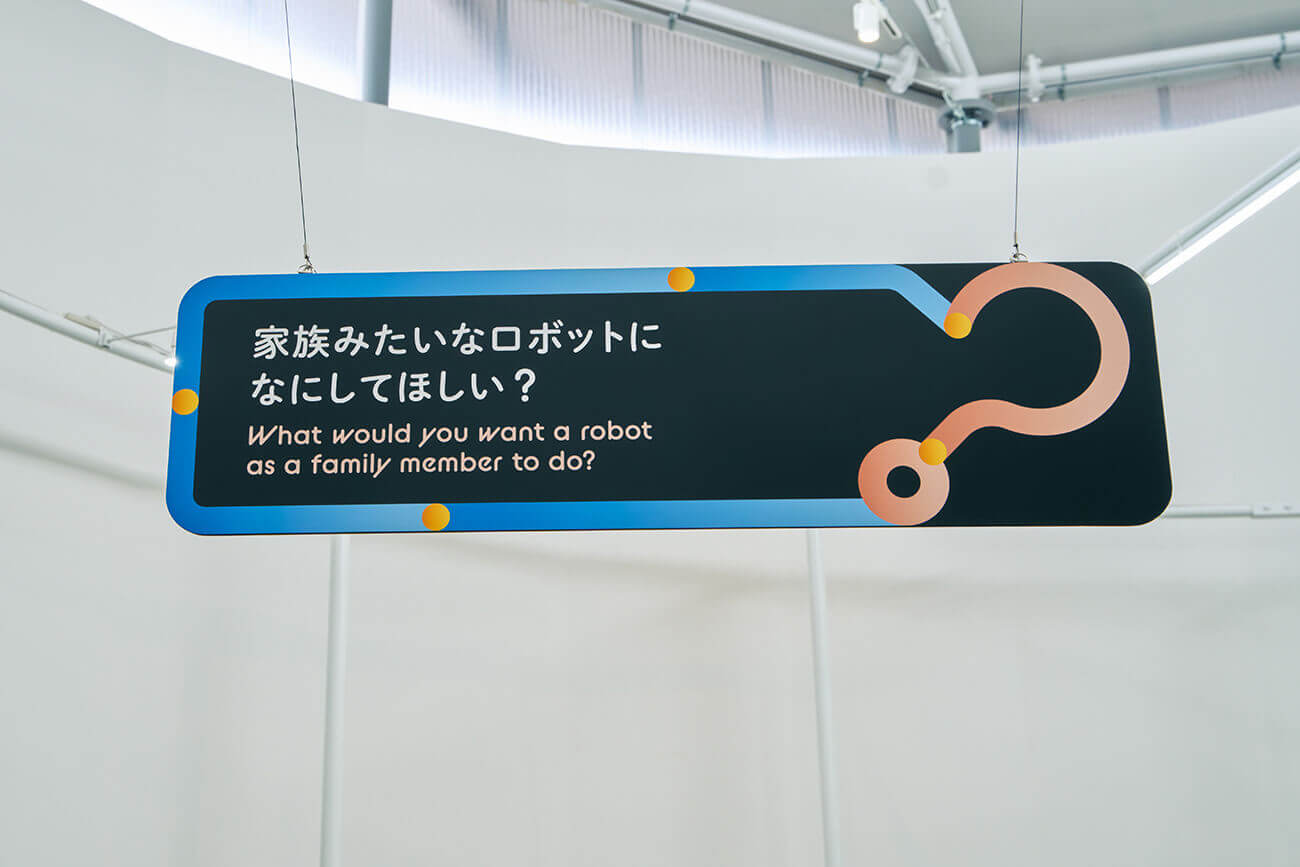
空間の中に設置された、問いのパネル
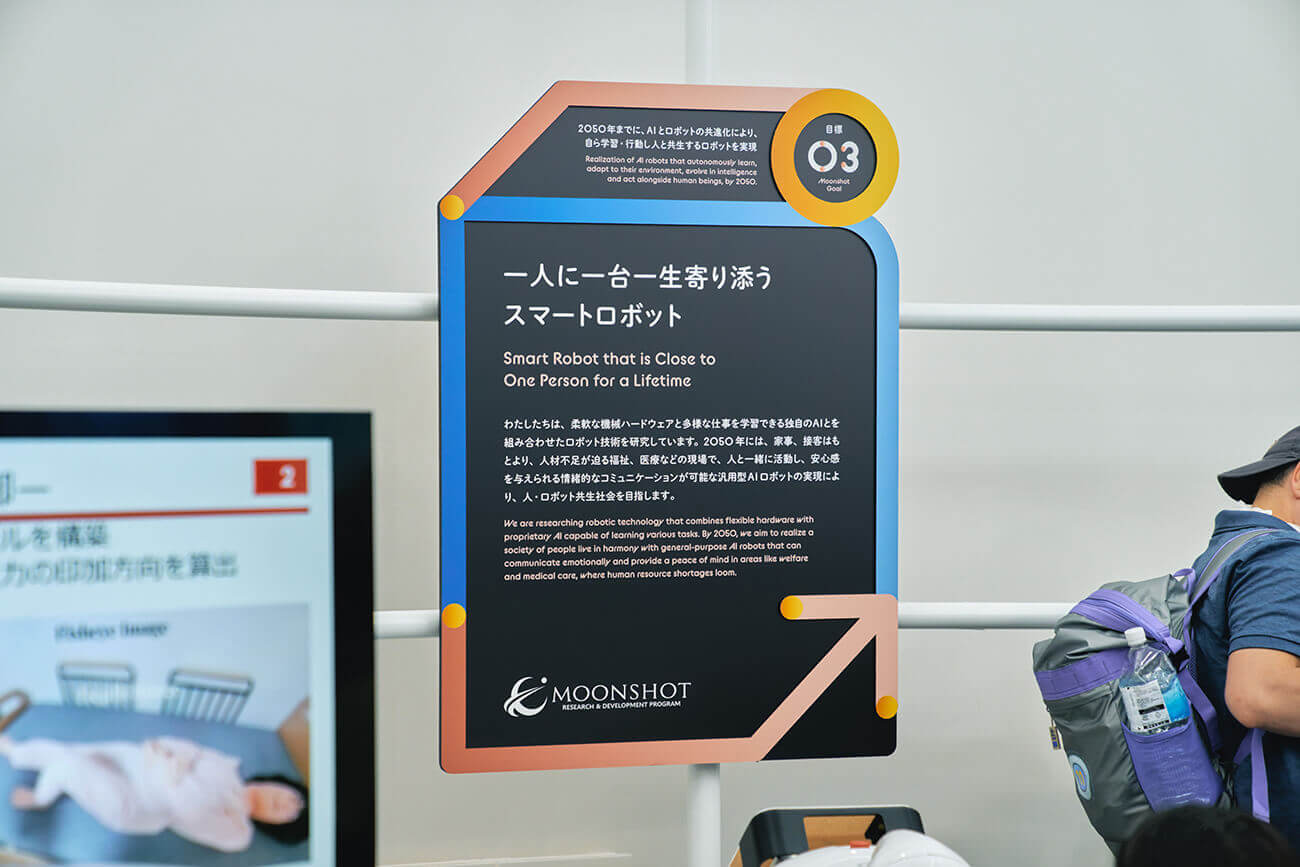
問いのパネルに加えて、研究内容の概要を紹介するパネルも制作
Creating a unified vision through strategic brand identity
To create a cohesive look and feel for the entire project, Loftwork developed the main visual under the supervision of art director Kanako Narita, head of Narika Design Office.
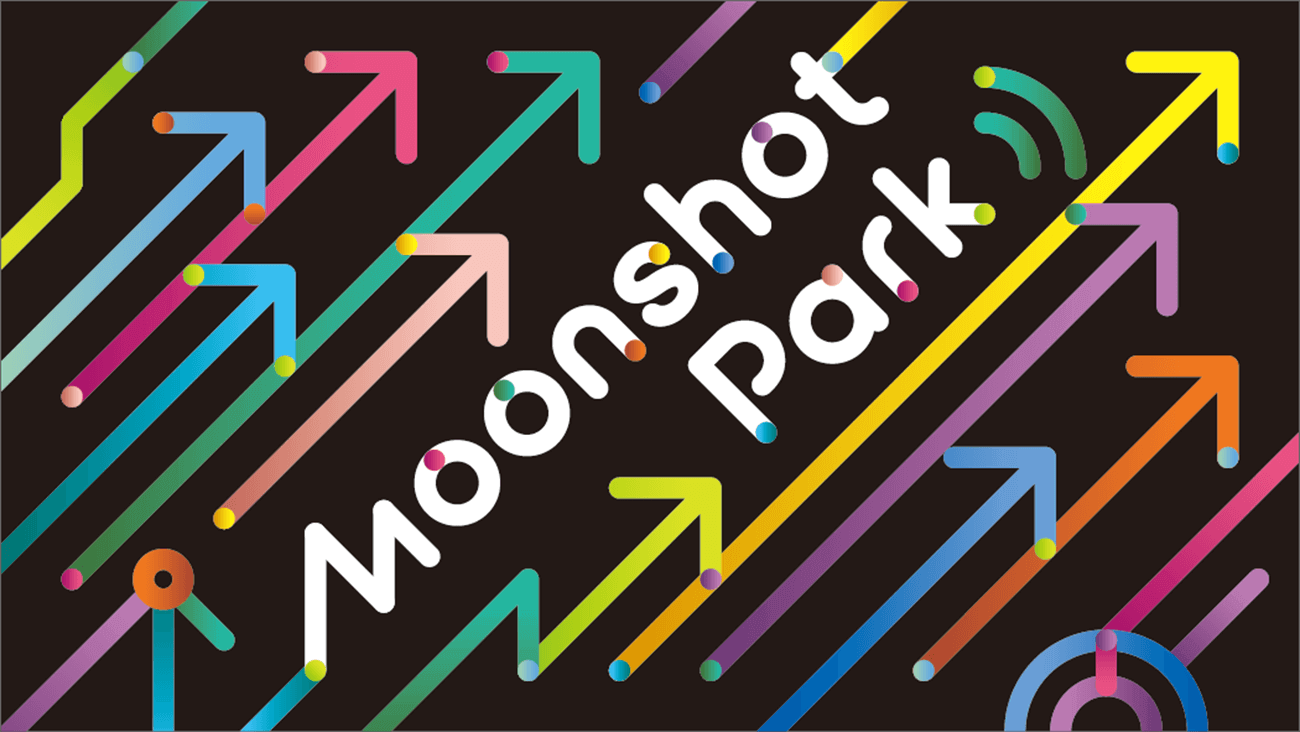
The Moonshot Park visual features 10 colorful arrows, each representing a specific Moonshot goal pointing toward 2050. Innovation within each research field is depicted as dots that connect into lines stretching toward the future. This graphic represents how current science and technology are solving societal challenges to shape our future lives. By using colorful gradients against a black background, the design builds excitement for the future and serves as a striking accent within the predominantly white exhibition space.
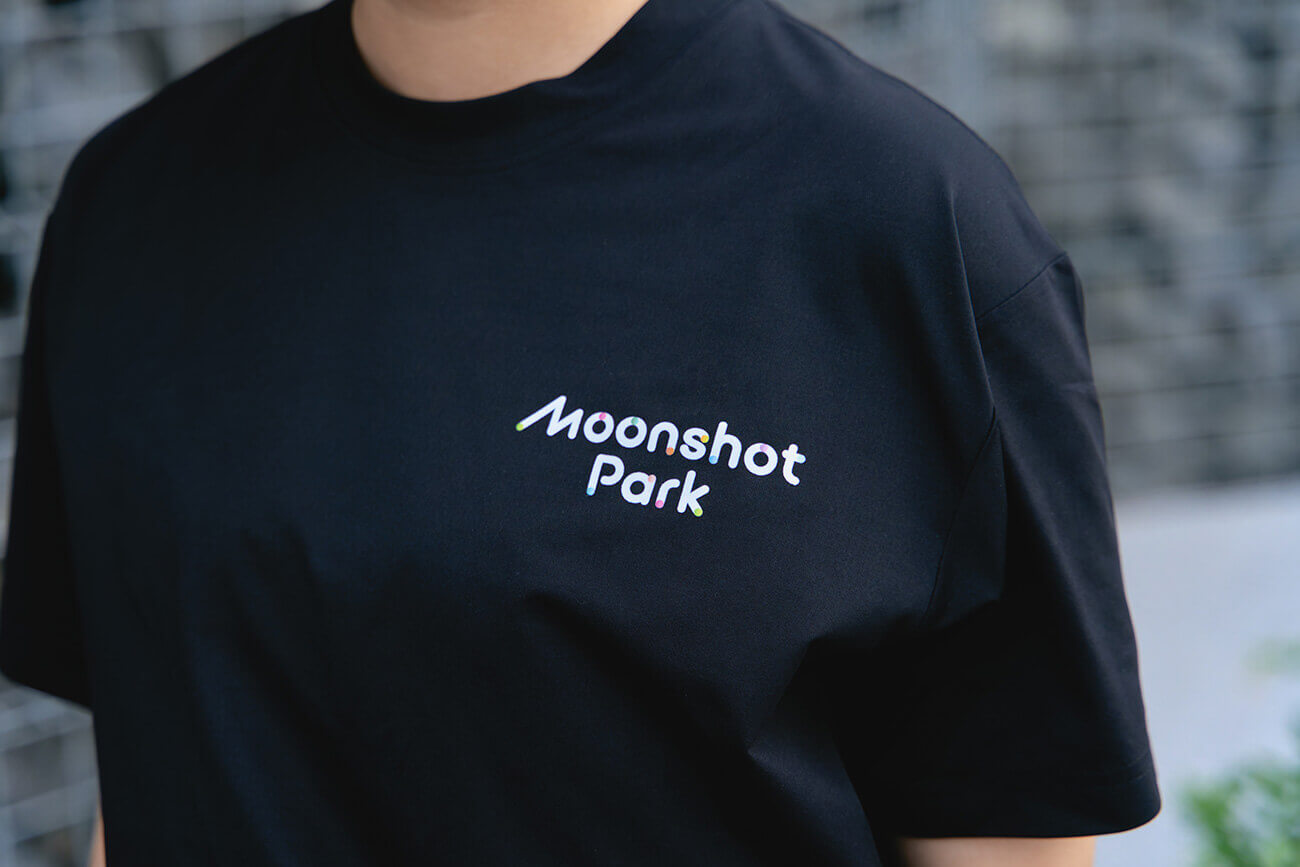
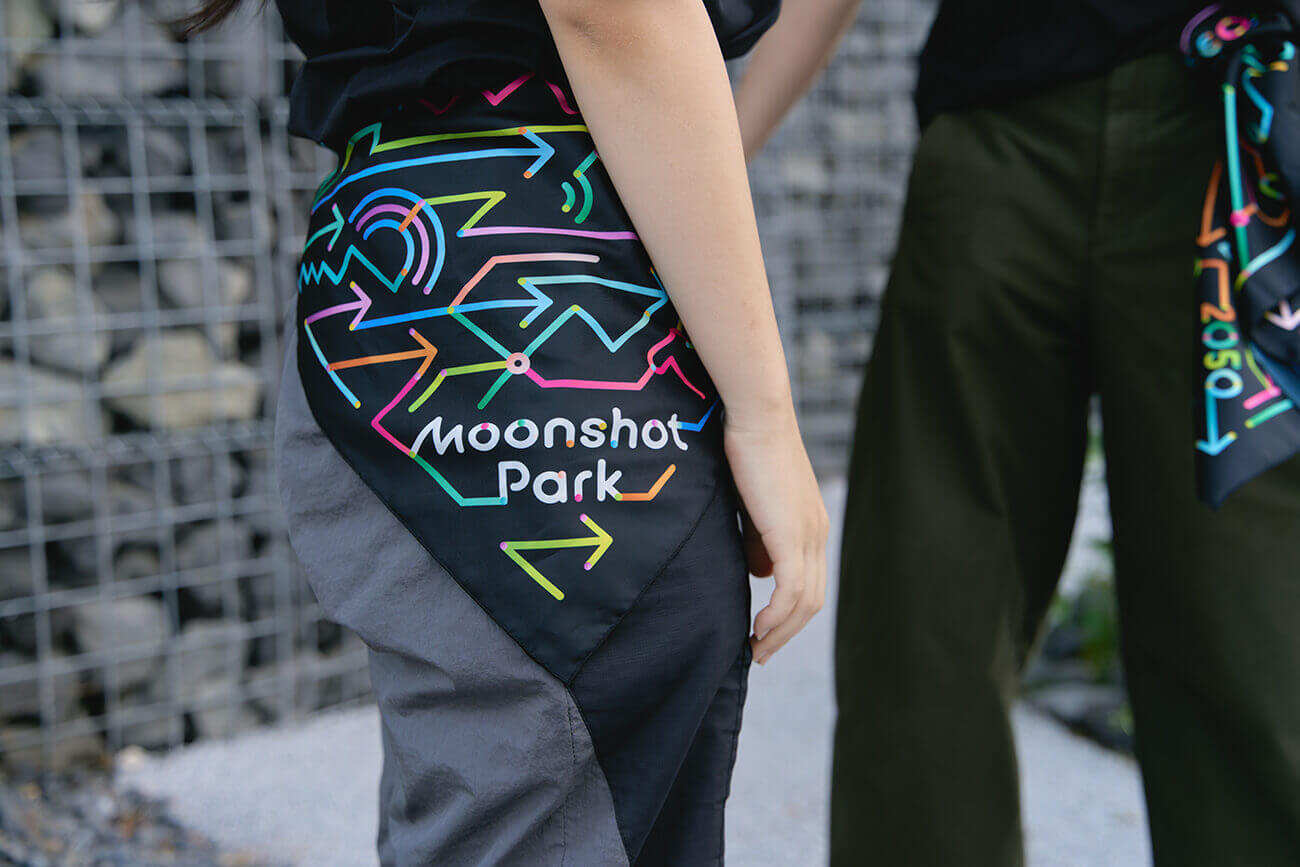
This visual identity was applied to the entrance, staff uniforms and scarves. By maintaining a consistent creative direction, Loftwork delivered a sophisticated brand experience that encouraged visitors to look forward to future possibilities.
Stage Events and Guided Tours for a Deeper Experience
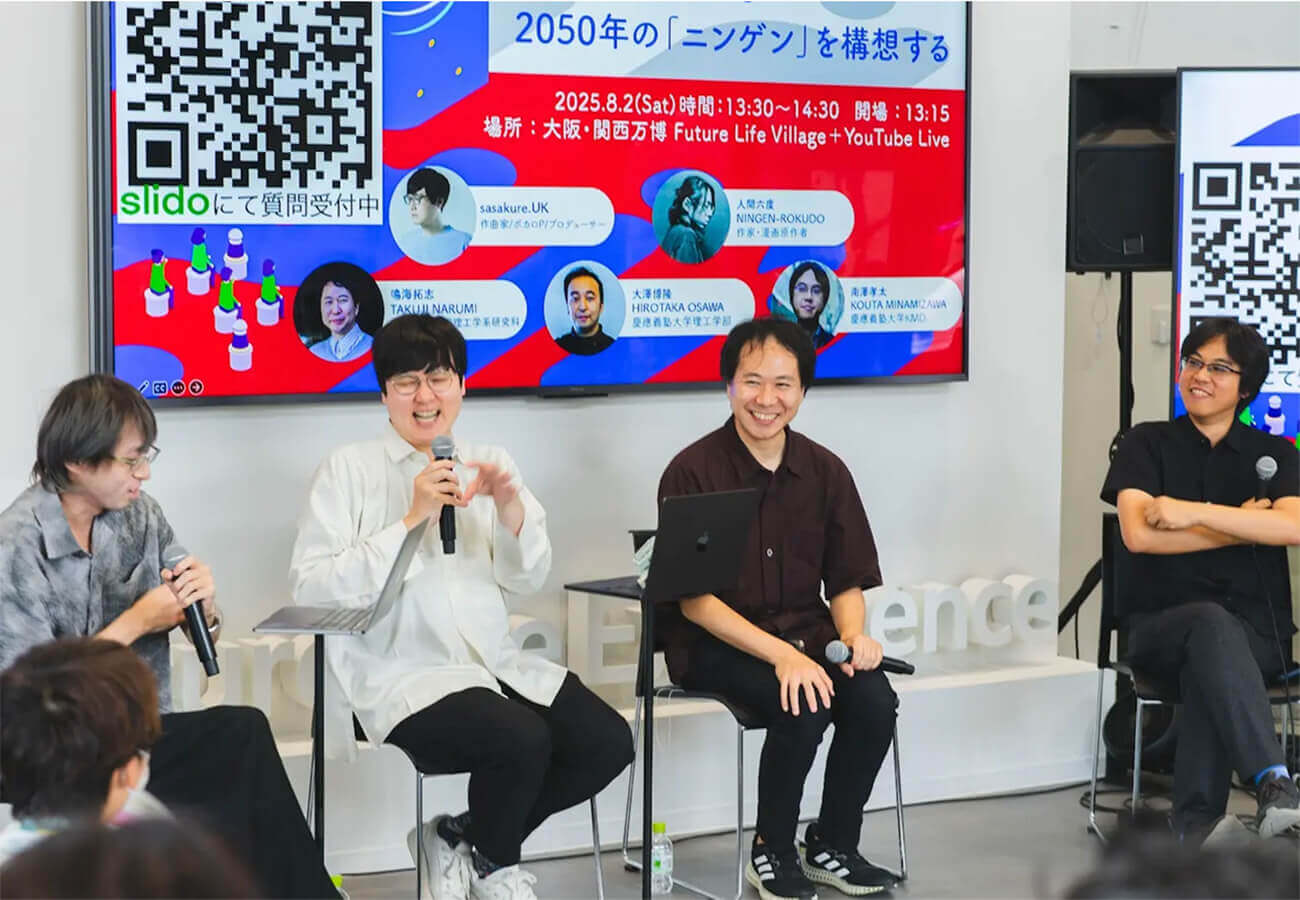
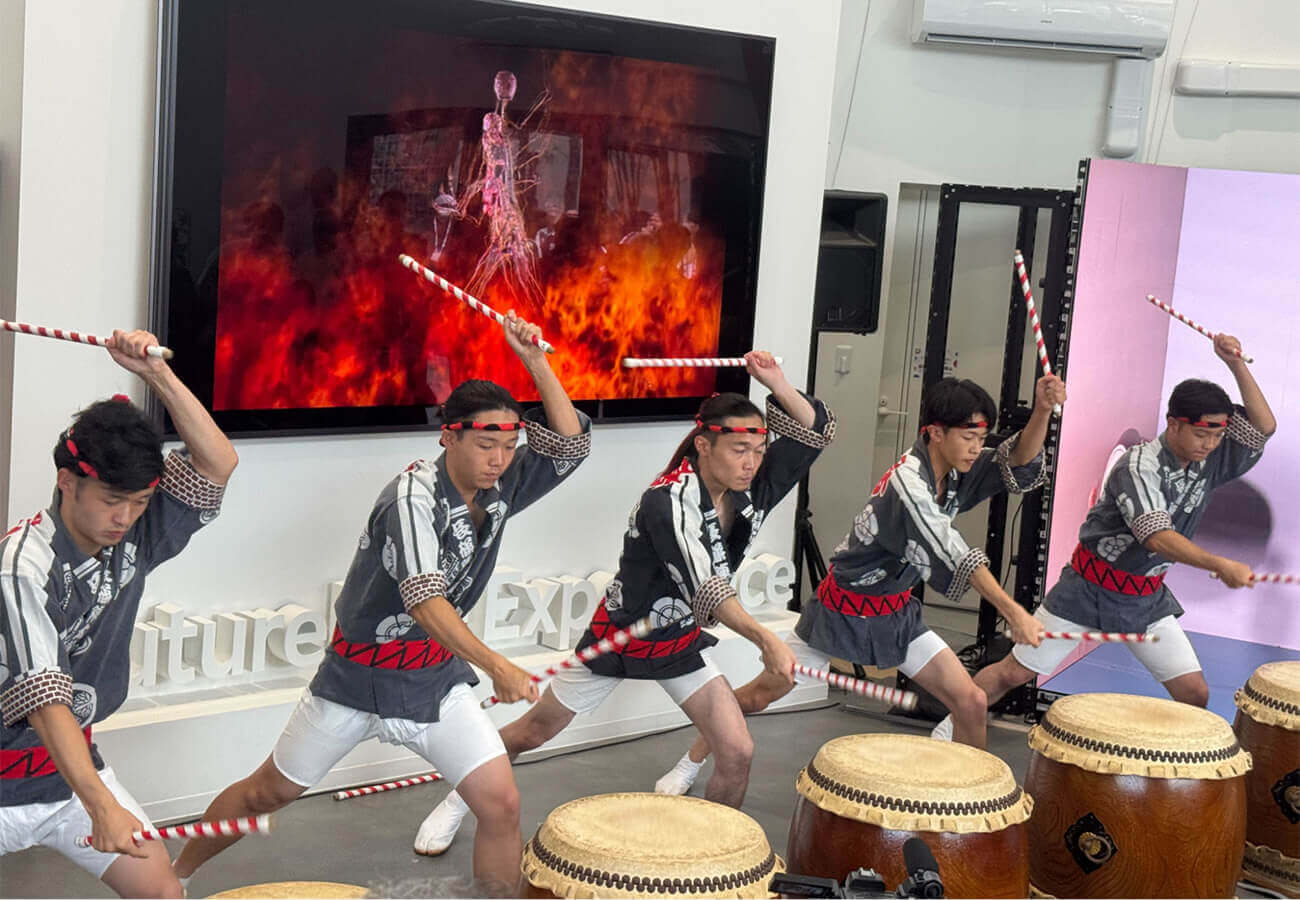
To share the passion and stories behind the research that static displays alone cannot capture, Loftwork supported tour programs led by the Cabinet Office and Project Stage events hosted by research teams.
The Moonshot Future Society Expo Tour introduced the program’s goals, the challenges researchers tackle, and the cutting-edge technology on display. Visitors received priority access to interactive exhibits and engaged directly with the material through Q&A sessions, gaining a clearer vision of the future society these projects aim to create.
At the Project Stage, talk sessions and live demonstrations provided a multifaceted look at the research projects and their potential global impact.
Approach
From excitement to personal connection: Designing the visitor journey
Expo 2025 attracts a global audience from all generations. To bridge the gap between complex research and a broad demographic, the exhibition design had to be both intuitive and engaging.
The experience targeted current high school students who will be 40 years old in 2050. As they prepare for university, this generation is uniquely positioned to embrace future possibilities and turn inspiration into action. The team’s mission was to inspire these young visitors and build their expectations for the decades ahead.
To achieve this, the experience prioritized cultivating a sense of agency, making visitors feel that the future is something they can actively participate in and help create. Under the theme “See, Touch, Feel,” the exhibit used visual and physical interactions to spark curiosity about future society, while Question Panels encouraged deeper reflection.
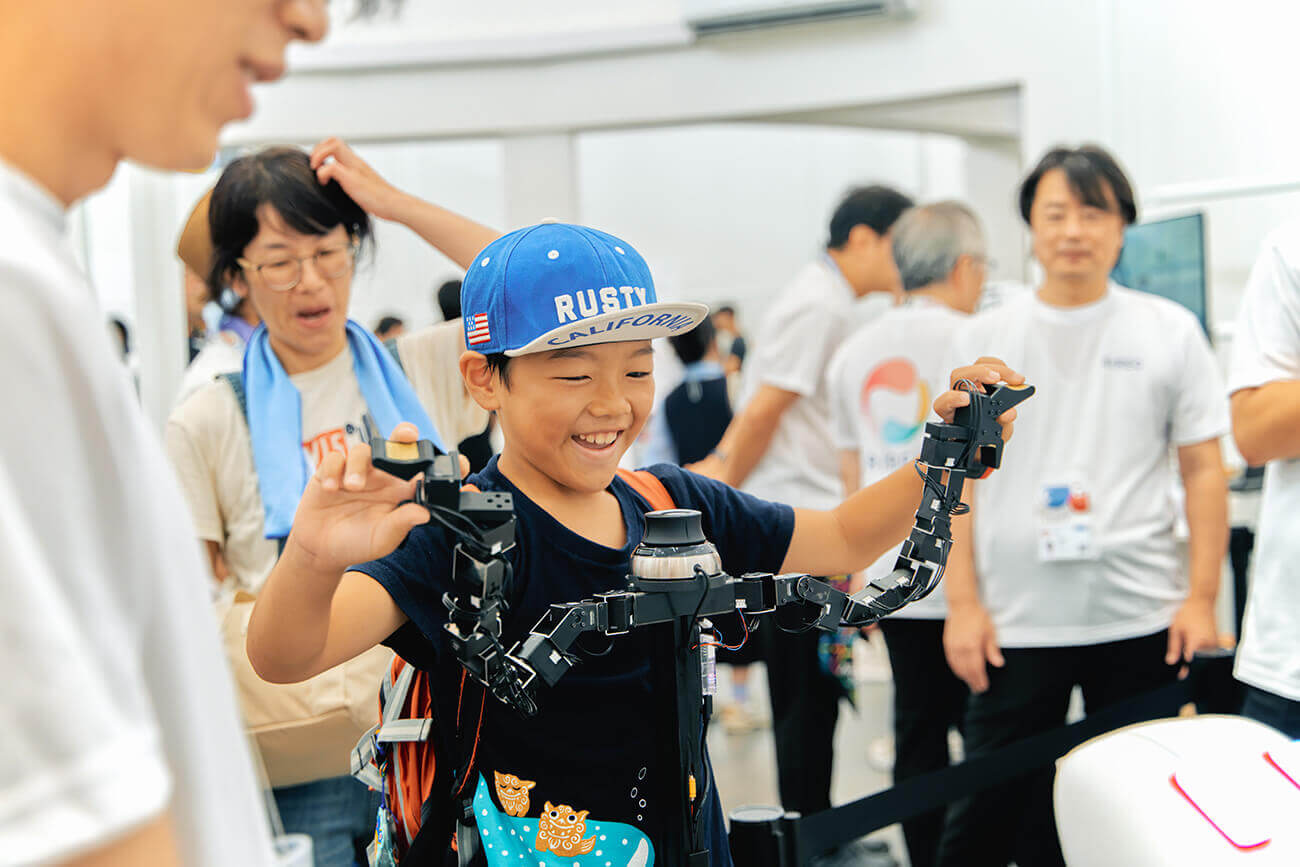
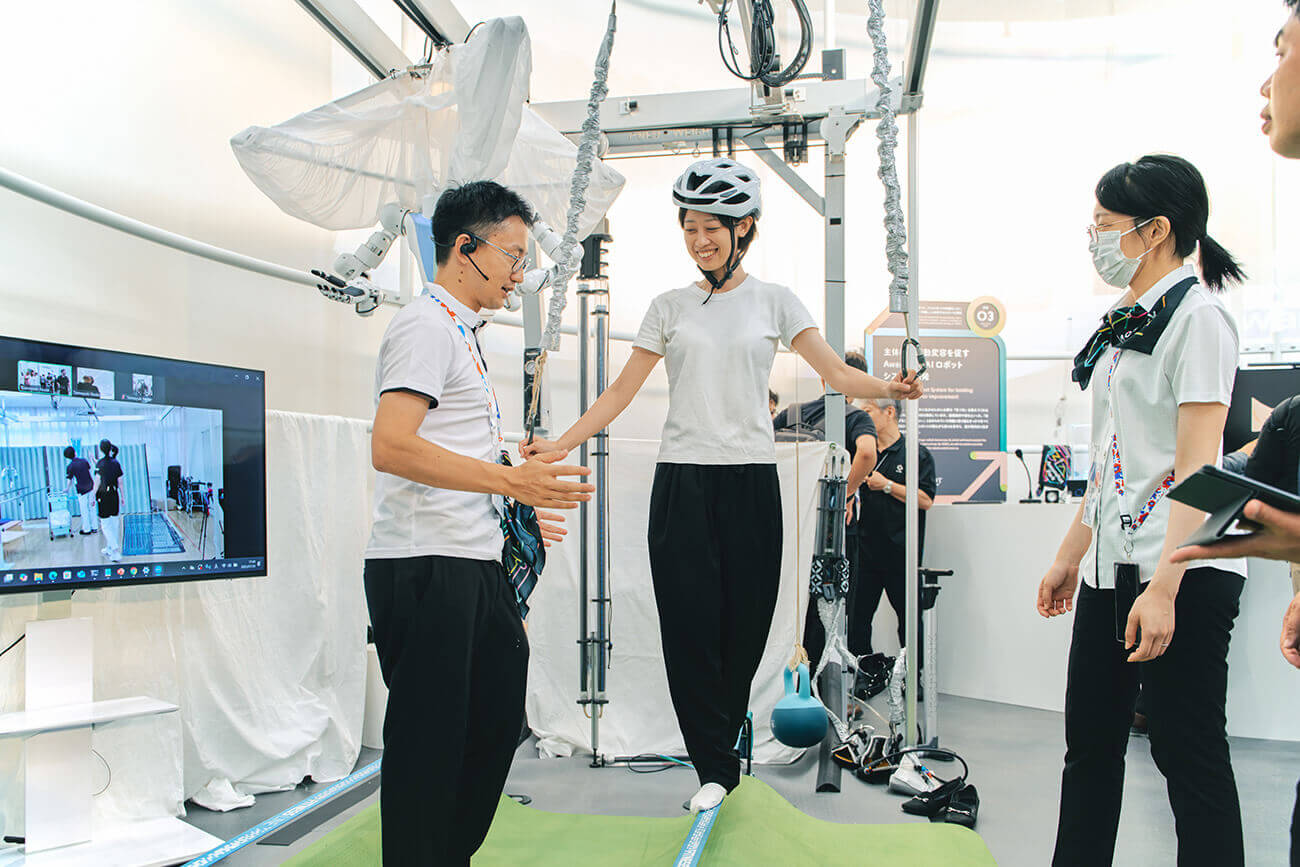
The team curated a seamless journey through the venue, beginning with a sense of wonder at the entrance and culminating in a time warp experience where visitors projected themselves onto visuals of the future. This flow maximized the impression of the core message: the future belongs to those who participate.
Unlocking collective creativity through stakeholder management
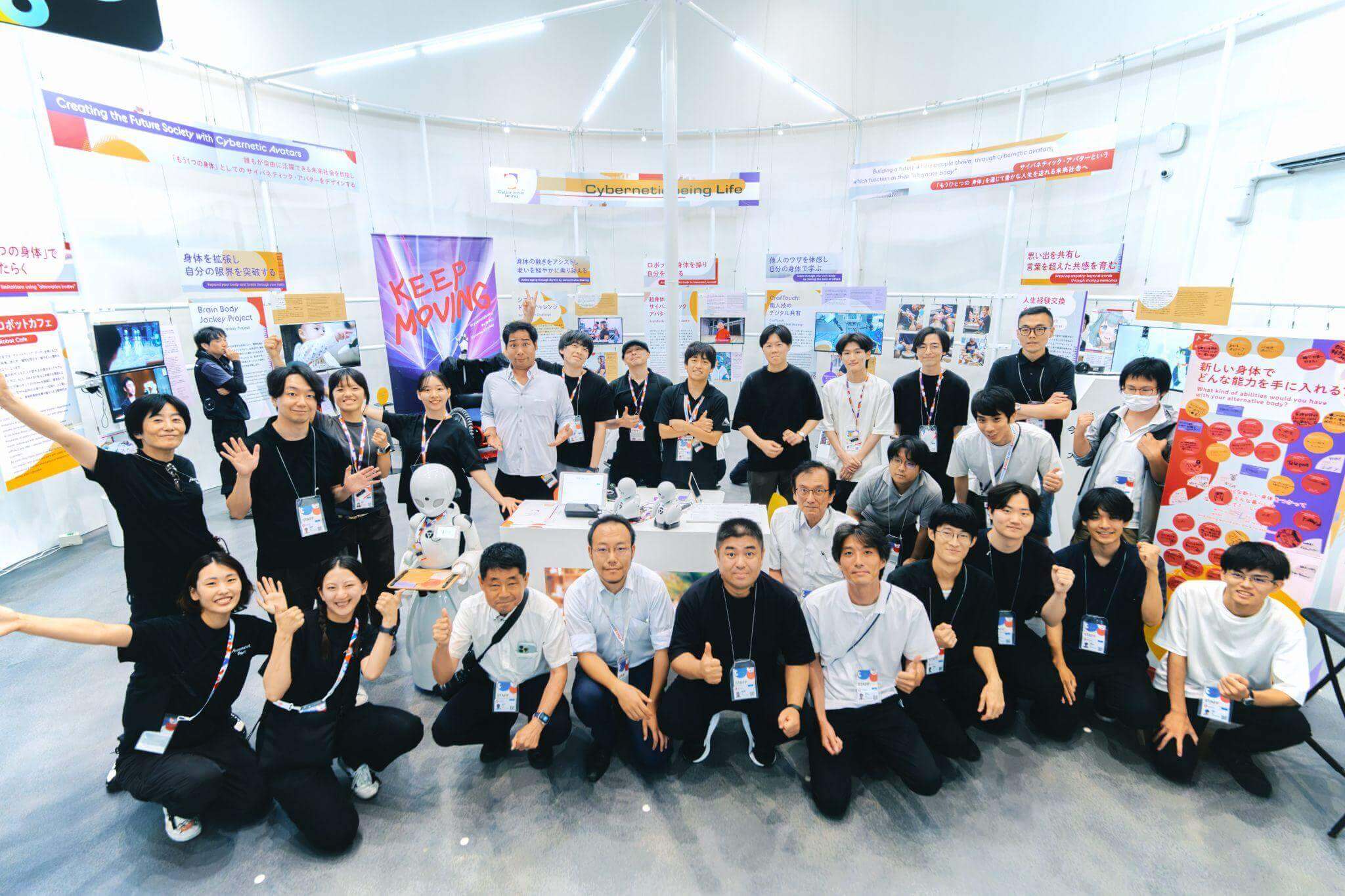
This project brought together 1,004 diverse stakeholders, ranging from the organizer of Expo and the Cabinet Office to JST, research teams, contractors, and creative partners. Each group joined with unique objectives, often involving disparate priorities that required navigation, such as national outreach strategies, rigorous scientific accuracy, and creative design excellence.
To align these competing interests, Loftwork adopted a “One Team” approach built on a foundation of open dialogue. Rather than relying on rigid top-down management, the team created an environment where every partner felt invested in the decision-making process. This collaborative culture successfully unified all parties under a shared vision for the project’s ultimate mission.
Supporting exhibition quality through strategic operations
Managing a weekly rotation of exhibits required a blend of meticulous planning and agile execution. In the operational planning phase, the team mapped out every scenario, from staff roles to visitor flow management. The logistical centerpiece was the overnight transition between exhibits. To ensure success, every step — from truck arrivals to the morning opening — was scheduled down to the minute. This precision, paired with a highly adaptable spatial design, facilitated seamless move-ins and setups within extremely tight windows.
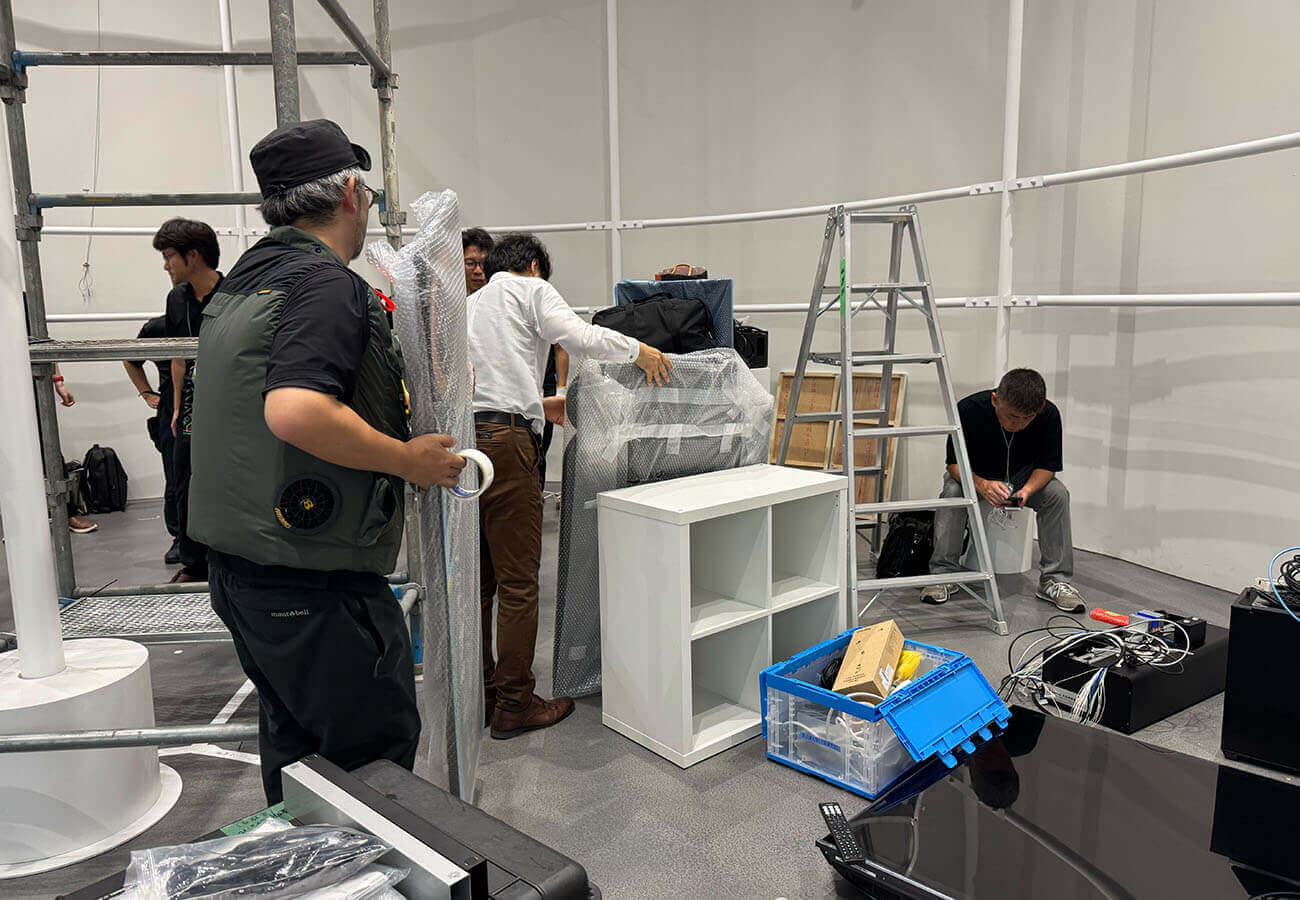
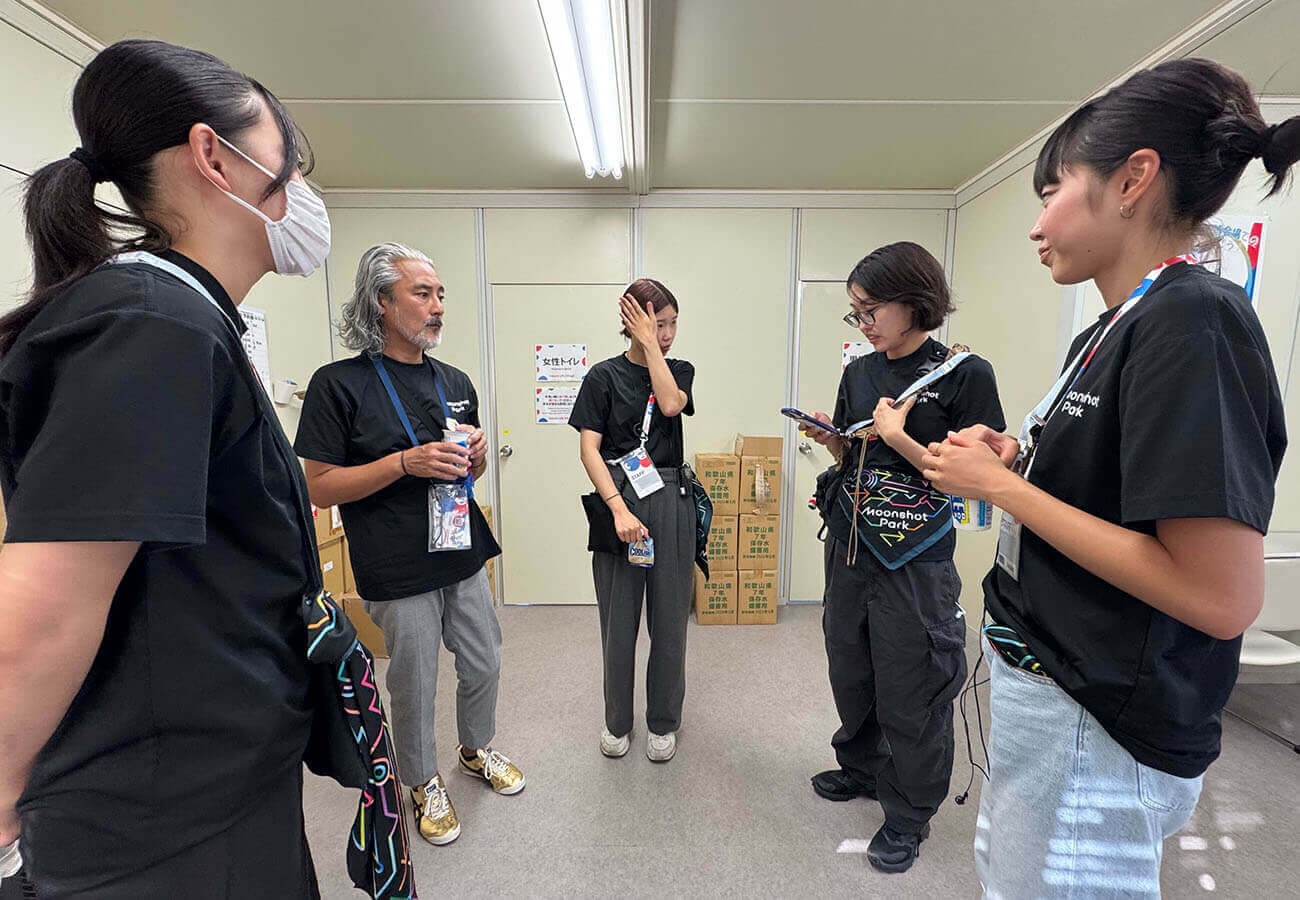
To uphold a premium experience throughout the event, Loftwork equipped staff with comprehensive operational and training manuals, as well as specialized content guides to translate complex research into accessible, accurate narratives. In collaboration with science communicator Takayuki Honda, the team identified key communication strategies and conducted deep-dive training sessions for the on-site staff. This robust documentation and rigorous preparation significantly elevated the overall quality of the exhibition.
Outcome
Connecting science to society: Achieving success beyond expectations
The exhibition was a resounding success, attracting 37,980 visitors over 36 days and significantly exceeding initial targets. Beyond the numbers, the interactive experiences and surveys effectively boosted public interest in Moonshot research and gathered critical insights for future real-world applications.
Bridging the gap between advanced science and the general public often means overcoming hurdles such as technical complexity and psychological distance. Leveraging the power of creative design to secure meaningful feedback across generations was one of the project’s most significant achievements. Visitors praised the exhibit as a highlight of the pavilion, with many noting that it helped children envision a bright, hopeful future in a fun and engaging way. The participating research teams also expressed high satisfaction, buoyed by the strong public response.
By unifying 15 research projects and their diverse stakeholders under a single visionary concept, this project demonstrated that even the most complex technology can be made deeply personal and accessible. Ultimately, this model serves as a powerful roadmap for the future of science communication.
Credit
Basic Information
- Client: Japan Science and Technology Agency (JST)
- Project Period:
- Phase 1: July – October 2024
- Phase 2: February – October 2025
Project Team
Loftwork
- Project Management: Kazuya Yanagihara, Makoto Ishii, Ayane Shinohara
- Research Project Liaison: Asumi Hoshi, Kazuma Kawaguchi, Makoto Tanabe, Naoya Tsuchida, Hazuki Yasunaga
- Exhibition Space Direction: Haruka Koshimoto, Ryo Usami, Wakana Isaka, Satoko Kitajima
- Creative Direction: Kei Katahira, Takeaki Sekimoto, Emi Nagashima
- Operational Planning & Execution: Haruka Koshimoto, Sakiko Miwa, Asumi Hoshi, Sawako Tane
- Stage Operations Planning & Execution: So Muramoto, Ryo Usami
- Produce: Daiki Nakatsuka
Note:
Some members served across multiple sections.
The list includes members from both Phase 1 and Phase 2.
Titles reflect positions at the time of the project.
External Partners
- Construction, Exhibition Planning, Technical Direction & Logistics: Hakuten Co., Ltd.
- Creative Design (Key Visual & Tools): Narikata Design
- Exhibition Photography: Wataru Sato
- Entrance Content & Video Direction: tkrm (Yoshinori Takamura)
- Installation Support: Yoshiya Susaki
- Science Communication Advisor: SOU, LLC (Takayuki Honda)
- Exhibition Operations & Visitor Communication: All Operations Staff
Writing: Yutaro Gokan (Loftwork Inc.)
Illustration: Asako Muraoka (Loftwork Inc.)
Translation: Pinhua Chen (Loftwork Inc.)
Photography: Wataru Sato
Member

Kazuya Yanagihara
Loftwork Inc.
MTRL Creative Director

Makoto Ishii
Loftwork Inc.
Creative Director

Naoya Tsuchida
Loftwork Inc.
Technical Director


Wakana Isaka
Loftwork Inc.
Layout Director


Kei Katahira
Loftwork Inc.
MTRL Creative Director

Takeaki Sekimoto
Loftwork Inc.
MTRL Creative Director

What can we do for you?
Please reach out if you are interested in:
- Bridging technology and experience by translating complex research into engaging stories that connect with diverse audiences.
- Coordinating diverse stakeholders like government agencies, experts, and creative teams to work toward a shared vision.
- Managing complex logistics and planning for international-scale events or exhibitions.
Recommended
-

2025.11.18
From scaffolding rentals to a value-driven company: A six-year transformation across 15 projects
-
2025.10.01
Loftwork contributes to the new ComoNe innovation space in the Tokai Region
-

2025.02.04
Exploring Creative Iterators in Japan’s Local Regions From Interviews to Editing in "AAA City Art & Lifestyle Journal Vol.8" Cover Story
-

2025.01.24
DRIVE MYSELF PROJECT: Co-Creating Future Mobility with NISSAN and the Next Generation
-

2024.12.05
Future Dynamic Program 2024: Sustainability in Action
-

2024.11.15
Strategic Visioning with the World Bank Reflecting on Tokyo Development Learning Center’s past, present, and future