


What do humans still do the best in the age of AI: An interview with Loftwork's MTRL Tokyo team
This interview article was originally published on MTRL’s website.
MTRL is Loftwork’s global platform for materials and creators, supporting co-creation between creators, companies and material manufacturers. Working across everyday materials, traditional craft materials and sensor-enabled technologies, MTRL creates opportunities for people to encounter materials, experiment with them and develop new ideas together.
MTRL website: https://mtrl.com/en/
Generative AI is reshaping how people work and how organizations evolve, shifting the focus away from efficiency and cost optimization. Loftwork has been exploring what it means for humans and AI to create together, bringing these questions into public conversation through events and research.
In this article, 19 MTRL members based in Tokyo are asked about AI’s application in a materials-focused research platform. Led by Sae Furukawa, a university student interning as a communicator in Loftwork’s MTRL division, Sae focuses on where companies, researchers, and creators could explore new possibilities through prototyping, co-creation, and design with generative AI. The conversations start from each member’s reasons for choosing Loftwork, then open onto a larger question: what can AI still not do, and what kinds of value can only humans create?
Their answers are gathered here across three themes, in the members’ own words.
- Chapter 1, What draws people to Loftwork
- Chapter 2, The human value AI cannot replace
- Closing Chapter, Staying curious as an organization.
As the world moves toward a future where humans and AI create side by side, the voices of Loftwork MTRL’s team may hold the clues we’re looking for.
Planning, writing, and editing by Sae Furukawa
Chapter 1, What draws people to Loftwork

With the arrival of generative AI, some people worry that a majority of human’s jobs may be taken over. Within Loftwork’s MTRL division, members tend to see human-AI co-creation as a positive force, and they continue to experiment with it in their everyday work.
The same question was posed to 18 MTRL members and one colleague on secondment to the team, 19 people in total: why did you choose to work at Loftwork? Their answers were varied and sometimes personal, yet certain keywords kept coming up.
The most common thread was a passion for working at the earliest stage of a project, where the real questions are still taking shape. This was followed by the freedom to learn across a wide range of work, and by Loftwork’s flat organizational culture.
Why these people were drawn to Loftwork points to something larger. It offers a glimpse of what it means to be human in the age of AI.
The first theme: a passion for designing from the very beginning.
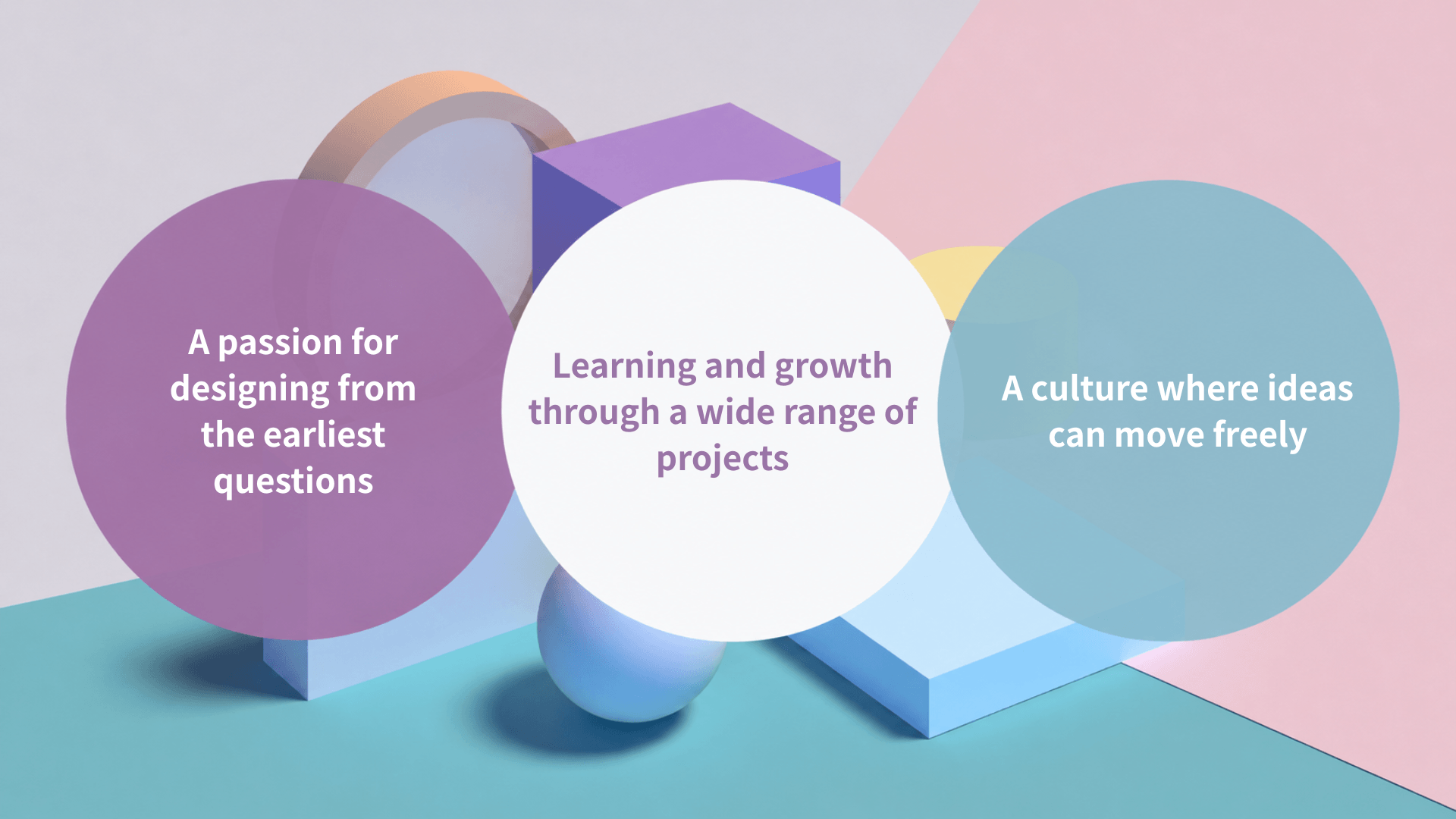
A passion for designing from the earliest questions
As generative AI becomes more widely used, machines are getting better at polishing work and improving what is already visible. That makes the questions only humans can ask even more important. What is the real issue here? Is the challenge in front of us truly the one that needs to be solved? Instead of stopping at surface-level improvements, MTRL members continue to look deeper. This mindset is where MTRL’s creative work begins.
Daiki Nakatsuka, a producer with a background in architecture and spatial design, speaks from his own experience.

Daiki Nakatsuka, Producer: For me, the quality of creative work improves when you are involved in the design process itself. I wanted to work in an environment where design is not just about making something look good, but about continuing to ask why a space is needed and who it is truly for.
Nakatsuka is not simply pursuing beautiful design. He is pursuing design grounded in purpose. By looking closely at use, context and intent, he wants the final output to carry genuine meaning.
Ei Miura, a creative director with a background in the entertainment industry, offers a different angle.

Ei Miura, Creative Director: In online games, we were creating new characters every week. In anime, we were producing large volumes of merchandise. I became worn down by that cycle of making things only to be consumed. I wanted to face something more fundamental and do work that could begin with the question of why we make things at all. Loftwork felt, intuitively, like a place where that might be possible.
Miura was questioning the high-speed cycle of mass production itself. Products are made, consumed almost immediately, and then pass by without their reason for existing ever being revisited. That sense of doubt led him to seek an environment where he could return to the fundamental meaning of making. Eventually, that search brought him to MTRL.
Nakatsuka and Miura share one clear instinct. Before looking for answers, they sharpen the question. As AI produces more outputs that look convincing, the human role of framing meaningful questions and translating them into socially relevant systems becomes even more important. Nakatsuka focuses on shaping purpose from the design phase, while Miura seeks to move beyond the cycle of consumption and return to the roots of value creation. Their paths differ, but they meet at the same point. Both begin by reframing the question, then design systems that carry real meaning. This is the core of creative work at MTRL, and the kind of value humans should continue to offer as AI advances.
Daiki Nakatsuka, Producer: For me, the quality of creative work improves when you are involved in the design process itself. I wanted to work in an environment where design is not just about making something look good, but about continuing to ask why a space is needed and who it is truly for.
Learning and growth through a wide range of projects
One of the biggest draws of Loftwork and MTRL is an environment where people are not limited to a single field. Members are encouraged to step into unfamiliar areas and keep expanding the questions they ask. Projects span spatial design, web service development, regional co-creation and more. Each one begins by looking again at what the real challenge is. As the project moves forward, the scope of learning naturally expands as well.

Ayane Shinohara, Creative Director: In the hotel industry, conversations almost always begin with how to improve our own service. That can make your perspective turn inward, and I began to feel the need to look further outward. Loftwork’s client work gave me exactly that opportunity. When a project starts with the right question, you can feel the range of possible outcomes open up.
When members cross boundaries as Shinohara did, their existing experience and strengths can create new value in unfamiliar contexts. MTRL offers opportunities to work on research-driven studies, digital prototyping, service design and more, so members are not confined to a single specialty. By repeatedly reframing questions in unfamiliar territory, they expand their skills in layers. What begins as a narrow view becomes more dimensional.
When people with different backgrounds come together, a project gains new angles. Unexpected ideas and forms of value begin to emerge. Even as AI becomes better at handling routine tasks, humans still play an essential role in expanding what they learn, discovering new questions and exploring them more deeply. This willingness to cross into unfamiliar territory is one of the forces that drives MTRL’s creative work.
A Culture Where Ideas Can Move Freely
Loftwork has long valued a culture where people can speak openly, without being held back by hierarchy. This environment encourages members to take on new challenges. Ideas are not judged by who said them, or by someone’s title or years of experience. They are judged by what they bring to the conversation. That creates the conditions for new perspectives and different opinions to be welcomed.

Dokje Kim, Producer: At my previous job, people tended to hold back, and it was difficult for both managers and team members to speak honestly. At Loftwork, I can have direct conversations even with senior leadership. That feels right to me.
At Loftwork, discussion is not about deciding whose opinion wins. It is about asking whether the current answer is truly the best one, whether it can be improved, and how the final output can be made better.
This open atmosphere encourages members to try new things. Even those earlier in their careers are encouraged by the people around them to take the first step.
Because of this culture, the habit of asking essential questions can spread across the organization. People exchange ideas honestly across levels of seniority, share what they are learning and trying, and continue to expand the questions themselves. MTRL’s creativity is supported by this foundation.
MTRL is built on this kind of culture. Its members look closely at each challenge from the start, step into unfamiliar fields and sharpen their work through honest conversation.
Design thinking begins with essential questions and fuels curiosity. Diverse projects make learning and cross-field exploration part of everyday work. Open dialogue lowers the barrier to trying something new. Together, these qualities shape what makes Loftwork distinctive, strengthening each member’s creativity and helping innovation move across the organization.
As technology continues to evolve, where can people make their strengths matter most?
The human value AI cannot replace
AI can now offer what looks like an optimal answer in an instant. But no matter how accurate AI becomes, every project still begins with human judgment. Before deciding what is right, someone has to decide what matters. How do MTRL members understand this space that only humans can hold?
The next sections focus on the forms of human value that this culture has cultivated, and that AI cannot replace.
Three main themes emerged.
- Emotional understanding and human agency
- Self-determination and ethical judgment
- Physical presence and a sense of the field
In each section, the members’ voices help reveal the strengths humans bring to the table, beyond the kinds of optimization AI does best.

Emotional understanding and human agency
“Even if AI can optimize the path to winning, chess played by a human still carries a story.” This is how Ryo Matsumoto, lead director at MTRL, frames the idea.

Ryo Matsumoto, Lead Director: “AI is already stronger at chess than any human. But what moves an audience is watching someone take on the challenge. People also take the long way around on purpose. They fail. There is even a concept called the right to act unwisely, and those irrational moves can sometimes lead to unexpected discoveries.”
Matsumoto is pointing to the meaning of human agency. AI-generated optimal answers become powerful when people choose to rely on them. Yet drama and empathy emerge because a person is still the one taking action, with all the failure, hesitation and detours that come with being human. The inefficiencies and uncertainties that pure efficiency might remove are exactly what leave room for creativity.
Kazuya Yanagihara, a creative director at MTRL, sees human agency in a similar way.
Kazuya Yanagihara, Creative Director: “AI may be able to write text. But what makes a great book great is that the author’s life and values come through between the lines. People are moved not only by the words themselves, but by the full context of who wrote them and where they came from.”
As AI produces more optimized results, small human inefficiencies become more rare. So do the meanings carried by a person’s background, and the emotional uncertainty behind a piece of work.
AI can optimize the outcome of an action, but it is much harder for AI to create the story that leads to that outcome. People are moved by the detours, failures and trial and error that shape the process.
Empathy and story, discoveries that emerge from the irrational, and the ability to convey the background behind the work are not easy to quantify or model. That is precisely why they sit at the heart of human creativity. Holding on to one’s own agency, and sometimes even embracing folly, forms the foundation of what MTRL members see as the human value AI cannot replace.
Chapter 2, Self-determination and ethical judgment
“No matter how much AI suggests, the initiative behind the decision still remains with the person.” So says Takeaki Sekimoto, creative director at MTRL.

Takeaki Sekimoto, Creative Director: “The basic structure will not change. A human still makes the final decision and acts on it. But beneath the surface, AI may be guiding us, and how we respond to that influence becomes the next question. Even when we think we have decided for ourselves, AI may have been involved behind the scenes. What matters is how we protect a sense of conviction and personal attachment to the choice.”
Sekimoto is pointing to the balance between human control and the transparency of AI’s influence. When an algorithm offers an option, who decides whether to accept or reject it? And when people reach for that final decision, are they truly acting by their own will?
Sekimoto believes that human choice itself will not disappear. At the same time, he is paying attention to a more subtle ethical question. How much of AI’s quiet optimization should people allow into the decision-making process?
MTRL Creative Director Hiromi Nishiura, adds another layer to this perspective.

Hiromi Nishiura: “Even when people look at the same data, what they choose to prioritize differs from person to person. The information you discard and the information you choose to adopt may itself be a form of originality.”
AI can organize vast amounts of information and present it clearly. But it cannot fully define what should be treated as important and what should be set aside. The person who sets the axis of value and gives intention its final shape is still, in the end, human.
Physical presence and a firsthand sense of the field
Keitaro Tsuchiya, an engineer at MTRL, describes the difference between AI and humans through the body.

Keitaro Tsuchiya, Engineer: “AI can recognize pain as sensor data, but it cannot instinctively avoid it. Without a body of its own, AI cannot yet reproduce the moment of insight that comes from touching something, or the split-second reaction that pulls a person away from danger.”
Tsuchiya focuses on the moment when the body and perception are directly connected. More experiments are combining AI with cameras, tactile sensors and robots. Tsuchiya is interested in what these technologies might make possible. Could AI become part of the body? Could the body become part of AI? A left-handed person, for example, might one day use right-handed tools fluently with AI assistance. Even in that future, the body remains central. AI is only an amplifier.
Mizuki Yoshie, a producer currently working with the MTRL team, approaches the importance of physical presence from another angle.

Mizuki Yoshie, Producer: “Lifting a child or gently rubbing an older person’s back are the kinds of hands-on tasks that, in my view, will be among the slowest to be taken over by AI.”
Yoshie sees another side of the same question. As AI becomes more deeply embedded in daily life, care delivered through the body may stand out more clearly as a uniquely human value. Even in an era when robots teach children or support caregiving, the human hand and heart may remain the final carriers of emotional meaning.
How MTRL business director Benkei sees the AI boom
“The internet has become fully woven into everyday life. Will AI follow the same path?”
Kazuya Ohara, also known as Benkei, is the head of the MTRL division and has helped lead MTRL to where it is today. He observes the current enthusiasm around AI with a measured eye.

Kazuya Ohara, MTRL Business Director: “When the World Wide Web first appeared, even the act of browsing felt exciting. You could send out a question, and information would come back from around the world, sometimes including things you had not been looking for. As an experience, that was revolutionary. Generative AI still feels like it is at the level of asking a question and getting a precise answer. To me, that is still customization. The open question is whether it can become something that fits more naturally with the body and is used as equally as everyday infrastructure.”
For Benkei, two things matter most. Serendipity, and how AI connects to human desire.
Kazuya Ohara, MTRL Business Director: “AI can quickly pick out the information people want. But what made the internet truly interesting was its ability to open pathways toward things people were not even searching for. If AI changes the way people relate to information itself, I welcome that wholeheartedly. Without a real conversation about how users decide what to take in and what to leave aside, AI may remain only a useful tool.”
For generative AI to become more deeply embedded in everyday life, at least three things may be needed. It needs to move beyond closed environments. It needs to make room for serendipity and small variations. And it needs transparency that supports users in making their own judgments.
Can generative AI create the kind of experience that, like the early days of the internet, changes the way people ask questions? Benkei is watching closely for the next phase of that conversation.
Closing Chapter, Staying curious as an organization
The shelf life of any “right answer” has become shorter. For organizations today, one of the greatest risks may be staying the same. MTRL has combined a culture that does not fear change with the habit of reframing questions, turning that combination into an engine for the organization. Rather than relying only on fixed job descriptions, MTRL values how each person engages with the next question. This open environment has helped make challenge-taking part of everyday work.
What matters most in this environment is the ability to ask questions. If a team simply implements someone else’s hypothesis, a different optimal answer may appear six months later. That is why MTRL looks closely at what should truly be asked, and keeps updating the question even while a project is in motion. Research, prototyping, reflection and redefinition repeat as an ongoing loop. As the question evolves, the members and the organization evolve with it.
The rise of generative AI has only accelerated this cycle. Each time AI instantly offers something that looks like an optimal answer, the original question can start to feel outdated. People then return to the question and ask whether that answer is truly enough. AI produces answers at scale, while people reinvent the questions. This co-evolution is opening a new creative phase at MTRL. What can move AI beyond the role of a tool is the agency people continue to hold, and the uncertainty they choose not to erase.
MTRL’s creativity emerges where two qualities meet. An organization that does not fear change, and individuals who are willing to reframe the question. Faced with the countless “optimal” outputs AI can generate, people can still choose to take a less direct path, stay with uncertainty and move toward the next question. This may be what real innovation looks like in the age of AI.
For readers who have come this far, one question remains. What question are you holding now? And with that question in mind, how far can you continue to change? MTRL will continue to create new experiments as a place where people bring questions together and keep cultivating them.
The next question waiting to be renewed may already be taking shape within you.
Planning, Writing, and Editing: MTRL Communicator, Sae Furukawa
MTRL members who participated in this interview

Kazuya Ohara
Loftwork Inc.
MTRL Business Director / Keio University Graduate School of Media Design Lecturer

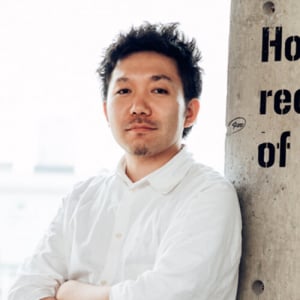
Ryo Matsumoto
Loftwork Inc.
Creative Director
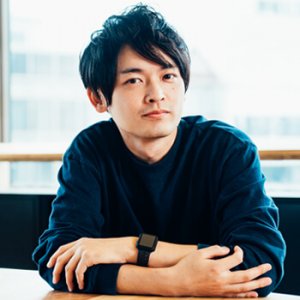
Kazuya Yanagihara
Loftwork Inc.
MTRL Creative Director

Kei Katahira
Loftwork Inc.
MTRL Creative Director

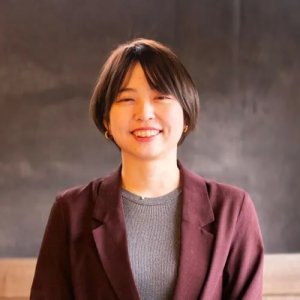


Onishi Akira
FabCafeTokyo / MTRL Tokyo
MTRL Producer
Recommended
-

2026.06.11
Wavering Terrarium: what we built with AI, and what it couldn't decide
-
2026.06.05
At ComoNe, curiosity finds company inside a co-creation space at Nagoya University
-
2026.04.22
Beyond the award: How Loftwork uses open calls to transform how companies innovate
-
2026.02.17
The ripple effect of MVMNT Behind the scenes of the [UN]REAL ESTATE exhibition at MAB25, Bangkok
-

2026.02.06
What happens when vacant spaces are unlocked? The people and stories weaving the connections behind FUJI TEXTILE WEEK
-

2025.12.02
AI is not magic: FabCafe’s ongoing quest to define our relationship with technology
Next Contents